

How Do You Promote an Event? A Guide for
Quick Answer: How Do You Promote an Event? A Guide for
Promote nonprofit events in three phases - email, social, ticketing, and volunteers - so registration fills early and staff are not scrambling the final week. The sections below walk through practical steps, examples, and what to watch for.
For related tools, see AlignMint features. Promoting a nonprofit event can feel like a second job you didn't sign up for. The best way to manage it is to break your plan into three simple phases: before, during, and after. This turns an overwhelming task into smaller, manageable steps, ensuring you connect with supporters at every stage.
Your Blueprint for a Successful Event
As a nonprofit director, you know events are more than just gatherings. They are a lifeline for funding your mission and building relationships with your community. But with limited time and budget, creating a promotion plan from scratch can be stressful. We have been there.
This guide isn't about needing a big marketing team or complex software. It's about giving you a clear, repeatable roadmap that builds confidence. Think of this as your playbook for a sold-out event that raises money and deepens supporter connections.
The Three Phases of Event Promotion
A great promotion strategy is a sustained effort that builds momentum over time. By splitting your plan into three phases, you can organize tasks and manage your time effectively. This ensures no opportunity is missed.
This timeline gives you a clear view of how to structure your promotional efforts.
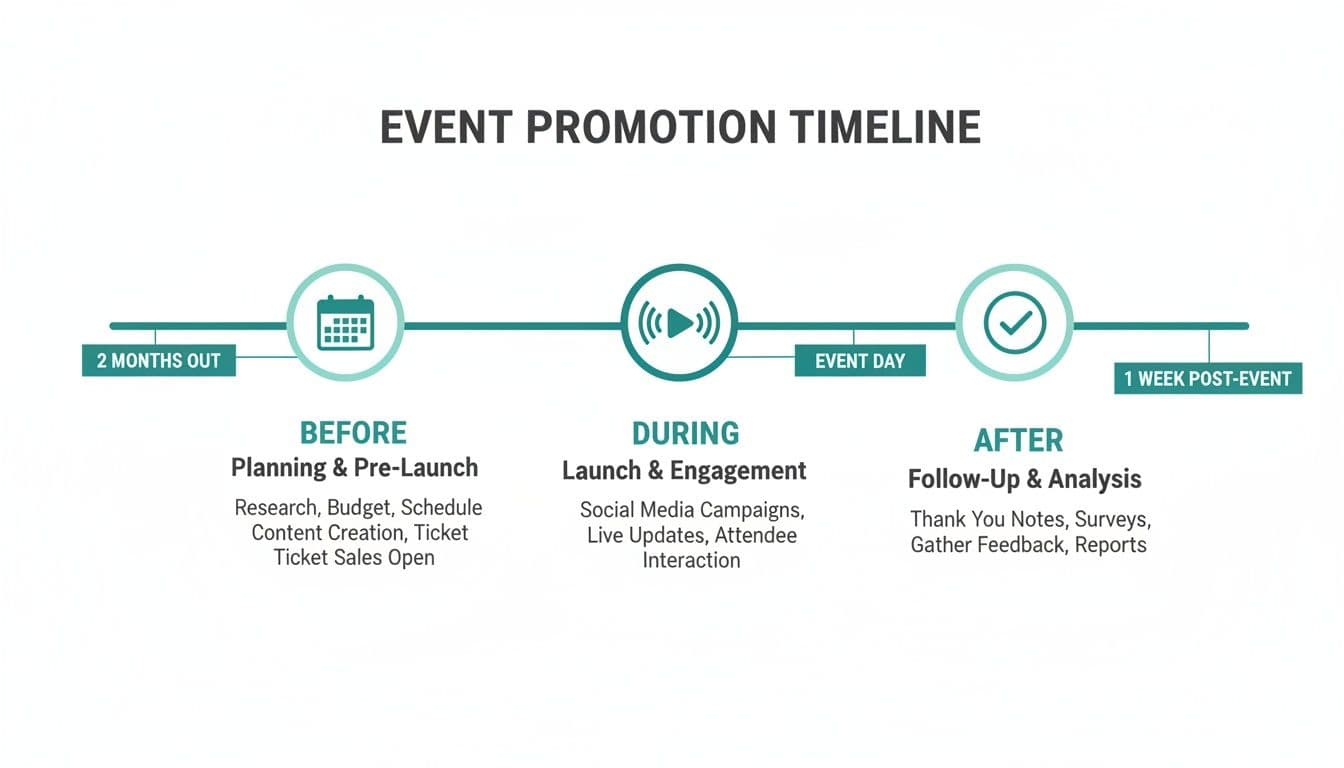
This approach helps you build buzz before the event and keep energy high during it. Most importantly, it strengthens supporter relationships long after the event ends.
This structured method works. Events remain a reliable source of revenue for nonprofits that plan properly. A remarkable 77% of nonprofits hosting events met or exceeded their fundraising goals, proving the power of a good plan.
We believe promotion should be about connection, not just communication. It's an opportunity to remind supporters why your mission matters and invite them to be part of something meaningful.
To help you begin, here is a simplified look at how you can organize your activities.
Event Promotion Timeline at a Glance
| Phase | Timing | Key Actions |
|---|---|---|
| Before | 12-4 Weeks Out | Announce event, launch ticketing, send save-the-dates, secure sponsors, start early-bird promotion. |
| During | Event Day | Post live updates on social media, use an event hashtag, encourage attendee posts, capture photos and videos. |
| After | 1-2 Weeks Post-Event | Send thank-you emails, share impact numbers, post event photos, survey attendees, invite them to the next event. |
This table is a starting point. You can build upon it to fit your specific event and audience.
Why a Timeline Matters
Without a timeline, event promotion becomes a series of last-minute, reactive tasks. A schedule helps you become proactive. It helps you:
- Build Awareness Gradually: You can introduce your event early and build excitement over several weeks. This avoids cramming promotion into the last two weeks.
- Segment Your Audience: A timeline gives you space to send targeted messages. You can send early-bird offers to past donors or special invitations to major supporters.
- Coordinate Your Team: When everyone knows what needs to happen and when, the process runs smoother. This prevents crossed wires and duplicated efforts.
This organization is much easier when you are not juggling a dozen different tools. Instead of separate systems, an all-in-one platform like AlignMint brings it all together. You can manage your entire promotional timeline from one place. And if your nonprofit is under $100K in revenue, you can get started for free.
Crafting Your Message to Connect with Supporters
Getting the word out is more than just sending emails. To drive attendance, you need to tell a story that reminds supporters why they believe in your mission. Let's walk through how to create messages that get people excited to participate.
This process doesn't have to be a heavy lift. You already have a powerful story about what you do. Think of your event promotion as an invitation for people to step inside that story with you.
Writing Emails People Actually Open
Your email list is your most valuable promotional channel. These are people who have already said, "I care." Your job is to craft emails that cut through the noise of a crowded inbox.
The key is to always lead with the "why." Instead of opening with logistics, start with the impact.
- Weak Subject Line: "Annual Gala Tickets on Sale"
- Strong Subject Line: "A Special Invitation to Change Lives"
That simple shift reframes the conversation. It's not about a transaction; it's about making a difference. In the email body, share a short story about a person your organization has helped. Then, connect that story to the event.
A great promotional message doesn't just ask for a ticket sale. It reminds supporters of the shared values that connect them to your cause.
You can save time by having your tools work together. Instead of exporting lists to a service like Mailchimp, you can use the built-in marketing suite in AlignMint. This lets you send targeted emails directly from the same platform holding your donor and event data.
Creating Social Media Posts That Get Shared
Social media shows the authentic energy behind your mission. Your posts should be visual, personal, and easy to share. Don't just post a digital flyer.
Share photos of your team getting ready for the event. Post a quick video from your phone about what this event means for your work. A powerful quote from someone who has benefited from your programs can also be effective.
Research shows 32% of donors say social media is a top inspiration for giving. Here are a few post ideas that work well for event promotion:
- Behind-the-Scenes: A candid photo of your team preparing for the event.
- Mission Moment: A short, impactful story about your work with a powerful photo.
- Countdown: "Only 3 weeks until our community comes together to make a difference."
Spark engagement by asking questions. For more inspiration, check our guide on creative social media fundraising ideas.
Turning Supporters into Event Ambassadors
Your most effective marketers are people who already love what you do. You just need to equip them to become your event ambassadors. This doesn't have to be a formal, time-consuming program.
Create a simple toolkit for your core supporters. This could be a one-page document with:
- A pre-written email they can forward to friends.
- Sample social media posts they can copy and paste.
- A direct link to the event ticketing page.
By removing friction, you turn their passion into ticket sales. A recommendation from a friend carries more weight than a marketing email. It's a personal invitation that builds trust and extends your reach.
Choosing the Right Event Format and Technology
Deciding between an in-person, virtual, or hybrid event can feel like a major decision. Your choice will affect your budget, promotion, and staffing needs. The first question is not about format; it's about your goal.
Are you trying to energize a local donor base, or connect with supporters far away? Your answer will make the next steps much clearer.
No matter the format, the goal is to engage supporters where they are. Technology should make this easier, not harder.
Weighing Your Event Format Options
There's no single "best" choice, only the best choice for your nonprofit and this event. Let's be realistic about the pros and cons of each.
-
In-Person Events: These are fantastic for building deep, personal connections. But they are geographically limited and have higher costs for venue and catering.
-
Virtual Events: The biggest benefit is accessibility. Anyone with an internet connection can attend. They are often more cost-effective, but keeping attendee attention is a bigger challenge.
-
Hybrid Events: This seems to offer the best of both worlds. The catch is you are essentially running two events at once. It demands serious planning and the right technology.
Data shows a clear shift toward digital integration. A recent report found that 55% of experts see a higher return on hybrid events.
The Technology Trap and How to Avoid It
Once you choose a format, the next question is technology. This is where many of us get stuck. We are skeptical of oversold software and worried about the learning curve for our team.
Perhaps you use a tool like Eventbrite for ticketing and another for email. This is a recipe for frustration. Juggling systems creates problems:
- Wasted Time: You constantly export and import lists between platforms.
- Disconnected Data: Your event data lives in one place, while your donor history lives elsewhere.
- Poor Supporter Experience: You force donors to use different websites and payment forms.
The point of technology is to get out of your way so you can focus on your mission. The right tools should simplify your work, not add to it.
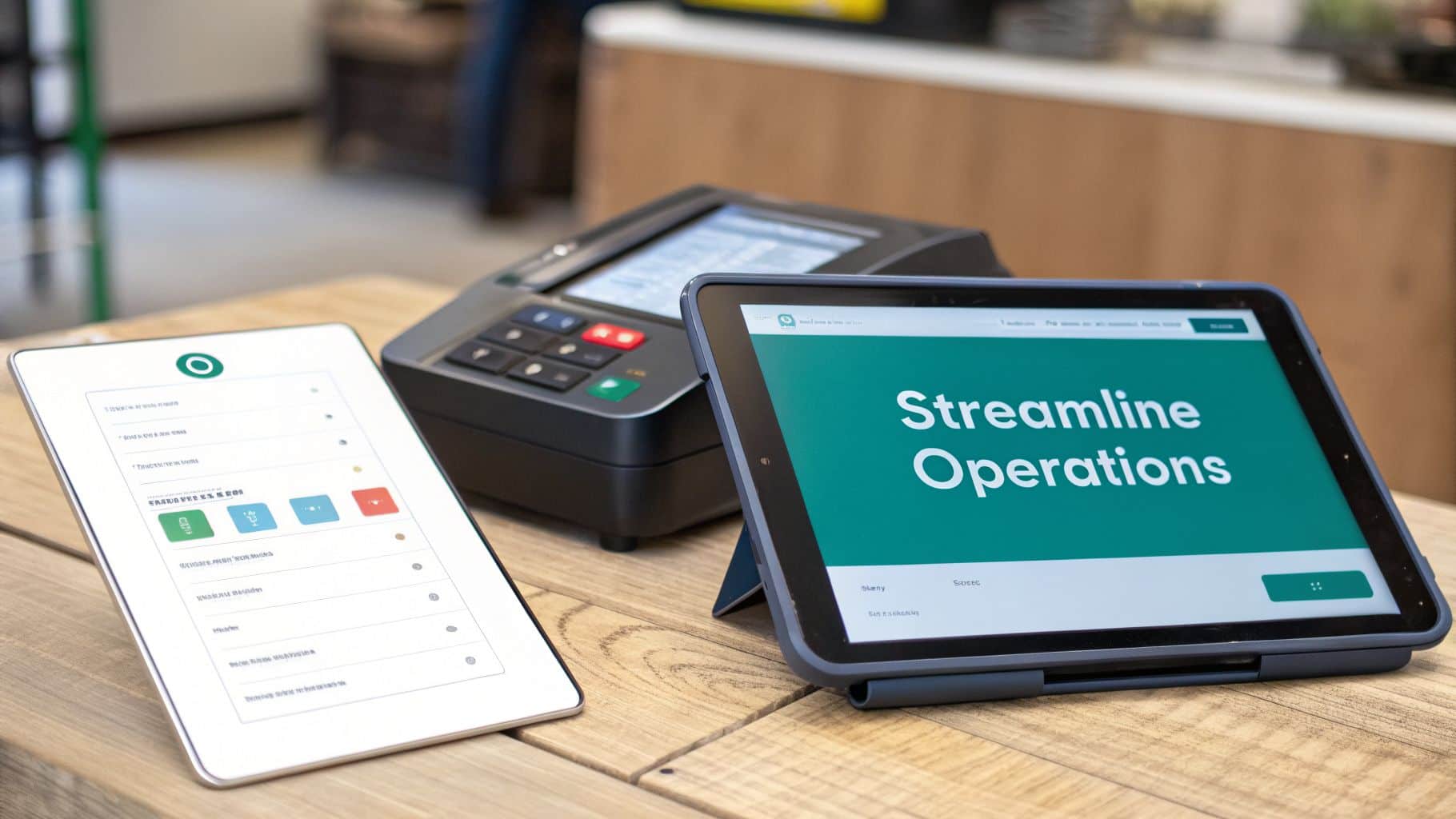
This is why we built AlignMint as an all-in-one platform. You can create beautiful event pages, manage ticketing with secure payments, and offer promo codes. When someone buys a ticket, their information is automatically linked to their profile in your donor management system.
Managing Tickets, Volunteers, and Payments with Ease
Getting people excited to come is half the battle. Now, the behind-the-scenes work begins. This is where many of us get bogged down managing ticket sales, volunteers, and payments.
Let's walk through how to handle these details with confidence. This will help you stay focused on your mission.
Smart Ticketing That Drives Action
Your ticketing strategy should focus on selling tickets early. Early sales provide cash flow and a better sense of attendance numbers. A few simple strategies work wonders here:
- Early-Bird Pricing: Offer a discount for the first few weeks of sales. This nudges your most engaged supporters to commit right away.
- Tiered Ticketing: Create different levels, like "General Admission" and "VIP Access." This gives dedicated donors an easy way to give a little more.
- Promo Codes for Partners: Give board members and sponsors a unique promo code to share. This empowers them to promote the event and helps you track their impact.
Setting this all up shouldn't be a technical challenge. In AlignMint, you can create multiple ticket types and promo codes in minutes from your event dashboard. You don't need to be a tech expert.
The best tools are the ones you barely notice. They simply work, letting you move from strategy to execution without getting tangled in technology.
From Volunteer Chaos to Coordination
Coordinating volunteers can feel chaotic, especially with spreadsheets and email chains. We have heard this pain point from hundreds of directors. An integrated system completely changes the game.
Our built-in volunteer management features create a central hub for everything. You set up event shifts in one place. Volunteers can then visit a portal to see what's available and sign up, freeing you from being the go-between.
Unifying Payments for a Clearer Picture
Finally, let's talk about payments. It's tempting to use a familiar tool like PayPal or Square. While good at what they do, they create a disconnect in your data.
When you process a sale through an external system, that transaction exists in a silo. You have to manually connect it to your donor database. This is time-consuming and prone to errors.
An all-in-one platform like AlignMint solves this. When a supporter buys a ticket, that transaction is automatically recorded in your donor management system. This creates a unified history, showing donations, attendance, and volunteer hours in one place. This complete view helps you build deeper relationships with supporters.
Measuring Success and Planning Your Next Event
After the event, your work isn't quite done. The final step is to figure out what worked and use those lessons for next time. This isn't just about the total dollars raised. It's about understanding the real impact of your efforts.
This measurement phase used to mean weeks buried in spreadsheets. Thankfully, it doesn't have to be that way anymore.
Moving Beyond Just Dollars Raised
Total revenue is important, but it doesn't tell the whole story. You need to look at a few other key performance indicators (KPIs). These numbers help you understand your efficiency and the long-term value of your event.
With an all-in-one platform like AlignMint, your event, donor, and financial data are already connected. You can get these crucial insights in a few clicks, without manual data entry. You can even ask our AI assistant, Minty, for instant reports.
The goal of post-event reporting isn't just to prove you did a good job. It's to learn exactly what to do differently to make your next event even more successful.
Let's look at the key metrics you should be tracking.
Essential Post-Event Metrics to Track
After the event, these numbers reveal the true success of your efforts. They give you a roadmap for your next one.
| Metric | What It Tells You | How to Calculate It |
|---|---|---|
| Return on Investment (ROI) | The overall financial success of your event. | (Total Revenue - Total Costs) / Total Costs |
| Cost Per Attendee | How much you spent to get each person to attend. | Total Event Costs / Number of Attendees |
| New Donor Acquisition | How many attendees were first-time donors. | Count of attendees not in your donor database before the event. |
| Average Gift Per Attendee | The average amount contributed per person. | Total Revenue / Number of Attendees |
These metrics provide a complete story of your event's impact on your mission.
Streamlining Your Reporting and Compliance
Gathering this information is easier when you're not fighting with your software. Many directors struggle with financial data from systems like QuickBooks, which use "classes" as a workaround.
A system with true fund accounting makes a world of difference. Your event revenue and expenses are properly categorized from the start. This makes generating reports for your board or Form 990 straightforward.
You have a complete playbook for promoting your events. The question is how to act on it without adding more work.
We created an all-in-one platform because your event promotion, donor management, and finances should live in the same place. AlignMint combines donor management, true fund accounting, event ticketing, and a built-in marketing suite. This means you can run your event without ever touching a spreadsheet.
We believe technology should get out of your way so you can focus on your mission. That means one system that just works, with plan-based user allowances (1 on Free, up to 10 on Plus, up to 25 on Pro, and unlimited on Enterprise).
Best of all, we offer a completely free plan for nonprofits raising under $100,000 per year. This isn't a limited trial; it's our commitment to helping your mission grow.
Your Event Promotion Questions, Answered
As you plan your event, questions are bound to come up. We hear them all the time from nonprofit directors. Let's tackle some of the big ones.
How Far in Advance Should I Start Promoting a Nonprofit Event?
For a major event like an annual gala, give yourself 3-4 months. This isn't just about sending emails. It's about building momentum, securing early-bird tickets, and talking with sponsors.
For smaller events like a workshop or local run, a 6-8 week timeline usually works. The key is consistency. A steady drumbeat of communication is more effective than one loud, last-minute blast.
What Is the Most Effective Low-Cost Way to Promote an Event?
Your email list. It's your most powerful and cost-effective asset. These are people who already believe in your mission, making them your warmest audience.
After that, combine consistent social media with people power. Ask your staff, board, and volunteers to share the event on their personal social media. This peer-to-peer approach expands your reach without an ad budget. Find more tips in our guide on nonprofit volunteer management software.
The best low-cost promotion doesn't feel like marketing. It feels like a genuine invitation from a friend to be part of something meaningful.
How Can I Manage Event Promotion Without a Dedicated Marketing Person?
We understand that most nonprofits run lean. This is where an all-in-one platform like AlignMint becomes your trusted colleague. It pulls your marketing, ticketing, and donor management tools into one place.
Instead of juggling multiple systems, you can handle everything from a single dashboard. This saves a huge amount of time. It lets you focus on your message, not the technology you're using.
Is It Better to Use Eventbrite or an All-in-One System?
A tool like Eventbrite is good for one thing - selling tickets. But that's also its weakness. It creates data silos. Your attendee information lives in one system, and your donor history lives in another.
An all-in-one system like AlignMint solves this problem. When someone buys a ticket, their profile and transaction history are automatically updated. This gives you a complete view of every supporter, which is essential for building relationships.
You now have a playbook for promoting a successful event. The next step is to simplify the process with the right tool. If you're tired of patching together software, AlignMint was built for you. Our all-in-one platform offers a free plan for nonprofits under $100,000 a year. See how AlignMint works.
Frequently Asked Questions
Ready to try AlignMint with your nonprofit?
Start free — set up donor tools, giving pages, and Minty. Upgrade when you need accounting.