

For related tools, see events, planning events for nonprofits, and nonprofit fundraising tools. You’re probably looking for restaurants that hold fundraisers because you need something that can raise money without asking your staff to build another event from scratch. That’s the appeal. A good restaurant night can bring in families, alumni, church members, and volunteers with less friction than a gala, auction, or formal campaign.
The catch is that restaurant fundraisers only feel easy if you run them with discipline. The wrong partner creates tracking problems, unclear donation rules, and a month-end reconciliation mess. The right one gives you a simple event, clean reporting, and a reason to bring supporters together. If you also need ideas for turnout, it helps to study strong smart menus and pricing strategies and think about how ordering behavior affects participation.
Quick Answer: Restaurants That Hold Fundraisers
Restaurants that hold fundraisers in this guide are Chipotle, Panda Express, Panera Bread, Noodles & Company, California Pizza Kitchen, MOD Pizza, and Shake Shack. A local partner belongs on the same list when the owner will put the giveback and the deposit date in writing.
A familiar brand, simple participation rules, and a giveback you can explain in one sentence are what make the night usable. Turnout usually matters more than the highest percentage on paper.
Pick by goal:
- Schools and youth groups: Chipotle-style programs — broad local turnout, one event code to promote.
- Family-heavy supporter bases: Panera-style programs — flexible mealtimes and a menu wide enough to avoid debate.
- Neighborhood loyalty: Local partner restaurants — an owner who answers texts and will put giveback terms in writing.
| Restaurant program | Best for | What to confirm before booking |
|---|---|---|
| Chipotle | Schools, youth groups, broad local turnout | Online and in-store code rules, eligible sales window |
| Panera | Family-heavy supporter bases | Minimum sales threshold and payout timing |
| Local partner restaurants | Strong neighborhood loyalty | Written giveback terms and deposit date |
| Any national night | Repeatable calendar events | Who owns promotion, check-in, and reconciliation |
The biggest risk isn’t picking the wrong restaurant — it’s supporters ordering through the wrong channel or forgetting the event code. Weak attribution creates disappointment and extra reconciliation work, so promotion and instructions matter as much as the brand you pick.
How to Run a Restaurant Fundraiser
Treat the night like a short campaign. One person owns promotion, one owns day-of reminders, and one owns deposit coding in your fundraising tools. That keeps restaurant giveback revenue from turning into a month-end guessing game.
Get the terms in one written reply before anyone sees a flyer. Confirm the date, the location, which order channels count, the code or flyer supporters must use, any exclusions, and the payout date.
Name the fund or program the money supports before you promote. If the manager cannot answer what has to happen for a sale to count, choose another location.
Use that same instruction on the flyer, in email, in texts, and on social posts: an announcement, a reminder a few days before, a day-of note, and a last-call during the window. For a longer promotion timeline, read how to promote a nonprofit event.
When the payout arrives, code it to the fund you named up front with fund accounting so the deposit is not unlabeled income. Smaller teams that need a lighter plan can compare easy fundraising ideas for small groups.
1. Chipotle Mexican Grill
A Chipotle night works best when the hard part is promotion, not event design. Families already know the menu, the order process is familiar, and that cuts down on the explanation your staff has to repeat all week.
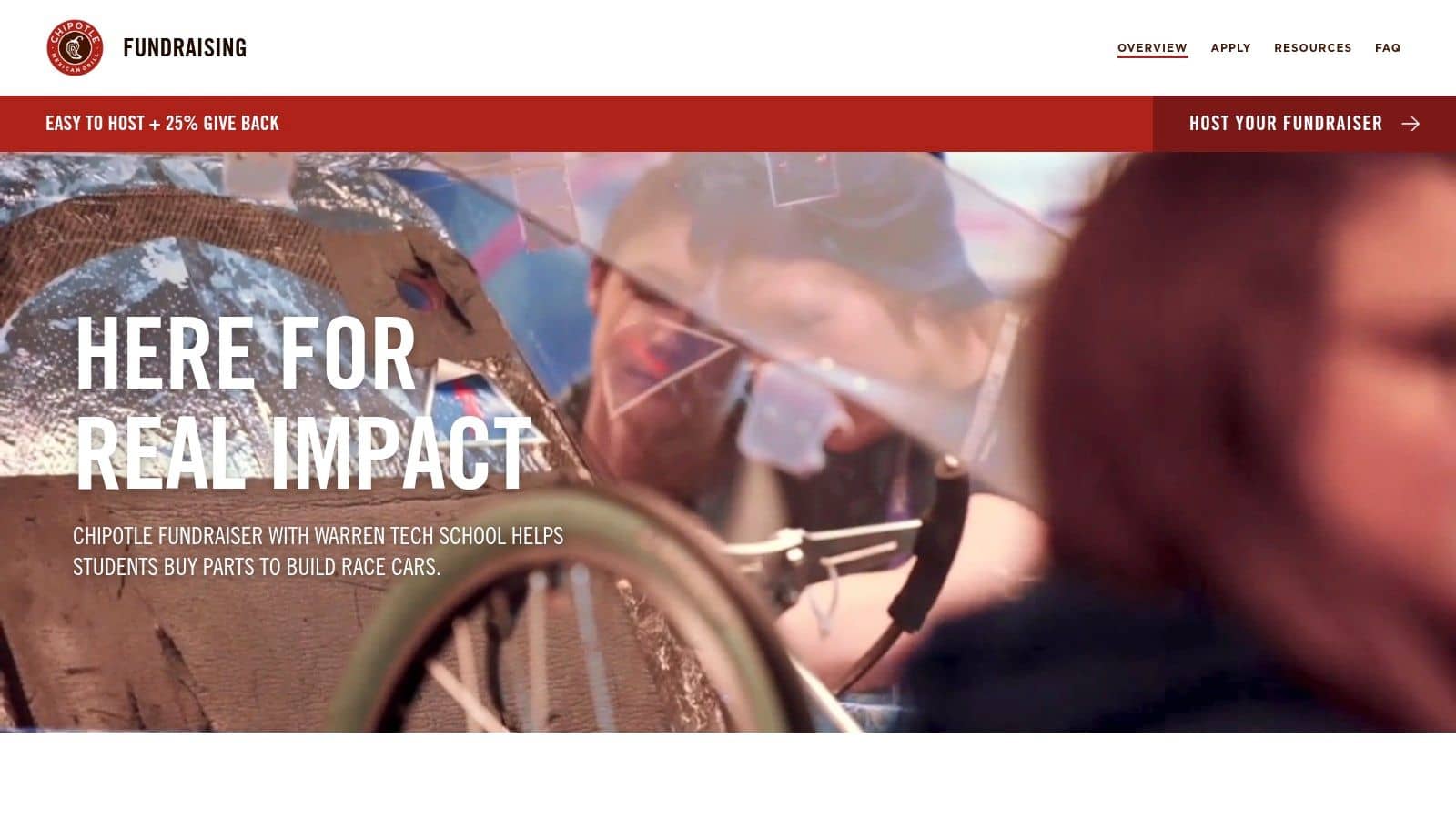
For schools, youth programs, and community groups with a reliable local audience, Chipotle is often one of the easier restaurant fundraisers to execute well. Supporters can participate in person or order online with the event code, which gives you a practical way to capture sales from busy families who are not staying to eat. Youth teams weighing other options can compare youth group fundraising ideas.
What makes Chipotle useful is operational clarity. The offer is simple enough to explain in one email, one text, and one flyer. That matters more than people admit. If supporters need a long set of instructions, participation drops and your team spends the day answering the same questions instead of pushing turnout.
Where Chipotle earns its place
Chipotle fits organizations that already have a responsive base and need a repeatable process. In my experience, the strongest results come from groups that treat the restaurant night like a short campaign, not a casual announcement.
A few strengths stand out:
- Recognizable brand: Families do not need much persuasion to show up.
- Online order participation: Pickup orders can count when supporters use the right event instructions.
- Cleaner administration: National programs usually create fewer reporting headaches than one-off local arrangements.
- Good training ground for your process: Chipotle is straightforward enough to test your reminder cadence, volunteer assignments, and post-event reconciliation.
That last point matters if you are building a repeatable fundraising calendar. A restaurant event should not end with someone digging through screenshots, email threads, and paper flyers to confirm what happened. Using a single system for outreach, attendance tracking, and follow-up makes the event easier to run and the final numbers easier to report. A tool for managing fundraising campaigns and donor activity in one place helps keep that work from spreading across inboxes and spreadsheets.
The trade-off to watch
Chipotle is not forgiving of weak promotion. If supporters forget the flyer, skip the code, or order through the wrong channel, you can end the night with plenty of participation and less qualifying revenue than expected.
Small organizations should pay attention to that risk. If your base is limited, every missed instruction matters. Before booking, assign one person to own the communications plan, one person to monitor reminders on event day, and one person to handle the post-event reconciliation. That simple division of labor saves time later.
Chipotle is a strong choice when you want a familiar restaurant, predictable rules, and a fundraiser you can fold into a larger system for planning, outreach, and final financial reporting.
2. Panda Express
Panda Express stands out because it can fit a nonprofit with local supporters and a nonprofit with people spread across different cities. That’s not common. For organizations with alumni, extended family networks, or regional volunteers, that flexibility can matter more than a slightly higher donation rate elsewhere.
The program is best known for offering both local restaurant events and a digital option. That means you can plan around how your supporters behave, not how you wish they behaved.
Best fit for dispersed supporters
Panda Express is one of the few restaurants that hold fundraisers in a way that can support geographically dispersed communities through digital participation. If your donor base includes grandparents, former members, or supporters outside your immediate area, that’s a meaningful advantage.
What I’d look at first:
- Digital participation: A nationwide code model can widen the audience beyond one neighborhood.
- Self-service setup: Printable materials and event setup resources reduce back-and-forth.
- Good match for schools and faith communities: People already understand the concept of a family meal fundraiser.
The trade-off is consistency. Local programs may vary by market, and digital-only rules can create confusion if supporters try to order through third-party delivery channels or other methods that don’t qualify.
A restaurant fundraiser succeeds or fails on the instructions your supporters actually read.
How to keep Panda organized
With Panda Express, the operational issue isn’t usually interest. It’s attribution. You need to make sure every supporter knows the exact order path, the exact code, and the event window. If even a modest share of orders misses the right channel, your team ends up disappointed and can’t easily diagnose why.
That’s why I’d treat promotion and tracking as part of the fundraiser itself. Keep the event page, reminder emails, donor notes, and attendance list together. If you want one place to manage that flow, AlignMint’s fundraising tools are built for that kind of practical coordination.
Panda Express is especially useful when your community isn’t all in one zip code. If your supporters are scattered, this option deserves a close look.
Confirm whether you are booking a local night or the nationwide digital code, and which order paths do not qualify, before you share instructions.
3. Panera Bread
A parent opens your reminder email at 4:30 p.m., realizes soccer practice runs late, and still decides to participate because Panera fits the schedule. That’s Panera’s real advantage. The brand is familiar, the menu covers enough preferences to avoid debate, and supporters usually understand the ask without much explanation.
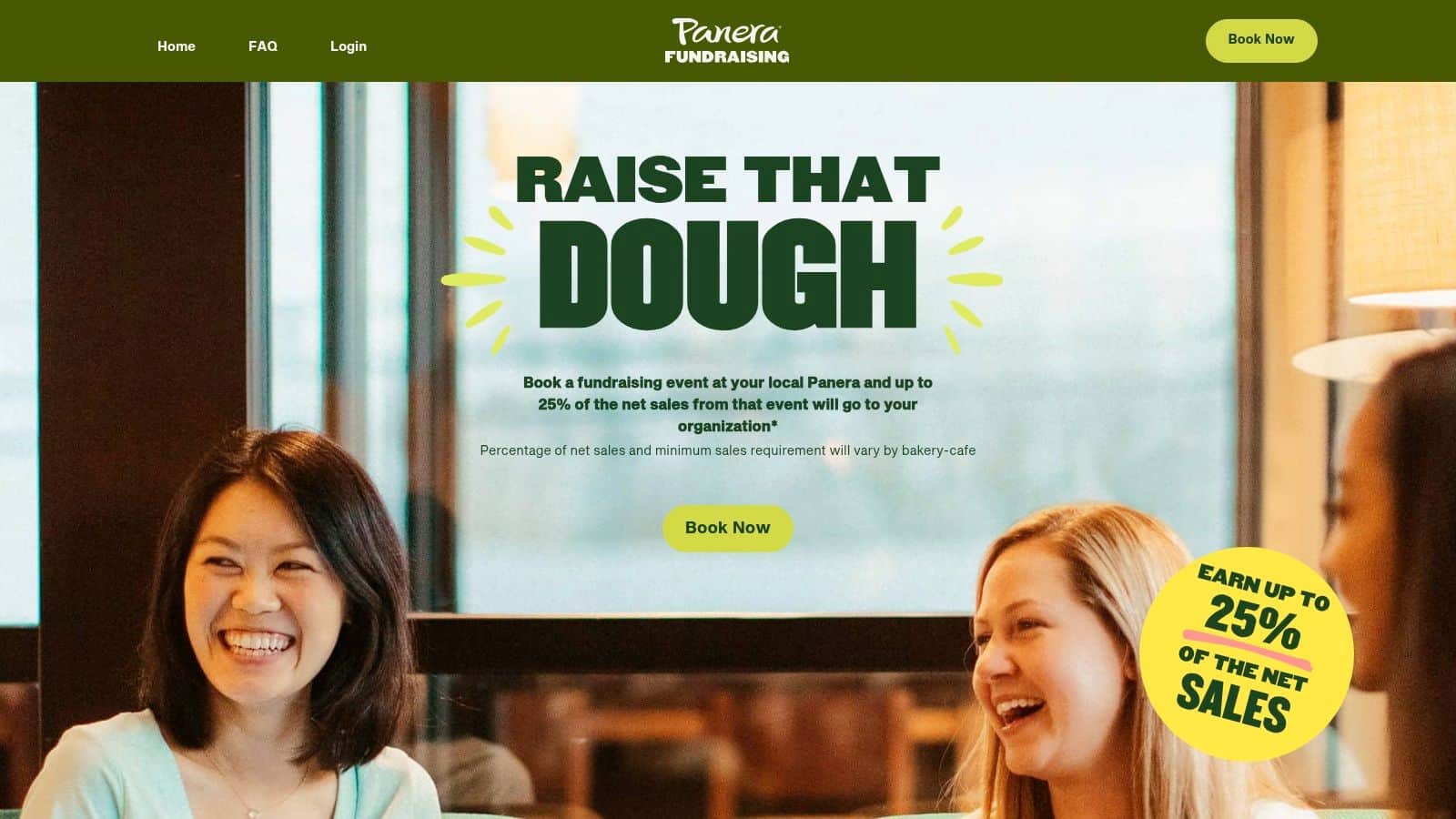
For nonprofit teams, that lowers promotional friction. You spend less time teaching people what the restaurant is and more time making sure they follow the right participation rules. Panera works best for groups that need an option supporters can fit into a normal weekday, not a special outing they have to plan around.
That convenience comes with a trade-off. Panera fundraiser terms can vary by location, and proceeds are often based on qualifying sales rather than the gross number your team sees in the dining room. If I were setting expectations with staff or a board treasurer, I would confirm the local participation method, excluded order types, and payout timeline before publishing a goal.
Where Panera fits in a real fundraising plan
Panera is a strong choice when the fundraiser needs to do two jobs at once. It has to raise money, and it has to be simple enough that a busy volunteer can promote it correctly.
A few situations where Panera tends to hold up well:
- Family-heavy audiences: Parents can grab dinner without adding another stop to the night.
- Mixed schedules: Breakfast, lunch, and dinner appeal widen the participation window.
- Lighter volunteer capacity: The message is easy to explain and easy to repeat.
- Stewardship opportunities: A restaurant night can also help you identify who shows up, who gives again, and who should get a follow-up thank-you in your donor management workflow.
The operational mistake is treating turnout as the only metric. Panera events are also useful for relationship tracking. If your team captures who promoted, who attended, and which families responded to reminders, the event becomes more than a one-night revenue bump. It feeds the next campaign, the next appeal, and your final reconciliation.
How to run the event without creating cleanup later
Panera rewards clear instructions. Supporters need one message with the exact date, time window, location, and order method that qualifies. Keep that language identical across flyers, email, text reminders, and social posts. Small wording differences create avoidable reporting problems after the event.
I’d also assign one person to own the back-end checklist: confirm approval, store event assets, track reminders sent, save the restaurant confirmation, and log the expected payout date. That sounds basic, but it’s what separates a pleasant fundraiser from three weeks of chasing paperwork.
For current local program details, review Panera fundraising.
4. Noodles & Company
Noodles & Company is a practical choice when you want a national process without a lot of guesswork. Some restaurant fundraisers feel heavily dependent on one local manager. Noodles tends to appeal to teams that want a more repeatable playbook.
Its reported giveback is 25% of qualifying sales in the planning guidance for this article. That puts it in the range many nonprofits hope for when they compare restaurants that hold fundraisers, but the bigger value is consistency in how supporters participate.
Why Noodles is easier to repeat
Noodles works best for organizations that expect to run more than one restaurant fundraiser a year and want a system they can teach to staff or volunteers. Supporters mention the event at checkout or use an online code, which is easy to explain in one line.
That repeatability matters if you have turnover in volunteers or office staff. A process people can relearn quickly is usually better than a technically better event that only one person understands.
A few reasons it earns consideration:
- Reliable giveback structure: The 25% level is competitive within common chain fundraiser programs.
- Online order support: Digital participation helps people who can’t stay for a meal.
- Good fit for schools and youth groups: The format is simple enough for parent-led promotion.
Where nonprofits get tripped up
Coverage can be the limiting factor. If you don’t have a convenient nearby location, excitement drops fast. The other issue is data hygiene. Restaurant nights create new names, casual donors, and occasional first-time supporters. If nobody records those contacts, you lose the longer-term value of the event.
That’s why I don’t treat restaurant nights as one-off transactions. They should feed your donor file. If someone shows up for your fundraiser, that person has raised a hand. AlignMint’s donor management tools help keep that interest from disappearing into someone’s inbox.
For program details, see Noodles & Company giving back.
5. California Pizza Kitchen
A CPK fundraiser usually works best when the problem is participation, not headline percentage. If your families are juggling sports, late work hours, and split pickups, a restaurant with several ordering options can outperform a higher-rate event that people forget to use correctly.
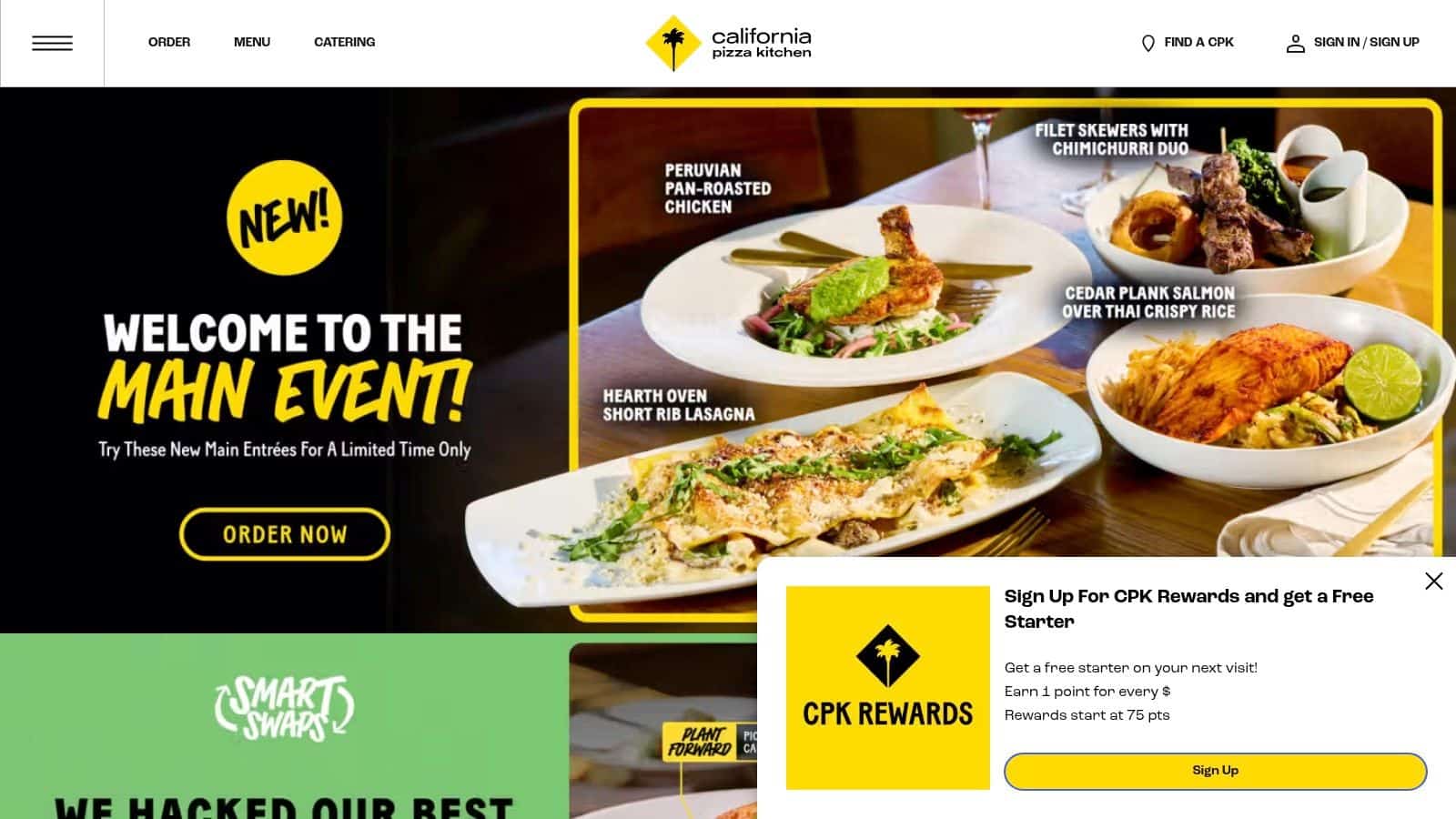
California Pizza Kitchen has run fundraising programs for a long time, and that usually shows up in the execution. The offer is familiar to supporters, the meal works for families, and the promotion is easier to explain than events with more conditions. I would still confirm the local rules in writing before you promote anything. Order channels, date limits, and eligible purchases can change by location.
CPK makes sense for groups that need a wider participation window. School communities, booster clubs, and workplace-backed campaigns often benefit from that. One household may dine in, another may grab takeout, and a staff team may place a larger group order. That range can do more for turnout than a small difference in giveback rate.
A few signs it belongs on your shortlist:
- You expect mixed supporter behavior: Some people want to sit down. Others need takeout.
- Your audience includes families and office groups: Pizza is easy to organize around.
- You want fewer promotion mistakes: A familiar restaurant format reduces volunteer training time.
The bigger opportunity is what happens after the event. Restaurant nights create small-dollar revenue, new names, and questions from finance if the deposit lands without context. I have seen teams run a solid event, then lose time at month-end because nobody marked whether the proceeds belonged to a general operating fund, a student program, or a restricted campaign.
That reporting step is part of the fundraiser, not cleanup. If your team needs a better process for coding event revenue, reconciling deposits, and keeping board reports clean, AlignMint’s guide to fund accounting for nonprofits is worth reviewing.
If the night supports a school activity fund, fund accounting for schools shows how to keep that money separate from operating dollars. Ask the location which order channels count, including dine-in, takeout, and any catering or online option, before you promote a date.
6. MOD Pizza
A volunteer sends the flyer at 3 p.m. Families start ordering at 5. By 7, someone texts asking whether online orders count, whether they need a code, and whether the donation applies to drinks or just pizza. That is the kind of confusion that cuts into turnout and creates cleanup work later.
MOD Pizza can work well for groups that need a simple, family-friendly event. Pizza is an easy ask. Supporters understand the purchase, and participation can be strong when the store allows online ordering as part of the fundraiser. The catch is execution. MOD events tend to depend on location-level instructions, so the primary task is confirming the details before promotion starts.
The practical questions are specific:
- What orders qualify: dine-in, takeout, delivery, app, or web
- What supporters must do: mention the fundraiser, use a code, or show a flyer
- What sales are excluded: alcohol, third-party delivery, gift cards, or add-ons
- When and how funds are paid: one check, electronic payment, and expected timing
That last point matters more than teams expect. A restaurant fundraiser is not finished when the event ends. It is finished when the amount received matches what the store committed to, the deposit is coded correctly, and finance can tie the revenue back to the event without chasing screenshots and email threads. Ensuring this requires a full process, from outreach and approval to promotion, reconciliation, and final reporting.
MOD is often a strong fit for PTOs, youth sports, and church groups that want a low-friction event people can join on a weeknight. I would choose it when the location responds quickly, gives written instructions, and makes the supporter action obvious. I would pass if the store sounds vague or the order rules take three explanations to understand.
Churches planning more than this one night can read church fundraising tips.
One question saves a lot of trouble: “What exactly has to happen for a sale to count?” If the manager can answer that clearly in one email, you probably have a workable event. If not, expect volunteer confusion, supporter drop-off, and extra reconciliation work after the fact.
You can check current information at MOD Pizza fundraisers.
7. Shake Shack
Shake Shack is a strong option when your supporters respond well to a more brand-driven event. The appeal is simple. A well-known menu, a polished promotional feel, and a clear event concept can help you get faster buy-in from younger families, board members, and urban professional donors.
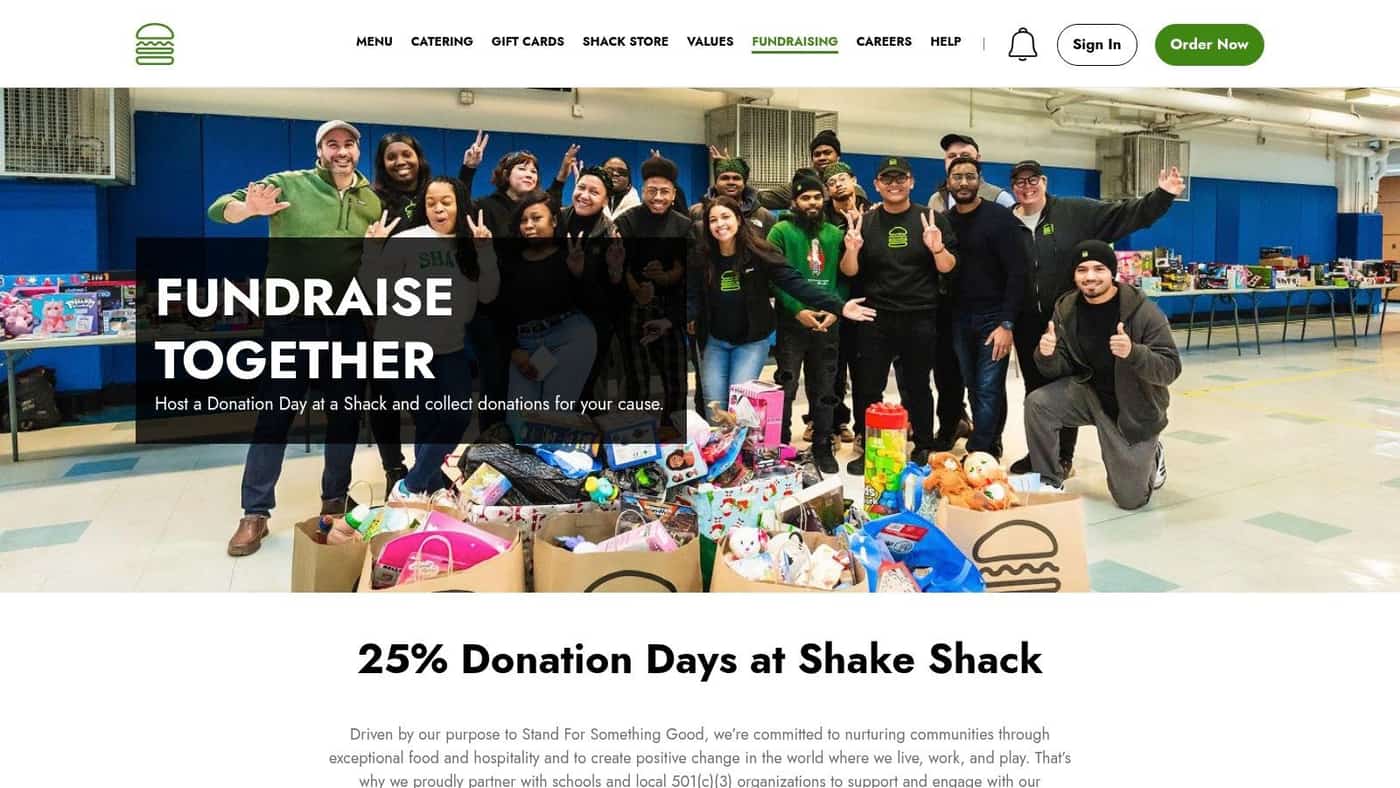
The planning notes for this article indicate a flat 25% donation model for scheduled events, with promotional materials provided. What I like most about that approach is clarity. When the message is easy to repeat, volunteers make fewer mistakes.
Best use case for Shake Shack
Shake Shack works best if you’re in a metro area and your audience values convenience and presentation. Professional promo assets can save staff time, especially if your communications person already has too much on their plate.
Reasons to consider it:
- Straightforward message: A flat 25% structure is easy to communicate when confirmed locally.
- Helpful promotional materials: That reduces design work for your team.
- Good event feel: Some groups get better response from recognizable, higher-interest brands.
The real limitation
Footprint matters. If the nearest location is inconvenient, donor enthusiasm falls off quickly. That’s especially true for school and church audiences who are fitting dinner around sports, rehearsals, and family schedules.
The other issue is that event rules may vary by location, especially around eligible order modes. Confirm those details before your first email goes out. Once supporters are confused, they rarely read the second explanation carefully.
The program in this guide is a scheduled Donation Day. Apply with the restaurant, then use the promo materials they provide.
Top 7 Restaurant Fundraiser Comparison
| Program | Implementation complexity | Resource requirements | Expected outcomes | Ideal use cases | Key advantages |
|---|---|---|---|---|---|
| Chipotle Mexican Grill | Low–Moderate, schedule event and distribute flyer or online code | Flyers or digital code promotion, meet $150 minimum sales | 25% of event sales if $150 threshold met; some exclusions apply | Local schools, teams, community groups with strong local turnout | High 25% giveback, automated reporting, in-store and online options |
| Panda Express | Moderate, choose local night or nationwide digital fundraiser; self‑service portal | Portal setup, digital code promotion for nationwide reach | Digital ~28% of pre‑tax sales; local events ~20% (market dependent) | Organizations with dispersed supporters or multi‑city donor bases | Rare nationwide digital option, high digital giveback, easy self‑service setup |
| Panera Bread | Moderate, scheduled Fundraising Night with digital code and flyer | Promote digital code/flyer; coordinate with local bakery‑cafe | Up to 25% of net sales (varies by location and order mix) | Family‑oriented groups, large community events, dispersed supporters where online code accepted | Broad footprint, online ordering code, strong brand familiarity |
| Noodles & Company | Low, consistent national process, all‑day or time‑window events | Basic promotion, supporters mention event or use online code | 25% of qualifying sales; exclusions apply | Schools and youth groups seeking simple, predictable fundraisers | Competitive flat 25% giveback, clear instructions, in‑store and digital participation |
| California Pizza Kitchen | Low, schedule event and share flyers or codes; coverage varies by location | Flyers/digital promotion; may include takeout/catering coordination | Typically 20% of eligible food & beverage sales | Family groups, corporate/team gatherings, events needing broad order mode support | Consistent program, many locations allow dine‑in, takeout, catering and online |
| MOD Pizza (MODGIVES) | Moderate, store‑level booking and confirmation of code tier | Flyers or MODGIVES code promotion; confirm store participation and percent | 20–25% of sales depending on location/event | Local organizations in MOD markets seeking higher tiers | Frequent availability of 25% tier, simple digital codes for app/online orders |
| Shake Shack | Low–Moderate, online application for Donation Day and scheduled event | Apply online, use provided promo kit and local promotion | Flat 25% of eligible sales during Donation Days | Urban/metro groups with nearby Shacks, organizations valuing branded assets | Flat 25% giveback, professional promotional materials, straightforward messaging |
Final Thoughts
A restaurant fundraiser usually looks simple from the outside. Pick a date, share a flyer, collect the check. In practice, the load spreads across staff calendars, supporter reminders, transaction tracking, and board-ready reporting. That gap is where these events either become a repeatable revenue stream or a small administrative mess.
The strongest choice is usually the restaurant your supporters will use, with rules your team can explain in one sentence. A higher giveback percentage helps, but only if supporters can order the right way and your staff can confirm what counted. The primary limitation in many campaigns is not restaurant interest. It is execution drift. Someone forgets the code, a volunteer shares an outdated flyer, or the deposit gets posted without a clear campaign tag.
That is why I recommend choosing the restaurant and the operating process together. The restaurant controls the public experience. Your internal system controls whether the event produces usable records after the meal is over. If promotion lives in email, contacts in a spreadsheet, gifts in accounting software, and follow-up notes in someone’s inbox, staff time disappears fast.
Local restaurants deserve serious consideration too. National chains bring consistency, but independents often give groups more room on timing, menu exceptions, and community promotion. I have seen smaller organizations do better with an owner who answers texts and cares about turnout than with a national brand that offers a cleaner form but less flexibility.
A few habits consistently save time and protect revenue:
- Choose for turnout first: A nearby, familiar restaurant with clear ordering rules usually outperforms a better-looking option that asks supporters to change their routine.
- Get the event terms in writing: Confirm dates, eligible order channels, promo codes, flyer requirements, exclusions, and payout timing before promotion starts.
- Build a simple promotion calendar: Send an announcement, a reminder a few days before, a day-of message, and a last-call post during the event window.
- Track the event like a real campaign: Record contacts, responses, revenue, and follow-up tasks in one place so the fundraiser adds to future donor work.
- Code income correctly at deposit: Assign the right fund, class, campaign, or program when money comes in, not weeks later during reconciliation.
This is the part many teams underestimate. The fundraiser itself lasts a few hours. The coordination, follow-up, and reporting can stretch for weeks if your information is scattered.
If you want one place to track the event, record the income correctly, follow up with donors, and keep your team on the same page, AlignMint is built for that reality. We combine fund accounting, donor management, volunteers, events, and marketing in one system, with a free tier for nonprofits under $100K and plan-based user allowances (1 on Free, up to 10 on Plus, up to 25 on Pro, and unlimited on Enterprise), so you can run restaurant fundraisers without stitching together separate tools.
Frequently Asked Questions
Ready to try AlignMint with your nonprofit?
Start free — set up donor tools, giving pages, and Minty. Upgrade when you need accounting.