

8 Easy Fundraising Ideas for Small Groups in 2026
Quick Answer: 8 Easy Fundraising Ideas for Small Groups
Eight low-cost fundraising ideas that work for small groups: virtual giving days, restaurant nights, product sales, peer-to-peer pages, raffles, community events, employer matches, and recurring giving drives. Pick one that matches your volunteer capacity, then run it through fundraising software so gifts, receipts, and follow-up stay connected.
For related tools, see nonprofit fundraising software and donor management.
More Mission, Less Fundraising Stress
You already know the hard part isn’t caring about the mission. It’s finding fundraising ideas that your team can run without burning out staff, board members, or volunteers. Most small groups don’t need another complicated campaign. They need something clear, affordable, and realistic for a calendar that’s already full.
That’s why the best easy fundraising ideas for small groups share the same traits. They’re simple to explain, quick to launch, and easy to repeat if they work. Some are best for fast cash. Others are better for donor acquisition, community visibility, or building a steadier base of support.
What follows is a practical list, not a fantasy plan built for a development department of ten. Each idea includes what it’s good for, where it can go wrong, who needs to help, rough cost guidance when the source supports it, and simple promotional copy you can adapt today.
1. Virtual Donation Campaigns & Online Giving Days
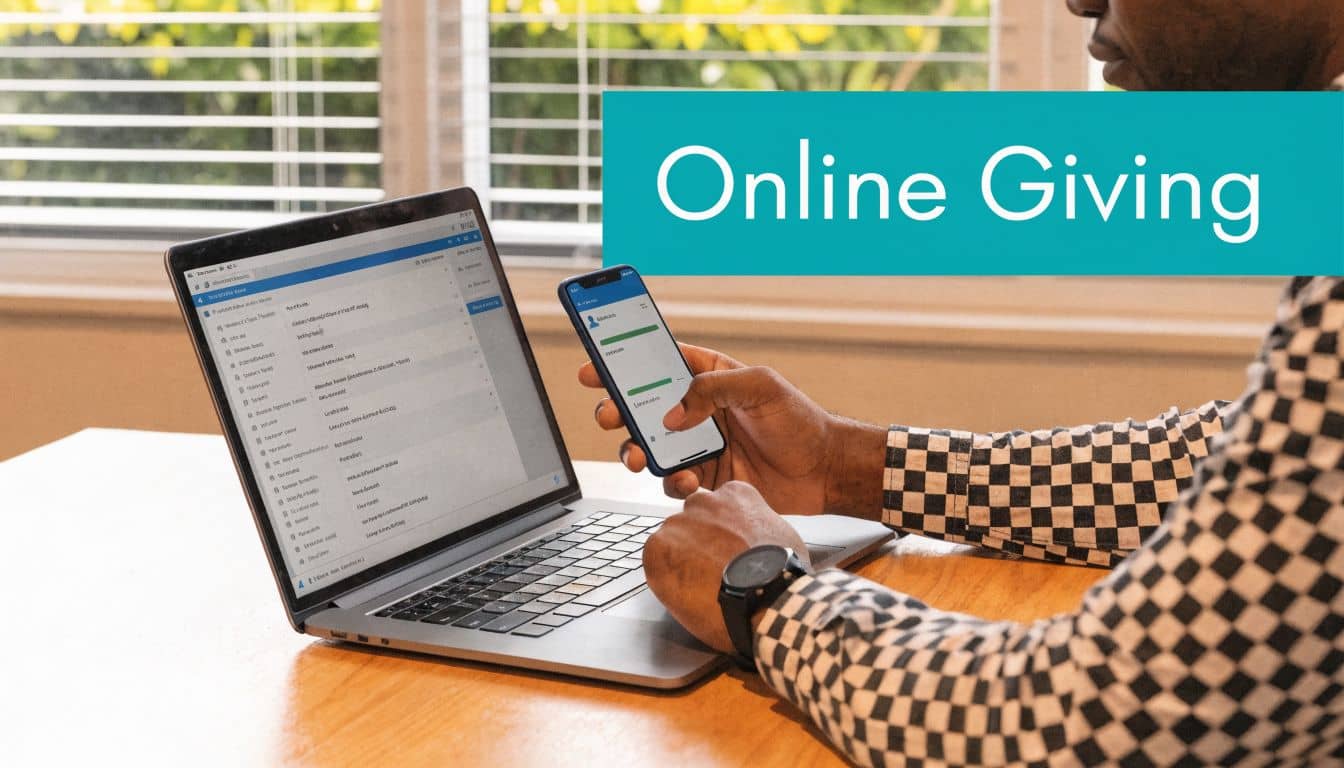
If your supporters are spread out, busy, or more likely to give from a phone than attend an event, start here. A focused online campaign can move quickly and doesn’t require tables, permits, food handling, or weather luck.
This works especially well for churches during holiday appeals, youth organizations with active parent networks, and community nonprofits that need a short, clear fundraising push. The mistake is treating it like “just send an email.” Online campaigns only work when the ask is specific and the follow-up is disciplined.
What it takes to run well
You don’t need a big team, but you do need one person who owns the timeline. Another person should handle email and social posting, and someone should monitor gifts and thank donors the same day if possible.
For setup, your main cost is usually time, not money. If your giving page is confusing, fix that first. Good nonprofit donation page best practices matter more than fancy graphics.
- Best fit: Year-end giving, holiday campaigns, emergency needs, matching gift pushes
- Volunteer roles: Copywriter, email sender, social poster, donor thank-you helper
- What often fails: Too many messages with no clear ask, weak donation page, no follow-up
Practical rule: If a supporter can’t understand your ask in one short sentence, your campaign isn’t ready.
Mini-playbook
Use one message across channels. Tell the same story in email, text, and social posts, then repeat it enough for people to notice. Most organizations under-communicate because they’re afraid of bothering supporters.
Ready-to-use copy:
Give today and help us keep this work moving. Every gift supports our mission right now, and your support helps us serve our community with consistency and care.
If you use AlignMint, having giving, donor records, marketing, and accounting together saves time. You can send the appeal, track who gave, and keep gift records tied to the right fund without rebuilding the report later.
2. Peer-to-Peer Fundraising
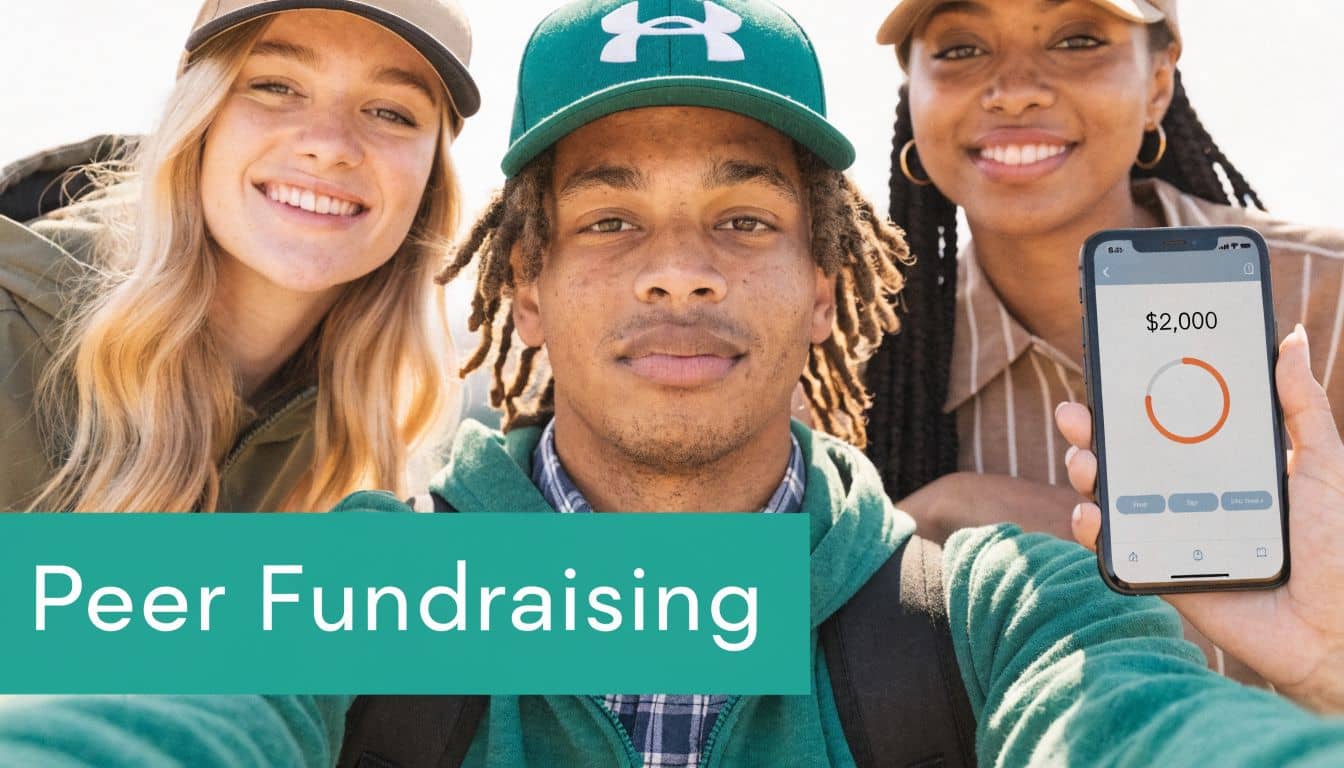
When your own list is small, borrow the reach of the people who already believe in you. Peer-to-peer fundraising works because supporters ask their own friends, family, and coworkers to give, which opens doors your organization can’t open alone.
This approach is especially useful for schools, church mission trips, youth teams, and community causes where supporters already have personal stories to share. It’s less labor-heavy than an event, but it does require structure.
Where the lift comes from
Peer-to-peer campaigns with competitive team structures do better than individual-only outreach. Research summarized by Givebutter notes that small groups using 3 to 5 competing teams with visible progress tracking see average dollars per participant increase by 40 to 60 percent compared with non-competitive campaigns, according to Givebutter’s small-group fundraising ideas.
That doesn’t mean every campaign needs a hard-sell contest. It means people respond when they can see progress and feel part of a team.
- Best fit: Walks, mission trips, scholarship funds, birthday fundraisers, youth campaigns
- Volunteer roles: Team captains, campaign coach, donor thank-you helper
- What often fails: No templates, unclear goals, no leaderboard or updates
Keep the structure simple. Supporters will fundraise for you, but they won’t write your campaign from scratch.
Mini-playbook
Give each participant a short starter kit. Include a personal fundraising page, sample email language, two social posts, and one thank-you template. If they have to guess what to say, many of them will never start.
Ready-to-use copy:
I’m raising support for an organization I care about. If you’re able to give, your gift will help them continue serving people who need it most.
If you want a practical overview of how this model overlaps with crowdfunding, this guide to crowd fundraising for nonprofits is worth reading.
3. Fundraising Events
Events still matter, especially when your real goal is community connection plus revenue. For small groups, the safest event choices are the ones people already understand. Bake sale. Pancake breakfast. Trivia night. Coffee sale after worship. Family movie night. A restaurant fundraiser night, where a local spot gives back a share of sales, is another low-lift option worth considering.
The important trade-off is this. Events can raise money, but they also absorb volunteer energy fast. They’re worth doing when they fit your audience and when you treat them as both fundraising and relationship-building.
Why bake sales still work
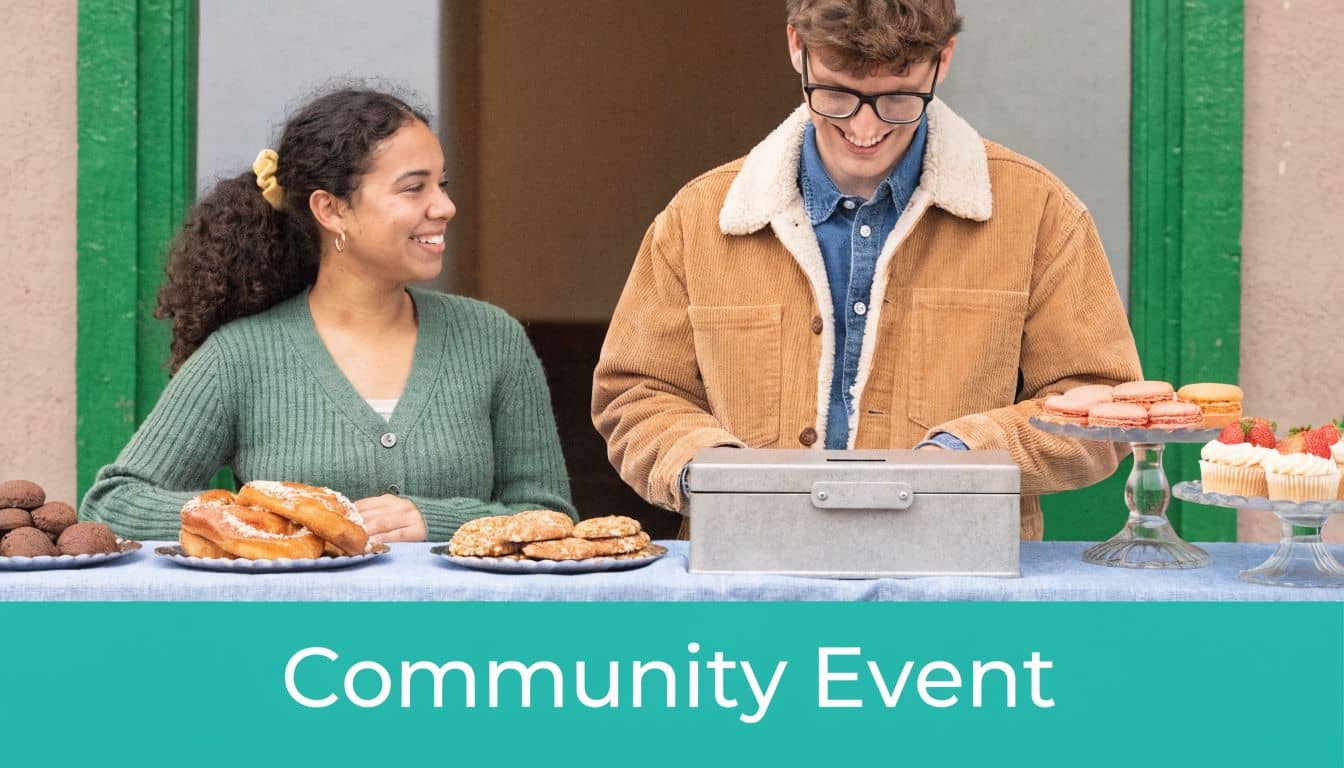
Bake sales remain one of the most enduring fundraising methods for small groups. Spotfund notes that modern analyses place typical revenue around $300 to $500 per event for groups of 10 to 20 volunteers, with startup costs often under $50 for ingredients and supplies, in its guide to easy fundraising ideas for small groups.
That’s useful because it sets expectations. A bake sale is rarely the answer to a major budget gap. It is often a very good answer for a quick, manageable fundraiser with broad community appeal.
Mini-playbook
For a small event, assign clear roles before you announce it. You need one setup lead, one cashier, one hospitality person, and one cleanup lead. When roles are fuzzy, the same two dependable volunteers end up doing everything.
- Best fit: Churches, schools, neighborhood groups, booster clubs
- Volunteer roles: Bakers or hosts, setup crew, cashier, cleanup lead
- What often fails: Overcomplicated menu, poor signage, weak location choice
Ready-to-use copy:
Join us this weekend for a simple fundraiser that supports our work. Stop by, bring a friend, and pick up a treat while helping our mission move forward.
If you’re running any kind of event, practical promotion matters more than perfect branding. These tips on how to promote an event are a good place to start.
4. Social Media Challenge Campaigns
A social challenge is one of the quickest easy fundraising ideas for small groups because it asks supporters to participate publicly, not just donate privately. That public action is the whole point. It gives your cause more visibility without the logistics of an event.
This is most effective when your supporters are already active online and your challenge is easy to copy. If people need instructions longer than a paragraph, it’s too complicated.
Make it easy to imitate
A good challenge has four parts. One simple action, one donation link, one nomination or tag, and one clear reason for doing it. Local youth groups often do well with this because participants like to share photos and short videos.
You don’t need a big production budget. You need consistency, a clear hashtag, and several supporters willing to post first. If your first wave is weak, the campaign usually stalls.
The easier the action, the better the participation. The more dignity and mission-fit in the idea, the better the long-term impression.
Mini-playbook
Ask a board member, staff member, volunteer, and one loyal donor to post during the first day. Seed the campaign before you expect the public to notice it. If you need practical inspiration, these social media fundraising ideas are useful, and some of the same habits overlap with these quick social media marketing wins.
- Best fit: Youth audiences, awareness campaigns, schools, community challenges
- Volunteer roles: Social poster, comment responder, content collector
- What often fails: No launch group, weak hashtag, donation link buried in profile
Ready-to-use copy:
We’re joining the challenge to support a cause that matters to us. Post your version, tag three friends, and give if you can.
5. Grant Writing And Foundation Grants
Grants are not easy in the sense of instant. They are easy in a different way. One strong application can produce meaningful support without planning a public event, staffing a table, or asking your volunteers to sell anything.
The trade-off is timing. Grants reward preparation, clean financial records, and patient follow-up. If your records are messy, grant work gets harder quickly.
What small groups often get wrong
Too many organizations chase national funders first. In practice, smaller local foundations and corporate giving programs are often easier to approach because they already care about the community you serve.
Another common mistake is weak fund tracking. If a grant supports a specific program, you need to show where that money went. That’s where true fund accounting matters. Not classes or workarounds, but real restricted fund tracking.
- Best fit: Program expansion, equipment, pilot projects, capacity support
- Volunteer roles: Grant researcher, proposal writer, budget helper, report coordinator
- What often fails: Poor fit with funder priorities, vague budgets, weak reporting systems
Mini-playbook
Build one reusable grant packet. Keep your mission summary, leadership list, budget, program description, and financial documents current. That saves time every time a new opportunity opens.
Ready-to-use copy for a short concept note:
Our organization serves this community through focused, practical programs. We’re seeking support for a defined need, with clear financial oversight and documented outcomes.
For operational discipline, this guide on grant management best practices is worth keeping close.
6. Monthly Recurring Donor Programs
If you want less fundraising stress next year, build monthly giving now. Event revenue can be helpful, but recurring giving gives you something events rarely provide, which is predictability.
This matters for small organizations because planning gets easier when part of your revenue is already committed. You can budget with more confidence, and your staff spends less time starting from zero each month.
Why this deserves more attention
Monthly recurring giving generates 2.4X more revenue on average than one-time gifts, according to 4aGoodCause’s guide to quick and easy fundraising ideas. That’s why I rarely advise leaders to treat small events as the whole strategy. Events can bring people in. Monthly giving helps keep funding steady.
This doesn’t have to be complicated. A simple sustainer club with a clear name, a short explanation, and easy signup can do a lot.
If someone has already given twice, asking for a monthly gift is often more sensible than inviting them to another small event.
Mini-playbook
Start with your current donors, not strangers. People who already trust your work are the most natural first sustainers. Then make the offer specific and easy to understand.
- Best fit: Human services, churches, education nonprofits, shelters, small arts groups
- Volunteer roles: Donor outreach helper, thank-you caller, monthly update writer
- What often fails: No follow-up, clunky signup, treating sustainers like ordinary one-time donors
Ready-to-use copy:
A monthly gift helps us plan, serve, and respond with more consistency. Join our sustaining community and support this work all year long.
Strong follow-up matters here. A thoughtful welcome sequence and regular updates make a recurring program feel personal. If you want a practical framework, this email automation guide can help.
7. Workplace Giving And Employee Matching Programs
Many donors can give more than they think because their employer will match the gift. The problem is that nonprofits often mention matching gifts once, bury it on a webpage, and never bring it up again.
Workplace giving is especially useful if your supporters include professionals at hospitals, banks, school systems, large local employers, or regional businesses with community programs. This isn’t flashy fundraising, but it’s one of the cleaner wins available.
Keep the ask simple
Donors won’t hunt for forms or policy details unless they’re highly motivated. Your job is to remind them at the right time and make the next step obvious. Add matching-gift reminders to receipts, thank-you emails, event follow-up, and campaign pages.
For employer campaigns, one strong relationship with an HR leader can matter more than broad public outreach. Offer short copy, a speaker, and a clean impact summary they can share internally.
- Best fit: Organizations with professional donor bases and local business ties
- Volunteer roles: Employer relationship lead, matching-gift tracker, impact reporter
- What often fails: No reminder process, no employer contact, no follow-through
Mini-playbook
Create one short employer outreach message and one short donor reminder. Repeat them often enough that supporters can act without searching for information.
Ready-to-use copy for donors:
Your employer may be able to match your gift. Check with your workplace giving program and help your support go further.
Ready-to-use copy for employers:
We’d welcome the chance to partner with your team through employee giving, matching gifts, or volunteer opportunities tied to local community impact.
8. Skill-Based Volunteering And Pro Bono Services
Not every fundraising gain arrives as cash. Sometimes the smartest move is getting expert help you would otherwise need to pay for. That can free up real money in your budget and improve the quality of your work.
For small groups, this is often the most underused option on the list. Board members, parents, church members, retired professionals, and local firms may be willing to help with accounting, legal review, design, marketing, technology, or HR.
Treat it like a real assignment
The biggest mistake is asking vaguely. “Can anyone help with marketing?” is too broad. “We need a volunteer to rewrite three donor emails over the next month” is much better.
The same is true for finance and compliance work. If a CPA volunteers to review your records, someone on your team still needs to gather documents, answer questions, and keep the project moving. Pro bono help still needs management.
- Best fit: Organizations short on cash but rich in community relationships
- Volunteer roles: Project lead, staff liaison, subject-matter volunteer
- What often fails: Poor scope, no deadline, no internal owner
Mini-playbook
Make a short list of projects that are concrete and time-bound. Website refresh. Event flyer design. Donor thank-you process review. Volunteer handbook update. Grant budget cleanup. Then match the project to a person, not just a general request.
Ready-to-use copy:
We’re looking for a volunteer with professional experience in a defined area who can help us complete a focused project that supports our mission.
If you track volunteer skills, hours, and communications in the same system as your donor and event work, this becomes much easier to repeat. It also helps when you want to recognize volunteers properly and report in-kind support clearly.
8 Easy Fundraising Ideas: Side-by-Side Comparison
| Method | Implementation complexity | Resource requirements | Expected outcomes | Ideal use cases | Key advantages |
|---|---|---|---|---|---|
| Virtual Donation Campaigns & Online Giving Days | Low–Medium: platform setup and list management | Email/SMS/social tools, donation pages, small staff | Rapid donation influx; real-time metrics; variable totals | Short-term appeals, Giving Tuesday, geographically dispersed supporters | Low overhead; highly grows with you; fast feedback |
| Peer-to-Peer Fundraising (Personal Fundraising Pages) | Low: platform + getting started and support | Fundraiser pages, shareable assets, coordinator support | Expanded reach and donor acquisition; revenue varies by fundraiser | Community events, races, youth engagement, peer networks | Uses personal networks; low organizational effort |
| Fundraising Events (Virtual & In-Person) | Medium–High: logistics, ticketing, volunteer coordination | Venue or virtual platform, ticketing, volunteers, promo budget | Moderate–High revenue plus community engagement; mixed costs | Local fundraising, donor cultivation, hybrid gatherings | Builds community; multiple revenue streams |
| Social Media Challenge Campaigns | Low–Medium: creative concept and seeding | Social content, influencers/seed participants, tracking tools | Potential viral reach and engagement; funds unpredictable | Awareness drives, youth-oriented campaigns, organic outreach | High organic reach; minimal production cost |
| Grant Writing & Foundation Grants | High: research, proposal writing, compliance | Skilled grant writers, financial records, time for reporting | Larger, often restricted awards; multi-month timelines | Program funding, capacity building, multi-year projects | Larger sums; credibility and sustained support |
| Monthly Recurring Donor Programs (Sustainer Clubs) | Medium: billing setup and retention strategy | Recurring payment system, CRM, ongoing communications | Predictable, stable monthly revenue; higher lifetime value | Operating support, long-term program funding, donor retention | Predictable income; improved donor LTV |
| Workplace Giving & Employee Matching Programs | Medium: employer outreach and coordination | Employer partnerships, payroll/match processes, admin | Stable donations amplified by matching gifts | Corporate engagement, workplace campaigns, local employers | Matching multiplier; access to broad employee base |
| Skill-Based Volunteering & Pro Bono Services | Medium: project scoping and volunteer management | Professional volunteers, project briefs, oversight staff | Cost savings, capacity build, in-kind service value | Technical, legal, marketing, or financial operational needs | High-value services without cash expense |
Bring Your Fundraising and Finances Together
Choosing the right fundraiser is only the first half of the job. The harder half is keeping donations, event records, donor follow-up, volunteer coordination, and accounting from turning into a manual mess. That’s where many small organizations get stuck. The fundraiser itself may go well, but the reporting and cleanup work drags on for weeks.
This is why disconnected tools become expensive, even when each one seems manageable on its own. One system holds donor names. Another sends emails. Another tracks ticket sales. Accounting sits somewhere else entirely. Then someone exports spreadsheets, reconciles payments by hand, and tries to remember which gifts were restricted.
Some platforms do part of this very well. Blackbaud Financial Edge is strong on finance for organizations that need depth and can support a more complex setup. Aplos is familiar to many churches and smaller nonprofits that want straightforward accounting. Those tools have real strengths. The gap is that many teams still need separate systems for marketing, donor management, volunteers, or events, which creates information silos.
We built AlignMint to solve that problem by bringing your work together in one place. Our platform combines donor management, fundraising events, marketing, and true fund accounting in a single system, so your team can run a campaign and keep the financial record clean at the same time.
That matters most when your team is small. If you run a bake sale, a giving day, a peer campaign, and a monthly donor program in the same year, you shouldn’t have to re-enter data after each one. You should be able to track gifts, receipts, restricted balances, contacts, and follow-up without exporting anything.
We also know many executive directors are tired of software pricing that punishes collaboration. Our free plan for nonprofits under $100K includes plan-based user allowances (1 on Free, up to 10 on Plus, up to 25 on Pro, and unlimited on Enterprise), so staff, finance help, and volunteer leaders can all work in the same system. User allowances published by plan. No juggling access based on budget.
For groups that want practical support, not hype, that matters. You can send emails, manage donors, coordinate events, track volunteer activity, and keep the books accurate in one place. If you need help understanding the accounting side of cleanup and reconciliation, this guide to streamlining bank statement data for accounting is a useful companion read.
The best easy fundraising ideas for small groups are the ones you can repeat without exhausting your people. The best operations system is the one that makes those repeat efforts easier every time.
If you’re ready to spend less time stitching together spreadsheets and more time funding your mission, take a look at AlignMint. We built it for nonprofits, churches, schools, and small teams that need donor management, marketing, volunteers, events, and true fund accounting in one practical system.
More fundraising guides: Fundraising ideas hub · Online fundraising ideas · Easy ideas for small groups · Nonprofit fundraising tools
Ready to try AlignMint with your nonprofit?
Start free — set up donor tools, giving pages, and Minty. Upgrade when you need accounting.