

10 Fundraising Online Ideas for Nonprofits in 2026
For related tools, see nonprofit fundraising software and donor management.
Quick Answer: 10 Fundraising Online Ideas for Nonprofits in 2026
Pricing as of May 2026. Check vendor websites for current pricing.
The best online fundraising ideas are the ones your team can actually run, measure, and follow up on.
Find Your Next Great Fundraising Idea
You’re in a familiar spot. The board wants stronger revenue. Donors need consistent follow-up. Staff time is already stretched. Then you search for fundraising online ideas and find a flood of advice that treats every tactic as quick, cheap, and easy to run.
Real fundraising rarely works that way.
The right online strategy depends on capacity as much as creativity. A peer-to-peer campaign can bring in new names, but it also needs supporter coaching. A virtual event can produce strong engagement, but only if registration, reminders, giving, and follow-up all stay organized. An email appeal may cost very little to send, yet still underperform if your donor records are messy or your donation page creates friction.
This guide is written for that day-to-day reality. It covers ten practical options, and for each one, it looks at the trade-offs, likely effort, cost, examples, and the numbers worth tracking. The goal is not to hand you a long wish list. The goal is to help you choose a few online fundraising ideas that fit your team and can be managed in one operating system instead of five disconnected tools.
Small organizations often feel this pressure most. According to the 2024 M+R Benchmarks study, digital fundraising now plays a meaningful role in nonprofit revenue and donor acquisition across the sector, especially for organizations that rely on direct response channels and mobile-friendly giving experiences. If you run a church, school, small nonprofit, or fiscal sponsor, online fundraising supports year-round stability, not just year-end campaigns.
Mobile giving also shapes the decision. As noted in the 2024 M+R Benchmarks report, a large share of nonprofit email traffic and donation activity now happens on mobile devices. If a page is hard to use on a phone, response rates drop fast.
The bigger problem usually is not a shortage of ideas. It is tool sprawl. Donation forms live in one system, email in another, event registration somewhere else, and finance has to reconcile the whole thing manually at month end. Connected tools solve that problem. When fundraising, donor records, communications, volunteer activity, and reporting stay in one place, it becomes much easier to test ideas, see what worked, and explain results to your board with confidence.
Best Online Fundraising Ideas for 2026
If you need a quick starting point, use this table before choosing tactics. The best idea is usually the one that fits your team capacity and your follow-up process.
| Idea | Best fit | What to connect before launch |
|---|---|---|
| Peer-to-peer pages | Donor acquisition, birthdays, memorials, board ambassadors | Participant pages, donor records, campaign fund, thank-you emails |
| Focused donation page | Year-end, emergency need, scholarship, church campaign | Gift designation, receipt language, mobile checkout, campaign tracking |
| Virtual event | Spread-out supporters, education, donor briefings | Registration, reminders, giving link, attendee follow-up |
| Email appeal | Active donor list, monthly updates, year-end giving | Segments, donation page, receipts, donor task follow-up |
| Text appeal | Giving day, deadline push, live event reminder | Opt-in list, mobile donation page, recent-donor suppression |
| Matching gift campaign | Board challenge, employer match, short deadline | Match rules, progress tracking, original gift and matching gift records |
| Video appeal | Personal donor story, school/church campaign, urgent need | Video page, donation form, follow-up sequence |
| Recurring giving drive | Stabilizing revenue and retention | Monthly option, donor portal, payment update flow, welcome series |
| Online auction or ticketed event | Gala, school fundraiser, community event | Ticketing, fair-market value, donor receipts, event revenue reports |
| Volunteer-to-donor campaign | Strong volunteer community | Volunteer records, service history, donor segmentation, stewardship notes |
For 2026, the winners are not necessarily the flashiest campaigns. The strongest online fundraising ideas are the ones where a donor can give quickly, receive a clear receipt, and hear what happened next without your staff stitching together five systems.
1. Peer-to-Peer P2P Fundraising Campaigns
A board member agrees to help. A parent wants to fundraise for the arts program. A volunteer offers to run a birthday campaign. P2P works best in that moment, when someone already has a personal reason to ask and your organization gives them a clear way to do it.
Used well, peer-to-peer fundraising expands your reach beyond your current donor file. Classy reports that many donors who give through peer-to-peer campaigns are first-time supporters of the organization, which is why this approach is so useful for schools, churches, memorial funds, scholarship drives, and sponsored projects where the connection feels personal. American Cancer Society walks and St. Jude participant pages show the model at scale. Smaller teams can run the same play with simpler goals and tighter support.
The mistake I see is not strategy. It is under-supporting fundraisers. Staff recruit 30 people, hand them a blank page, and hope enthusiasm carries the campaign.
It rarely does.
Strong P2P campaigns give supporters a starter kit that removes friction from day one:
- A prewritten story: One short paragraph they can copy into an email, text, or social post.
- A page template: Photos, campaign language, gift amounts, and designations already loaded.
- A communication schedule: Reminders before launch, mid-campaign nudges, milestone notes, and thank-yous.
- A clear ask: Tell fundraisers whether success means five donors, $500 raised, or three recurring gifts.
If you want better page performance, review these donation page best practices for nonprofits. The same principles apply here. Clear copy, mobile-friendly forms, and fewer choices usually outperform pages that try to explain everything.
What it takes
P2P is not hard because of the technology. It is hard because people need coaching.
Expect front-end work. Someone on your team needs to recruit participants, answer questions, monitor page activity, and step in when a fundraiser stalls out. That trade-off is worth it when your goal is donor acquisition or community visibility. It is less attractive if your team is already stretched and needs a quick campaign with minimal follow-up.
Cost, effort, and a realistic use case
For a small organization, a focused P2P campaign is usually the right scope. Four to six weeks is enough. A church raising money for a building repair fund might recruit 15 families. A school could ask eight parent leaders to each raise support for a field trip or arts initiative. A nonprofit with an active board might run a birthday or ambassador campaign tied to one specific program need.
Costs are usually moderate. The bigger expense is staff time, not software fees. If your fundraising pages, donor records, email, and accounting codes live in separate tools, the cleanup work at the end can erase a lot of the upside. An all-in-one platform matters here because every gift, designation, participant page, and donor record lands in one system. That saves real hours and reduces posting errors.
Metrics that matter
Track a short list:
- Number of active fundraisers, not just people who signed up
- Average raised per fundraiser
- Number of first-time donors
- Donor conversion rate on participant pages
- Percentage of gifts designated correctly
- Follow-up conversion, especially whether new donors give again within 90 days
Form setup also affects results more than many teams expect. If you are refining asks, fields, and donor flow, these AI insights for fundraising forms can help you spot where completion drops off.
For organizations with modest staff, P2P works best as a campaign, not an always-on program. Keep the goal specific, give participants real support, and run it inside a system that connects fundraising, CRM, communications, and finance from the start.
2. Online Donation Pages and Giving Platforms
A donor opens your appeal on their phone while waiting in line, taps the link, and decides in seconds whether to finish the gift. That moment is the whole job of your donation page.
If the page loads slowly, asks for too much, or sends the donor hunting for the right fund, conversion drops fast. I have seen organizations spend weeks polishing an appeal email, then lose gifts on a generic form that looked disconnected from the campaign.
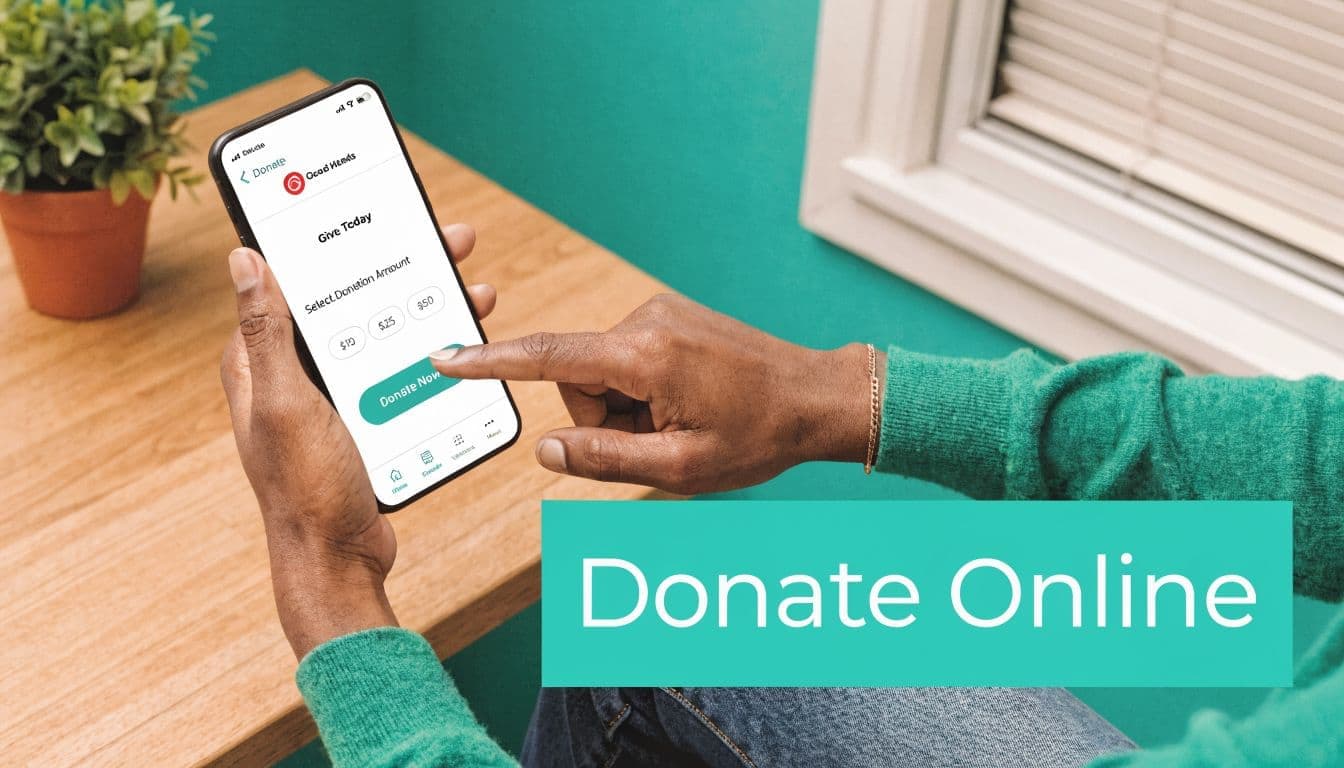
A good giving page carries the same message the donor just responded to. It should match the appeal, state the need clearly, and make the next step easy. Charity: Water does this well with focused campaign pages. A local food pantry can do the same with a simpler setup: one need, one ask amount range, one reason the gift matters now.
What to include on the page
Before changing the form, review these donation page best practices for nonprofits. The basics decide more results than fancy design.
- A specific purpose: Tell donors exactly what their gift will fund.
- Short forms: Ask only for information you will use right away.
- Suggested amounts: Give donors a starting point instead of a blank decision.
- Monthly giving option: Put recurring giving near the top if it matters to your model.
- Clear fund selection: If donors can choose scholarships, programs, or missions, those choices need to map correctly in your records.
If you are trimming fields or reworking the ask flow, AI insights for fundraising forms is a useful outside reference.
Effort, cost, and where the trade-offs are
This is usually a low-to-moderate effort project. One strong general donation page can go live quickly. Campaign-specific pages take more coordination because the copy, gift designations, receipts, and tracking all need to match.
The trade-off is not page design versus no page design. It is speed versus precision.
A single catch-all form is faster to maintain, but it weakens campaign performance and creates cleanup later. A separate page for year-end, memorial gifts, event sponsorships, and restricted programs gives donors more confidence, but only if your team can manage the extra setup without introducing errors.
That is why the platform choice matters. If your giving page, donor database, email receipts, and accounting codes live in one system, your staff can launch more customized pages without creating a reconciliation project at month-end. An all-in-one setup solves a common problem for small teams: too many tools, too many exports, and too many chances to miscode a restricted gift.
What usually goes wrong
The first problem is mismatch. Donors click on a campaign about camp scholarships and land on a broad annual fund page. That forces them to stop and reconsider.
The second problem is friction. Extra fields, weak mobile formatting, and confusing payment options hinder completed gifts.
The third problem is operational. If someone gives to a restricted fund, your system should record that designation immediately and carry it into acknowledgments, reports, and finance coding. When that handoff fails, staff spend hours fixing records by hand.
Metrics that matter
Track a short list and review it by page, not just across all online giving:
- Conversion rate from page visit to completed gift
- Mobile completion rate
- Average gift size by page or campaign
- Monthly donor signup rate
- Form abandonment rate
- Percentage of gifts coded to the correct fund on first entry
If one page underperforms, start with the basics. Tighten the headline. Cut fields. Match the page copy to the appeal source. Check the mobile experience on an actual phone, not just a desktop preview.
Donation pages look simple. In practice, they sit at the intersection of fundraising, donor experience, and back-office accuracy. The strongest setup gives your team both: a page that converts well and a system that records every gift correctly without extra cleanup.
3. Virtual Fundraising Events and Webinars
Virtual events still work well when the value is clear and the format is tight. They’re especially useful if your supporters are spread across regions, if your audience includes older donors who prefer attending from home, or if you want to teach as well as raise money.
The strongest virtual events don’t try to copy an in-person gala. They use the screen well. A school can host a live update with student performances. A church can stream a special concert and mission appeal. A nonprofit can run a short issue briefing with donor stories and a direct invitation to give.
Keep the event focused
Long virtual programs lose energy fast. Keep your run of show disciplined and your ask direct.
A practical format often looks like this:
- Open with mission: Start with the need, not housekeeping.
- Use one host: Too many voices slows the pace.
- Mix live and pre-recorded segments: This reduces technical risk and keeps quality high.
- Make giving easy: Put the donation link where people can act without searching.
Where the hidden work lives
Virtual events are easier to host than ballroom events, but they’re not effortless. The primary work is promotion, speaker prep, follow-up, and data cleanup after the event.
Connected tools are vital. If event registration, donation records, and post-event outreach are disconnected, your staff loses context. One person attends, another gives, a third asks for a recording, and now three systems need updating. An all-in-one platform reduces that friction because the same record can track attendance, giving, and follow-up.
Acknowledge the strengths of event-focused tools like Eventbrite or auction-focused tools like OneCause. They can be good at registration or event execution. The gap for many smaller organizations is what happens after the event, when finance, donor records, and communication need to line up.
4. Email Fundraising Campaigns and Donor Newsletters
A donor opens your message at 6:30 a.m. on a phone, while getting ready for work. You have a few lines to show why this matters and one clear next step. That is why email still works. It gives you direct access to people who already said they want to hear from you.
Email remains one of the steadier online fundraising channels for nonprofits, according to the M+R Benchmarks study. The practical takeaway is simple. If your list is active and your message matches the moment, email should be part of your core fundraising plan.
Build emails around one job
Teams lose results when one email tries to act as an appeal, newsletter, event update, volunteer bulletin, and annual report at the same time. Readers skim, the purpose gets muddy, and the donation link feels secondary.
A stronger approach is to assign each send one job. Raise money. Report impact. Invite attendance. Thank donors. You can still run a newsletter, but even a newsletter needs a clear primary action.
What usually improves response:
- Lead with a real story: Start with one person, one family, or one program result.
- State the ask before the scroll gets long: Readers should know early what support will do.
- Send donors to the right page: A scholarship appeal should land on a scholarship giving page, not your general donation form.
- Set up immediate thanks: Automatic receipts are administrative. A prompt, human thank-you builds confidence.
Segment enough to avoid obvious mistakes
You do not need an advanced digital team to segment well. You need clean records and a few practical groups.
First-time donors need a different message than long-time major donors. Monthly givers usually should not receive the same emergency appeal cadence as lapsed donors. School parents, church members, alumni, volunteers, and event attendees may all care about the same mission, but they do not respond to the same framing.
Relevance beats polish.
This is also where the operational trade-off shows up. Tools like Mailchimp, Constant Contact, and Kit are useful for sending email and testing subject lines. Their limitation appears when the giving history, event participation, pledges, and accounting records live in separate systems. Staff end up exporting spreadsheets, checking who already gave, and worrying about sending the wrong ask to the wrong donor.
An all-in-one platform solves a very practical problem here. It gives your team one place to see communication history, donation records, campaign responses, and follow-up tasks. That means fewer list mistakes, faster acknowledgments, and reporting that finance and development can both trust.
Effort, cost, and metrics to watch
Email is usually low cash cost and moderate staff effort. The hidden work sits in list hygiene, writing, segmentation, and follow-up.
For a small team, a realistic starting plan looks like this:
- Effort: 3 to 6 hours for a basic appeal, more if you are segmenting carefully
- Direct cost: Usually your email platform fee and staff time
- Best use cases: Year-end giving, monthly donor conversion, urgent needs, impact updates, donor retention
- Examples: A one-story spring appeal, a three-part year-end sequence, a new-donor welcome series, a monthly program update with one soft ask
- Metrics: Open rate, click rate, conversion rate, unsubscribe rate, average gift, and revenue per email sent
The metric I watch first is conversion. High opens with low giving usually mean the message created interest but the ask, landing page, or audience match was off. Low opens point to list quality, timing, or subject line problems. That distinction matters because the fix is different.
Well-run email fundraising is rarely flashy. It is consistent, relevant, and tied to clean operations. That is what turns a newsletter from a routine task into a channel that keeps donors informed and giving.
5. Text SMS Fundraising and Mobile Giving
It is 3:30 p.m. on the last day of a giving campaign. Email has already gone out. Social posts are live. You still need a fast way to reach supporters who will see the message before dinner. That is where text giving earns its place.
SMS works well for short windows, simple asks, and mobile-first donors. I have seen it perform best for giving days, event reminders, church offerings, school campaigns, and urgent needs where one clear action matters more than a long story. The trade-off is simple. Text gets attention, but it gives you very little room to explain.
Use SMS with discipline
Text messages land in a more personal space than email. That means your margin for error is smaller. Send too often, send without clear consent, or send people to a clunky form, and response drops fast.
A sound SMS program usually comes down to three operating rules:
- Get clear opt-in: Supporters should know they are agreeing to receive fundraising texts.
- Keep the copy tight: One purpose, one link, one ask.
- Match the timing to the moment: Send while the update, reminder, or deadline is still relevant.
Mobile giving keeps growing because donors live on their phones. The practical takeaway is straightforward. Your donation page has to load quickly, display well on a small screen, and let someone finish a gift in less than a minute.
Best use cases, effort, and what to measure
SMS is usually low to moderate staff effort and moderate direct cost, depending on volume and platform fees. It is rarely the right primary channel for a full campaign. It is a strong support channel for a campaign already running elsewhere.
For a small team, the planning frame looks like this:
- Effort: 1 to 3 hours for a basic text sequence, plus setup time for consent and list management
- Direct cost: Platform fee, text volume charges, and staff time
- Best use cases: Final-day reminders, event attendance prompts, giving day pushes, live progress updates, short deadline campaigns
- Examples: A morning giving day launch text, a two-hour event reminder with donation link, a final-night match reminder tied to a mobile form
- Metrics: Click rate, conversion rate, opt-out rate, average gift, and total revenue per message sent
The first metric to watch is opt-out rate. If people are leaving the list after each send, the issue is usually frequency, relevance, or audience selection. If clicks are healthy but gifts are weak, the problem is often the mobile donation flow, not the text itself.
Text also works well in campaign formats that depend on momentum and public participation. If you are pairing SMS with a short fundraising push, this guide to crowdfunding campaign structure for nonprofits can help you map timing, updates, and donor flow. Some teams also borrow participation ideas from community organizing models built around using collective intelligence, then adapt them carefully for donors and volunteers.
The operational side matters more than many teams expect. If your texting tool sits apart from your donor records, staff can easily send appeals to people who already gave, miss follow-up tasks, or lose track of who opted in. When SMS lives inside the same platform as donations, campaign history, acknowledgments, and contact records, the channel becomes much easier to use well. You can suppress recent donors, trigger thank-yous quickly, and report results without stitching together three different systems.
That is the primary value of mobile giving for a non-technical director. It is not just about sending a text. It is about running a timely campaign without creating another spreadsheet, another export, or another place for donor data to go out of sync.
6. Crowdfunding and Matching Gift Campaigns
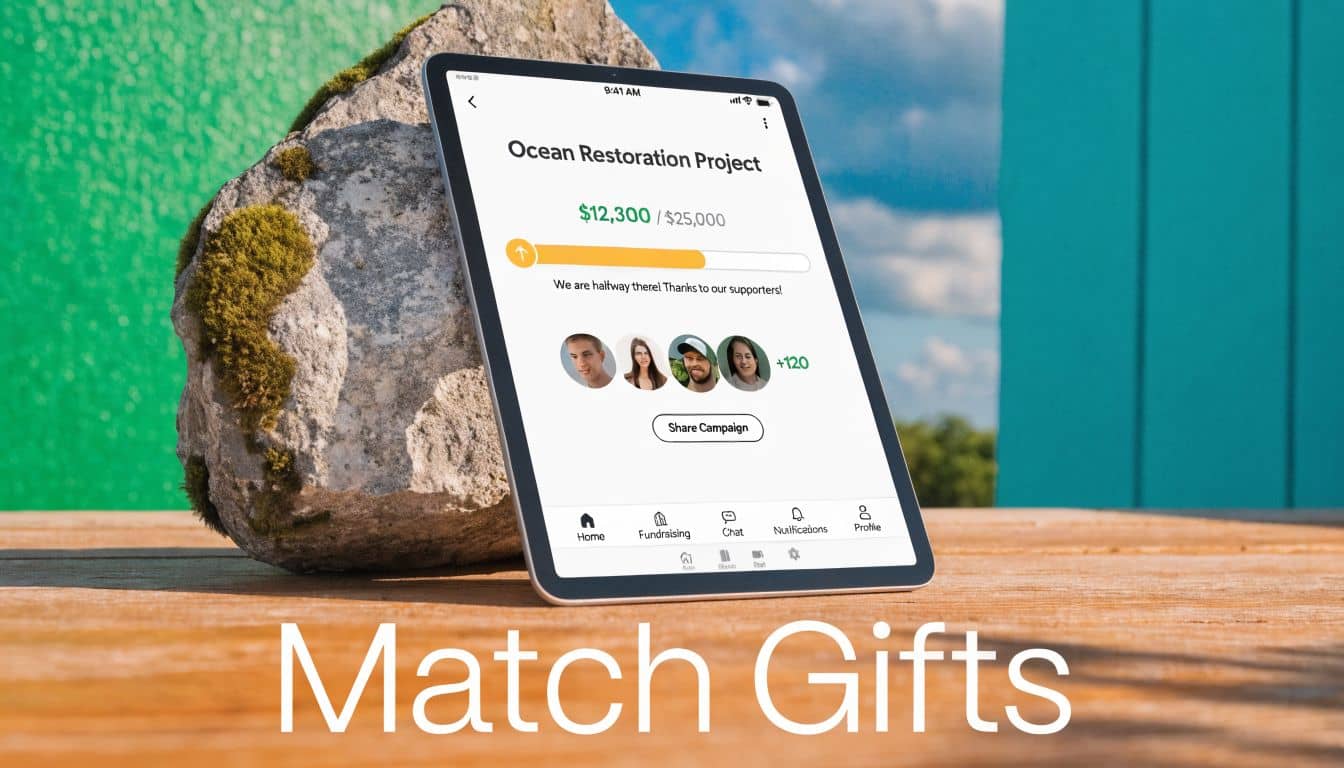
Crowdfunding works when the goal is concrete and easy to picture. Matching gifts work when the deadline and the match terms are simple. Put them together, and you have one of the strongest short-run fundraising online ideas for a specific need.
A school might raise money for playground equipment. A church might fund a mission trip. A community nonprofit might support a van purchase, kitchen upgrade, or scholarship pool. The formula is the same. Name the need, show progress, and make the ask feel immediate.
For a deeper look at campaign structure, see crowd fundraising for nonprofits. It’s one of the clearest ways to think through timeline, message, and donor flow.
You can also borrow creative participation ideas from broader community examples, such as using collective intelligence in crowdsourcing, then adapt them carefully to a nonprofit setting.
Keep the campaign concrete
Crowdfunding struggles when the need is broad and abstract. “Support our mission” is harder to rally around than “Help equip the new after-school room.”
Matching campaigns add urgency, but only if donors understand the terms right away. Avoid cute language. State who is matching, when the match ends, and what gifts qualify.
A match should remove hesitation, not create math homework.
The operational side matters
This kind of campaign often brings in many first-time or low-dollar gifts quickly. That’s good news, but it creates follow-up work. You need receipting, acknowledgment, and correct fund coding from the first day.
Tools like GoFundMe and Classy can help with campaign visibility and public sharing. Their strength is campaign presentation. If you run restricted giving, grants, or multiple internal funds, make sure your accounting side can absorb the activity without manual reentry.
7. Social Media Fundraising and Giving Platforms
A supporter sees your post during lunch, shares it with three friends, and one of them gives that afternoon. That is the practical value of social media. It spreads stories fast and lowers the barrier to first contact.
Used well, social media helps your organization get attention, collect campaign traffic, and support peer sharing. Used poorly, it creates scattered donor activity across Facebook, Instagram, YouTube, and third-party giving tools that staff then have to reconcile by hand. For a non-technical director, that trade-off matters. Reach is useful. Clean records matter too.
Choose channels based on staff capacity, not trends
Facebook still performs well for many churches, local service organizations, and older donor audiences. Instagram fits schools, arts groups, and programs with strong photos or short videos. YouTube earns its place if you already have video content with a clear purpose, such as testimonials, program updates, or event recaps. TikTok can produce reach, but only for teams that can post often and match the tone of the platform without sounding forced.
A small team does not need to be everywhere.
It needs one or two channels it can run consistently, with a clear path from post to donation page to donor record. For practical examples, these nonprofit donor retention strategies are useful because social gifts only matter long term if your team can follow up well after the first click. If your staff is testing supporter-created short videos, platforms like ShortGenius AI UGC ad platform show how organizations are organizing that content, though approval and brand review still need human judgment.
Treat social as the top of the funnel
Social platforms are strong at discovery and weak at ownership. If someone gives through a native fundraiser or a third-party social tool, your team may get limited donor details, delayed reporting, or inconsistent campaign coding. That makes acknowledgment, segmentation, and future asks harder than they should be.
I have seen this problem more than once. The campaign looks busy in public, but the development team cannot easily tell who gave, which fund should receive the gift, or whether that donor ever received a proper thank-you.
The fix is straightforward. Build social campaigns around a central system that handles donation pages, receipting, fund tracking, and donor records in one place. Social should send people into your operating platform, not become a side system your staff has to clean up later.
What success looks like in practice
A good social fundraising setup is simple to explain:
Post a story. Link to one campaign page. Capture the donor correctly. Send the receipt immediately. Assign the fund properly. Follow up within days, not weeks.
That structure keeps social media useful without turning it into an administrative mess. Social can start the relationship. Your main platform should manage the rest.
8. Recurring Sustaining Donor Programs and Monthly Giving
A donor gives $25 in response to an urgent campaign, then disappears into the year-end file until the next appeal. A monthly giver gives $25, stays connected, and gives your team something every nonprofit director needs. Predictability.
That steady base matters because monthly giving supports budgeting, staffing, and program planning in a way one-time gifts rarely do. It also exposes weak operations fast. If your donation form is confusing, receipts are inconsistent, or failed payments sit unresolved, a sustainer program will show those problems within weeks.
Build the program around one clear promise
The strongest monthly offers are specific. Donors should know what their gift supports and what amount feels reasonable for an ongoing commitment.
A few examples:
- A church: $20 a month to fund pantry staples and pastoral care visits.
- A school: $15 a month for classroom materials or student scholarships.
- A nonprofit: $30 a month to support rides, meals, counseling sessions, or case management.
A fancy giving circle name can help later. Clear purpose comes first.
Retention depends on what happens after signup. Thank the donor promptly, report back regularly, and make it easy to update payment details without emailing staff. Teams that want a stronger retention plan should review these donor retention practices for grant-supported and annual giving programs, especially if restricted funds and reporting obligations overlap.
Monthly giving succeeds or fails in operations
This is the trade-off I have seen repeatedly. Monthly gifts look simple on the front end, but they create repeated back-office work every 30 days. Card expirations, ACH changes, receipt timing, fund coding, and donor acknowledgments all need to happen correctly every month.
If those tasks live across separate systems, staff spend too much time reconciling records and chasing failed payments by hand. If one platform handles the donation page, recurring billing, donor record, receipting, and fund tracking together, the program is easier to run and easier to grow.
That is the key advantage of monthly giving online. It does not just raise repeat revenue. It rewards organizations that treat fundraising and operations as one system.
9. Grant Management and Foundation Giving Platforms
Grants aren’t usually grouped with fundraising online ideas, but they should be. The search, application, reporting, and compliance work now happens largely through digital workflows, and many organizations depend on that funding for programs with restrictions attached.
This matters even more if you serve multiple programs, operate as a fiscal sponsor, or manage school and church initiatives with designated funds.
Online grant work is really operations work
Many teams think of grants as writing work. The writing matters, but the harder part is tracking what happens after the award. Funds have restrictions. Reporting deadlines arrive quickly. Expenses need to tie back to the grant correctly.
That’s why it helps to approach grants as a shared process between development and finance, not a handoff.
For a practical planning view, see grant management best practices for nonprofits.
Where most organizations get stuck
The biggest problem is fragmentation. Application notes sit in one place, award letters in another, donor records somewhere else, and expenses in accounting software that wasn’t built around true fund structures.
That’s not just inconvenient. It creates reporting risk. As one underserved area in current fundraising guidance points out, small and midsize nonprofits often need tighter integration between online fundraising, fund accounting, and compliance than typical campaign advice addresses. If your software can’t track restricted gifts and grants naturally, your staff will end up building workarounds.
Tools like Instrumentl are helpful for grant discovery, and many teams value them for prospecting. The gap appears after the award, when finance and compliance need to stay tied to donor and grant records.
10. Corporate Sponsorship Cause Marketing and Storytelling
Corporate support often starts with visibility, but it lasts because of clarity and follow-through. Businesses want to know what they’re supporting, how they’ll be recognized, and whether your team can carry the partnership professionally.
This can look like a local bank sponsoring a school event, a regional business underwriting a church outreach program, or a retailer linking a sales campaign to your cause. Cause marketing can also work well for community nonprofits with a strong local identity.
Storytelling closes the gap
Sponsors rarely respond to need alone. They respond to a credible story, a defined audience, and a clear package.
That means you need:
- A short sponsor summary: One page is often enough.
- Specific benefits: Event recognition, content placement, staff volunteer days, or co-branded outreach.
- A real reporting plan: Tell them what they’ll hear from you and when.
Strong storytelling helps here, but it must stay honest. Use real program stories, real photos with permission, and clear explanations of what support makes possible.
Choose fit over size
Many nonprofits spend too much time chasing national brands and too little time building local partnerships that can close. A community hospital foundation, school booster group, church, or youth nonprofit often has better odds with regional companies that already know the audience.
Acknowledge that platforms like Benevity and CyberGrants can help with workplace giving and corporate philanthropy workflows. They have clear strengths in employer-based programs. The limitation for smaller organizations is that those systems don’t replace your core need to manage sponsor contacts, donations, event benefits, and follow-up in one operational view.
Top 10 Online Fundraising Ideas Comparison
| Item | Implementation Complexity | Resource Requirements | Expected Outcomes | Ideal Use Cases | Key Advantages |
|---|---|---|---|---|---|
| Peer-to-Peer (P2P) Fundraising Campaigns | Medium–High: platform setup, training & coordination | Fundraiser support, campaign pages, analytics tools | Expanded reach and engagement; ROI ~3:1–5:1 | Events, school/church drives, awareness campaigns | Multiplies reach via personal networks; builds ambassadors |
| Online Donation Pages and Giving Platforms | Low–Medium: page build and optimization | Donation platform, payment processor, content/design | grows with you donations and recurring revenue; ROI ~5:1–8:1 | Ongoing operations, emergency relief, churches, schools | Removes friction; supports recurring gifts; CRM integration |
| Virtual Fundraising Events and Webinars | Medium–High: streaming, production & event flow | Event platform, AV, technical staff, moderators | Larger remote audiences, sponsorships, repurposable content; ROI ~4:1–6:1 | Virtual galas, webinars, online auctions, performances | Low venue costs; global reach; measurable engagement |
| Email Fundraising Campaigns and Donor Newsletters | Low–Medium: automation, segmentation & testing | Email platform, content creators, CRM data | Very high ROI (often 40:1+); targeted conversions | Year-end appeals, donor cultivation, stewardship | Highly targeted, grows with you, easily measurable |
| Text/SMS Fundraising and Mobile Giving | Medium: compliance, shortcode setup & opt-ins | SMS platform, opt-in list, compliance oversight | Immediate action and fast donations; excellent open rates | Emergency appeals, event prompts, rapid-response campaigns | Near-instant engagement; high conversion speed |
| Crowdfunding and Matching Gift Campaigns | Medium: campaign planning and match coordination | Campaign page, match commitments, outreach resources | Urgency-driven spikes; matched funds can 2–3x results; ROI high | Project-specific drives, school builds, disaster relief | Creates urgency and social proof; multiplies donations |
| Social Media Fundraising and Giving Platforms | Low–Medium: account verification and content strategy | Social managers, verified platform access, creative assets | Good organic reach and younger donor engagement | Live streams, birthday fundraisers, viral campaigns | In-app giving with low friction; strong shareability |
| Recurring/Sustaining Donor Programs and Monthly Giving | Medium: enrollment flows, retention & churn management | Recurring billing system, stewardship team, retention tools | Predictable revenue; lifetime value 5–10x; high retention | Operational funding, sustaining memberships, alumni giving | Stable, predictable income and stronger donor relationships |
| Grant Management and Foundation Giving Platforms | Medium–High: integration, process & compliance | Grant database, grant writer(s), reporting systems | Large restricted awards; significant funding share for programs | Schools, program funding, service organizations | Access to institutional funds; improves grant success/management |
| Corporate Sponsorship, Cause Marketing and Storytelling | High: long sales cycle and bespoke deliverables | Corporate relations staff, high-quality content production | Significant single-partner revenue and multi-year deals | Major events, cause marketing campaigns, in-kind partnerships | Large funding and marketing reach; employee engagement and PR |
Bringing Your Ideas Together in One Place
A donor gives through your campaign page on Tuesday. By Friday, your development manager is checking one system for the gift, another for the email receipt, a spreadsheet for event attendance, and your accounting software to see whether the money hit the right fund. That is where good online fundraising ideas start to break down.
Smaller organizations feel this first because there is less staff time to clean up the gaps. As noted earlier, digital channels and events now make up a meaningful share of revenue for many nonprofits. If online fundraising carries that much weight, the systems behind it need to hold up under daily use, not just look good during a campaign launch.
The practical goal is coordination. Pick the few channels your team can run well, then make sure they feed the same records and reporting process. For one nonprofit, that might be email, donation pages, and monthly giving. For another, it might be events, text appeals, and sponsor outreach. A school often needs campaigns, volunteer tracking, and tuition support in one workflow. A church may care more about recurring gifts, seasonal appeals, and member communication. A fiscal sponsor may need clean fund separation and consolidated reporting above all.
Operations and fundraising should sit in the same workflow.
Online giving pages should update donor records automatically. Donor records should trigger receipts and follow-up. Restricted gifts should post to the right funds without end-of-month cleanup. Event attendance and volunteer activity should be visible when your team decides who is ready for a larger ask, a renewal, or a stewardship call. That is how a list of fundraising ideas becomes a working plan your staff can manage.
Single-purpose tools still have value. Mailchimp handles email well. Eventbrite can be useful for registration. Classy and GoFundMe help with campaign reach. Instrumentl supports grant prospecting. QuickBooks works for general bookkeeping. The trade-off is manual connection work. Staff still has to reconcile donor history, restricted funds, attendance, and reporting across separate systems, and that effort grows fast once volume picks up.
AlignMint was built to cover that operational gap. It brings fund accounting, donor management, volunteer management, events, and built-in marketing tools into one system. It also includes Minty for questions about your own data, plan-based user allowances (1 on Free, up to 10 on Plus, up to 25 on Pro, and unlimited on Enterprise), and a free tier for nonprofits under $100K. For teams that are tired of workarounds, that setup is worth a close look.
Use fewer ideas. Run them consistently. Keep the data clean enough that your board report, audit support, and donor follow-up all pull from the same source.
If you want fewer tools, cleaner reporting, and fundraising that connects directly to your accounting and donor records, take a look at AlignMint. It’s built for nonprofits, churches, schools, and fiscal sponsors that need online giving, marketing, volunteers, events, and true fund accounting to work together without extra systems.
More fundraising guides: Fundraising ideas hub · Online fundraising ideas · Easy ideas for small groups · Nonprofit fundraising tools
Ready to try AlignMint with your nonprofit?
Start free — set up donor tools, giving pages, and Minty. Upgrade when you need accounting.