

Best Grant Management Software for Nonprofits: 2026 Picks
The spreadsheet usually stops working right when you need it most, before a board meeting, a grant drawdown, or a messy audit question. You've got one tracker for prospects, another for reporting, and a folder full of PDFs nobody trusts. The answer isn't more tabs, it's choosing software that matches how you manage grants, whether that's discovery, post-award tracking, compliance, or a full operating system for grants and finance. For a quick outside perspective on proposal quality, this guide to winning grant proposals for nonprofits is a useful companion read.
The best grant management software for nonprofits should make your life simpler, not force you into a new kind of chaos. Below, I'll give you a straight shortlist of ten tools, with honest strengths and honest gaps, so you can choose like a peer, not like a sales prospect.
Quick Answer: Best Grant Management Software for Nonprofits
The best grant management software depends on whether you need discovery, full lifecycle tracking, federal compliance depth, or grants connected to fund accounting. Choose the tool that matches your biggest bottleneck, then test whether restricted balances and reports stay clear without spreadsheet repair.
Compare this list with grant management software and grant tracking software. For the finance backbone, see fund accounting.
1. AlignMint
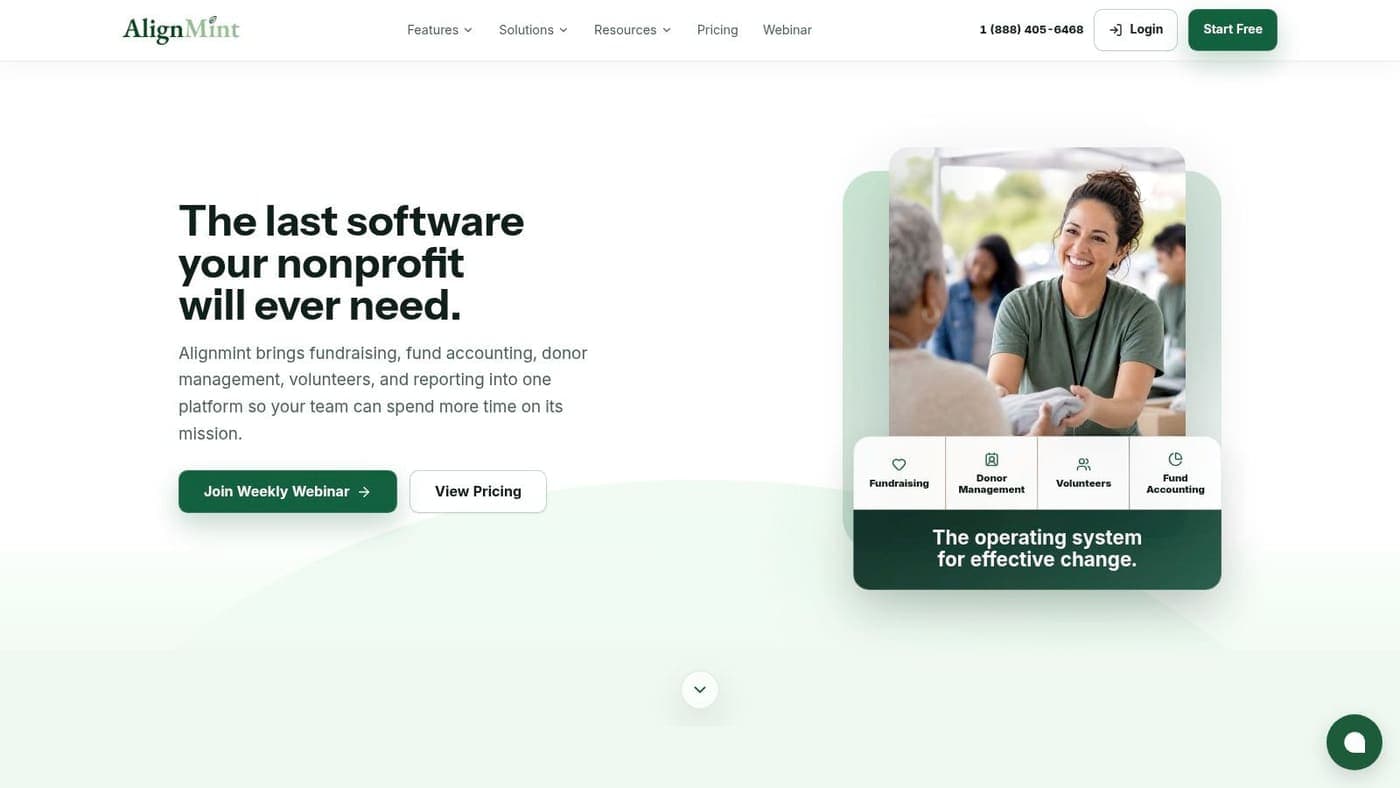
If your real problem is not just grants, but the mess around grants, AlignMint is the strongest fit. It brings fund accounting, donor management, volunteers, events, and marketing into one place, which means fewer handoffs and fewer late-night reconciliations.
AlignMint is built for executive directors who need answers fast, especially on restricted funds, grant drawdowns, and Form 990 readiness. Its native fund accounting tracks restricted and unrestricted funds, grants, and programs in the ledger itself, so reports like Statements of Functional Expenses come from the system instead of from a rescue mission in Excel.
Why it stands out
The big difference is that AlignMint doesn't treat grants as a side module. It ties giving, ledger activity, and reporting together, then adds a donor-centric CRM, automatic receipting, pledge tracking, donor portals, and direct bank-feed reconciliation. That matters when you need to show where grant dollars went without asking finance to rebuild the story from scratch.
Its volunteer tools also matter more than vendors usually admit. You can track skills, availability, background checks, group management, and hours in the same system, which is a real advantage for churches, schools, and fiscal sponsors running mixed programs. The built-in marketing suite covers email and text campaigns, online donation pages, events, ticketing, promo codes, and Video Blast appeals, so your staff isn't exporting lists just to communicate.
Practical rule: If you can't answer “what's restricted, what's spent, and what's still pending” in one screen, your software is costing you time.
Where it fits best
AlignMint is a strong match for small and mid-sized nonprofits, churches, schools, and fiscal sponsors that want one system for operations. It also fits finance and executive leaders who care about true fund accounting, not accounting classes copied into QuickBooks.
Minty is the other major differentiator. It answers questions about your live data without exports or add-ons, which helps when you're trying to make a board packet or answer a program question quickly. The public site also highlights bank-level encryption, complete data isolation, and 99.9% uptime, while pricing stays simple with everything included and a free tier for organizations raising up to $100K/year.
Pros
- Native fund accounting: Restricted and unrestricted funds, grants, and programs are modeled directly in the ledger.
- Unified operations: Accounting, CRM, volunteers, events, and marketing live together.
- AI insight layer: Minty works on your actual data.
- Pricing posture: A free tier lowers the barrier for smaller nonprofits.
Cons
- Public proof is light: The website doesn't publish many testimonials, case studies, awards, or certifications.
- Pricing details are limited: Larger organizations will need a conversation to understand plan limits and migration effort.
Website: AlignMint nonprofit operations platform
2. Instrumentl
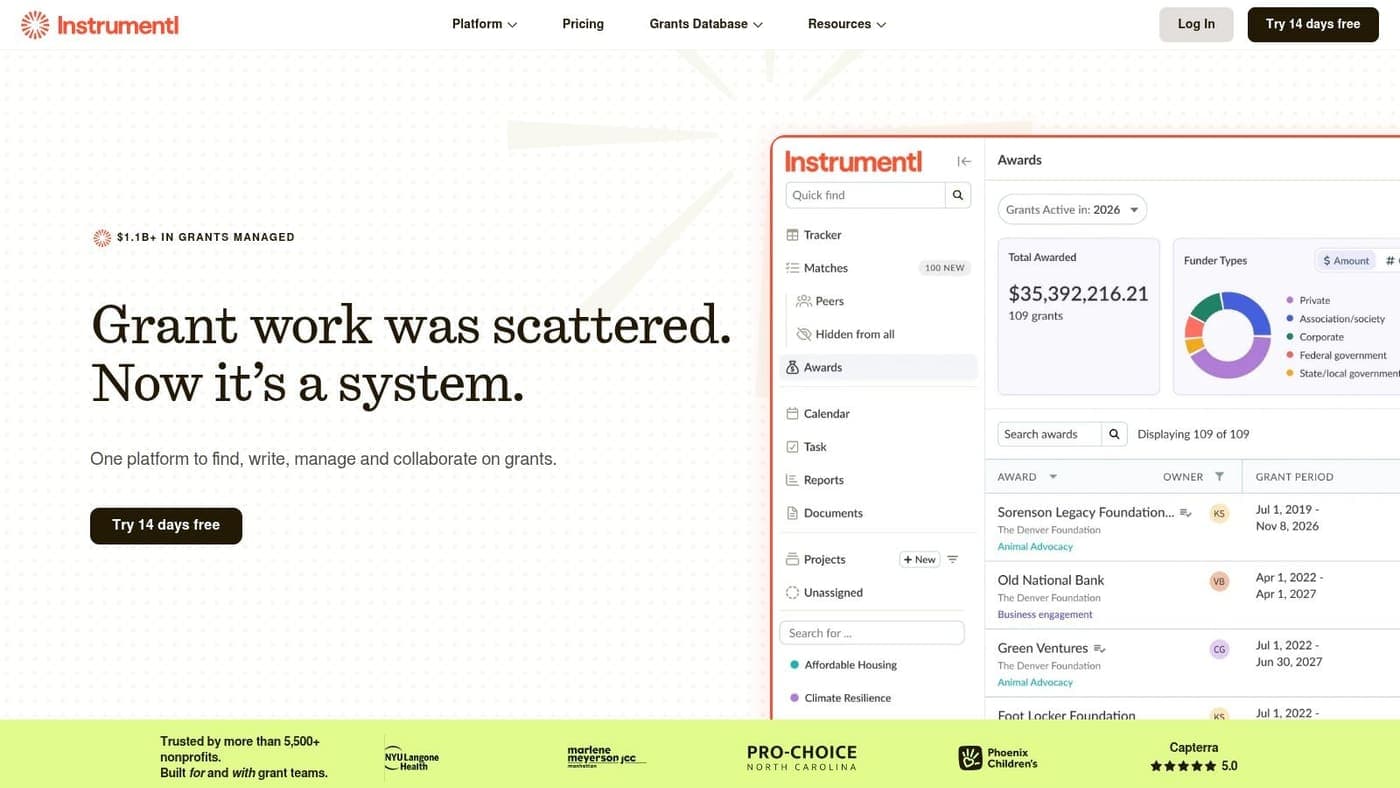
When your biggest headache is finding the right grants and keeping them organized after you win them, Instrumentl is the clearest choice. It's built for discovery first, then management, which is why many nonprofits like it for prospecting-heavy workflows.
The public feature set includes a curated database, proposal collaboration, AI-assisted writing, and post-award budget tracking. Grantsights lists Instrumentl at about $179 per month and says it also includes a 14-day free trial, which makes it easier to test without a long internal debate. That pricing matters because it tells you this is a serious grant-seeking tool, not just a file cabinet.
What it does well
Instrumentl's strength is motion. It helps you identify opportunities, coordinate internal tasks, and keep an eye on budget versus actuals once a grant lands. For many executive directors, that's enough to keep the development and program sides from drifting apart.
You should also like the fact that it sits in the middle of the lifecycle, not at one end only. The platform is a better fit if you need discovery, application support, and post-award visibility in one interface, rather than a separate search tool plus a separate tracker.
Practical rule: If your team spends too much time hunting for opportunities, start with discovery tools before you buy heavier grant software.
Where it falls short
Instrumentl is not your accounting system. If you're managing restricted funds, complex reimbursement drawdowns, or ledger-level reporting, you'll still need a real finance stack behind it. That's the line executive directors should watch closely, because software that helps you win grants isn't always the software that helps you close them cleanly.
It's also more useful for teams that want grant intelligence than for teams that only need light internal tracking. If you don't care about prospecting, you may be paying for more than you'll use.
Website: Instrumentl grant management software
Internal link: Available grants for nonprofits
3. Fluxx Grantseeker
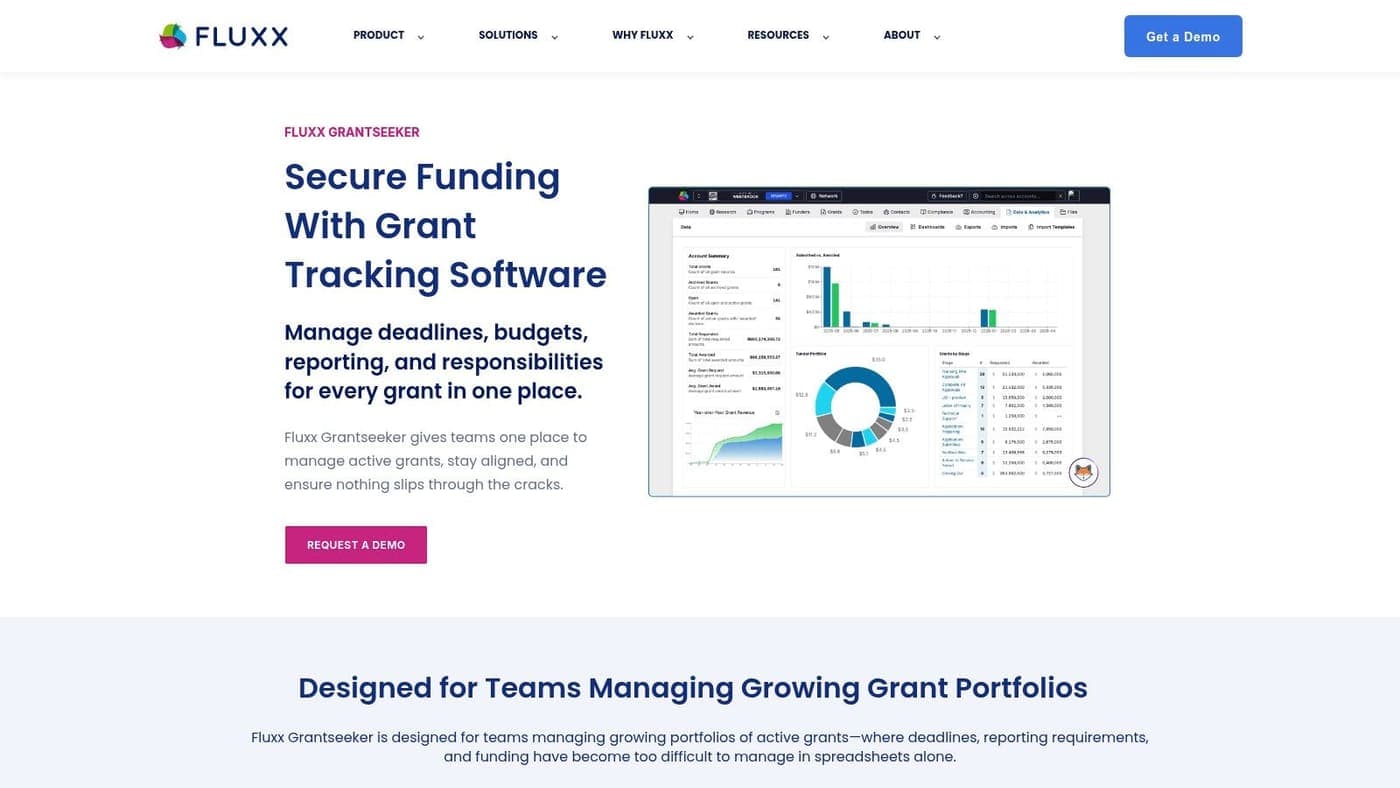
Fluxx Grantseeker makes sense when your team has outgrown spreadsheets and needs a cleaner way to manage active grants. It's a tracking system first, which is exactly what many nonprofits need once deadlines and reporting schedules start slipping.
The point of this tool is control. You get centralized grant portfolios, shared calendars, task ownership, and budget tracking, which helps everyone see what's due and who owns it. That's useful for executive directors because it turns grant management into something you can review at a glance, instead of chasing status updates through email.
Why teams choose it
Fluxx Grantseeker is especially appealing if your portfolio is getting busy. The public positioning says it's a better fit for teams managing 10 to 50+ active grants, and that tells you where it lives, between small spreadsheets and enterprise grantmaking systems.
The strength here is collaboration around active awards. Shared calendars and responsibilities can stop the usual problem where program staff think finance has filed something and finance thinks program staff already handled it. That kind of confusion is what blows up a reporting deadline.
Where it's thinner
Prospecting is not the main event here. If your organization needs help finding grants, comparing opportunities, or building applications, you'll want a discovery-first product instead. Pricing is also not public, so you'll need to sit through a demo before you know whether it's a fit.
If your board wants a polished answer to “how are our grants moving,” Fluxx Grantseeker gives you a better story than a spreadsheet. If your bigger issue is restricted fund accounting, you'll still need a stronger finance backbone.
Website: Fluxx Grantseeker
4. Salesforce Nonprofit Cloud for Grantmaking
If your organization already lives in Salesforce, Salesforce Nonprofit Cloud for Grantmaking is the natural power play. It's a fit for grantmakers and fiscal sponsors that want configurability, portal access, and deep integration with the rest of their donor and program data.
The headline benefit is flexibility. You can manage applications and budgets with workflow automation, then give grantees or applicants portal access through Community logins. That kind of setup matters when you're handling many stakeholders and need everyone in the same system.
Where it earns respect
Salesforce is hard to beat when your organization already has staff, admin capacity, and partner support around it. The platform can connect grantmaking with broader organizational data, which helps leaders who want one view across programs, constituents, and fundraising.
If your internal team can manage it, the system can go very far. It's especially appealing for large organizations that want a platform they can shape around their process instead of changing the process to match the software.
Practical rule: If nobody on your staff can own Salesforce configuration, the platform will own you instead.
Where caution is smart
This is not the easiest path for a small nonprofit that just wants clean grant tracking. Salesforce asks for admin know-how and implementation discipline, and that's where many organizations stall. It can also be more than you need if your grant program is simple.
For anyone migrating from a nonprofit stack that's become too messy, this internal resource is worth reading: AlignMint's Salesforce NPSP data migration guide. It's useful if you're thinking about whether a platform jump makes sense before you commit.
Website: Salesforce Grantmaking
5. SmartSimple Cloud for Grants Management
SmartSimple Cloud for Grants Management is the serious option for complicated programs. If your grants involve multiple stages, reviewers, source funds, eligibility rules, and audit trails, this is the kind of platform that keeps the machinery together.
The advantage is structure. You can set up application, review, budget, and compliance workflows with enough control to handle multi-entity or multi-stage programs. For executive directors dealing with strict reporting expectations, that level of control can be the difference between calm and constant cleanup.
Why it's strong
SmartSimple is designed for organizations that need more than a tracker. It supports branching logic, eligibility checks, report building, dashboards, and Grants.gov integration for prime awardees. That makes it attractive for public sector work, research-oriented grants, and complex grantmaking programs.
It also earns points for auditability. If your compliance team cares about who changed what and when, SmartSimple gives you more of that visibility than lightweight grant tools usually do.
Where it may be too much
The tradeoff for all that control is setup effort. Configuration takes time, and quote-based pricing usually signals an enterprise buying process. That's fine if you're running complex programs, but it's too much if you just need to keep a few awards organized.
Website: SmartSimple Cloud for Grants Management
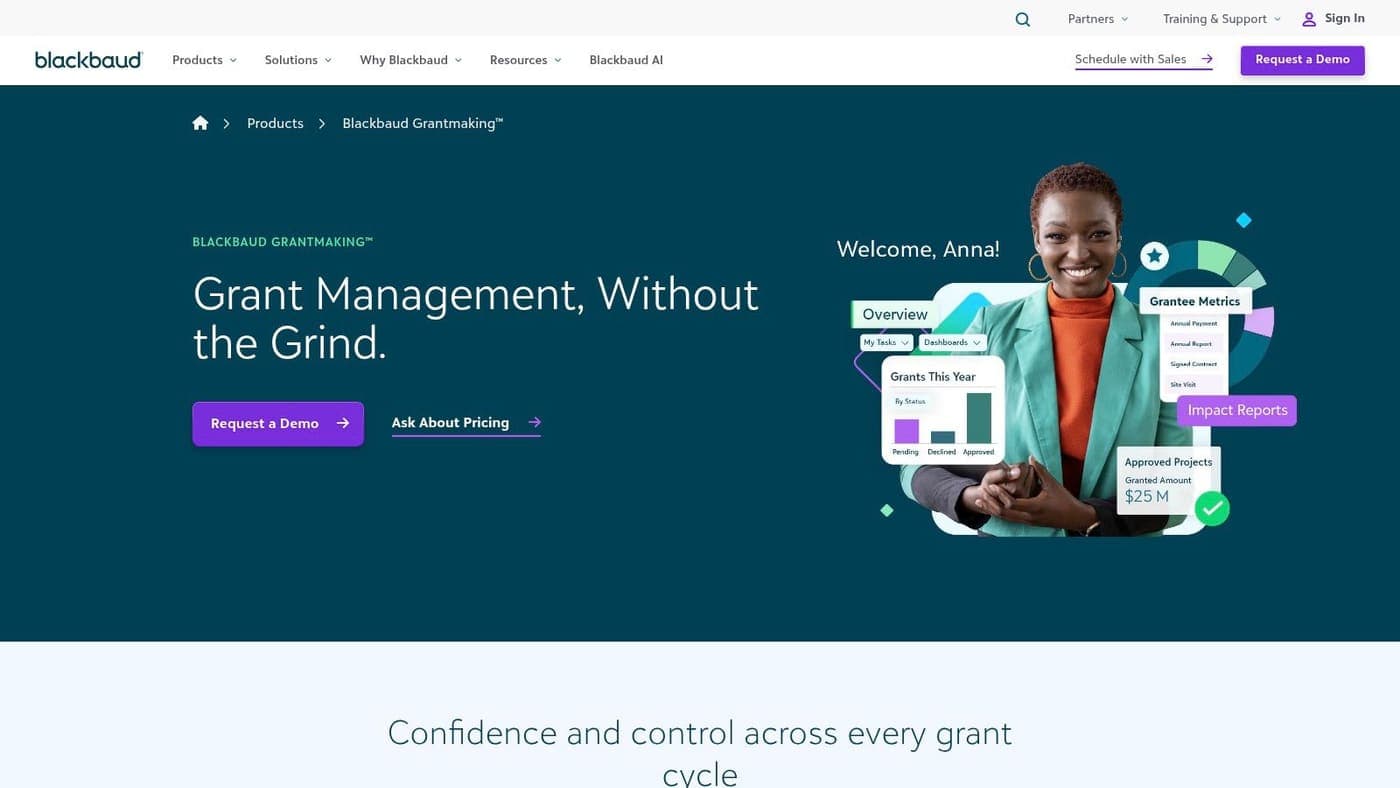
6. Blackbaud Grantmaking
Blackbaud Grantmaking is the veteran choice for organizations that want maturity and depth. It's especially relevant for foundations, fiscal sponsors, and larger nonprofits that manage sub-grants or formal award cycles.
The platform covers the full lifecycle from intake to outcomes, with reviewer portals, payment schedules, and reporting. That means your grant program can live in one place instead of being split between forms, email, and a separate finance process.
Why people stay with it
Blackbaud has the kind of reputation that comes from long use in the field. For organizations that need dependable workflows and strong reporting, that experience matters. It also connects into the broader Blackbaud world, which can help if you're already using related products.
If your organization values proven patterns over novelty, Blackbaud makes sense. It gives grantmakers a lot of control and a familiar structure for review, approval, and reporting.
Where the gap shows up
This is not usually the cheapest or simplest choice. Pricing is quote-based, and implementation often requires guided setup. For smaller organizations, that can turn into more process than payoff.
If you're comparing migration paths or thinking about whether your current setup has become too heavy, this checklist may help: Blackbaud migration checklist.
Website: Blackbaud Grantmaking
7. Bonterra CyberGrants
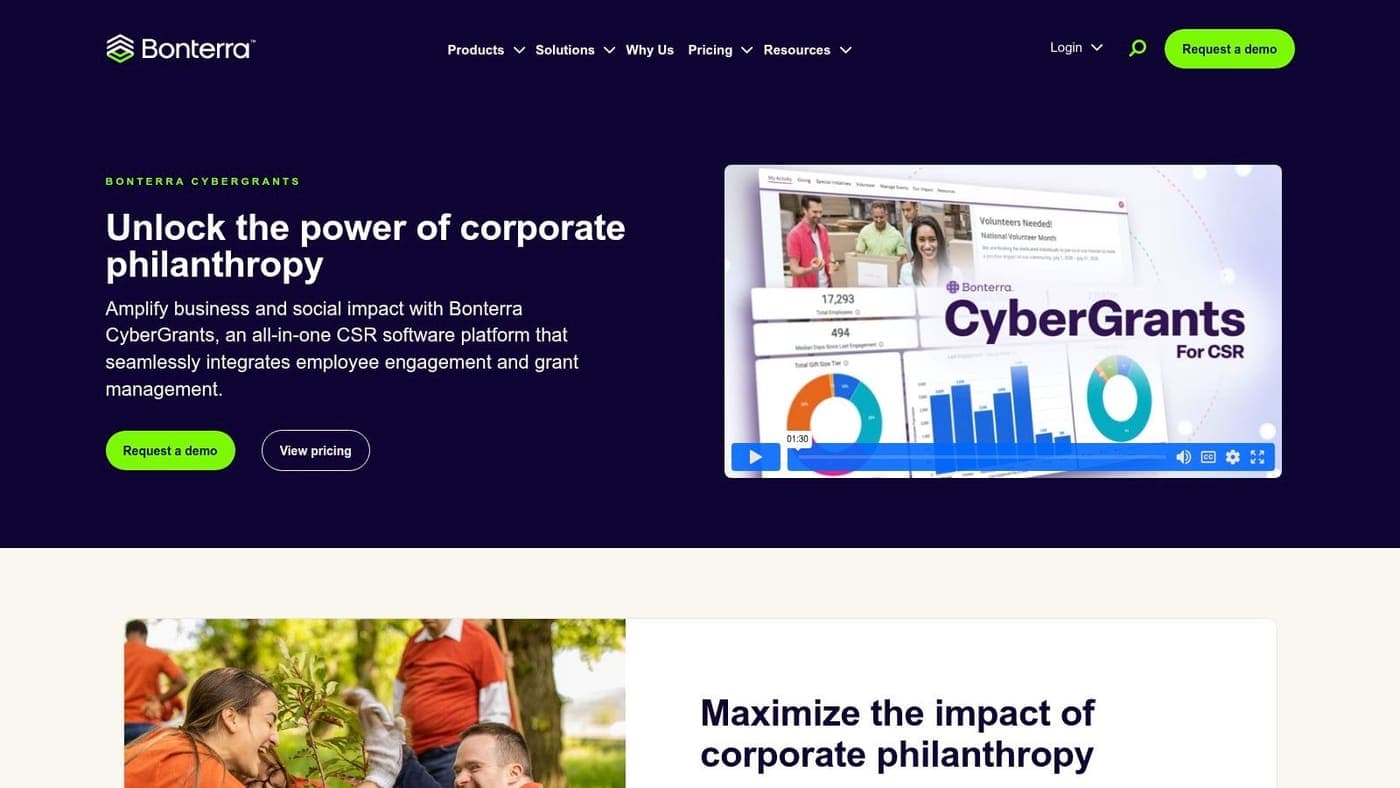
Bonterra CyberGrants is built for large grantmaking operations, especially corporate and institutional programs. If you're running competitive awards or CSR-style initiatives, it gives you the structure to manage applications, reviews, awards, and reporting in one system.
The strength here is scale. Large programs need more than a form builder, they need workflows, reviewer collaboration, and outcome tracking that can survive volume. Bonterra is comfortable in that world.
Why it works for bigger programs
The platform's main appeal is that it's built for grantmakers who live in process. Applicant portals, review tools, and outcome tracking help teams keep the program organized without turning every cycle into a custom project.
It also has useful tie-ins to employee giving and volunteer programs, which can matter for corporations that want to connect grantmaking with broader community investment.
Where nonprofits should be careful
This is not the most natural fit for a small nonprofit that needs to track a few awards it has received. It's heavier than that, and the pricing model reflects an enterprise product. If you only need grant tracking and restricted fund visibility, you may be buying a lot of machinery you won't touch.
For teams already comparing systems or planning a move, this internal page is worth a look: Bonterra migration support.
Website: Bonterra CyberGrants
8. AmpliFund
If your world includes federal reporting, compliance checks, and subrecipient management, AmpliFund belongs on the shortlist. It serves both grantmakers and recipients, which makes it useful for organizations on either side of a demanding grant relationship.
The platform's value is compliance support. Pre-award and post-award management sit together, and that matters when you're dealing with reporting obligations that don't forgive sloppy recordkeeping. Executive directors tend to like tools like this because they reduce the chance of getting surprised late in the cycle.
Why it matters
AmpliFund is especially relevant for public sector and federally funded work. Configurable workflows, portals, and reporting can help staff keep documentation clean and deadlines visible. If your staff is juggling multiple funding sources, that kind of structure pays off fast.
It also stands out because it doesn't assume grants only flow in one direction. That broader design can help organizations that both award funds and receive them.
Where it may be too formal
The downside is that implementation usually comes with project overhead. Pricing is quote-based too, so you'll need more than a quick look to understand the cost. Smaller nonprofits often discover that lighter tools cover their needs more comfortably.
Website: AmpliFund grants platform
9. Euna Grants
Euna Grants, formerly eCivis, is built for organizations that work closely with public-sector funders. If you manage subrecipients, standardize portals, or need clean audit-ready reporting, this is one of the stronger enterprise options.
The benefit is alignment. The platform speaks the language of government and public programs, which helps when your nonprofit has to coordinate with agencies or comply with formal reporting structures. That can make collaboration smoother for nonprofit subrecipients too.
Why it belongs on the list
Euna Grants gives you centralized pre- and post-award tracking, workflow automation, dashboards, and grant histories. That combination helps organizations keep a long paper trail without drowning in paper.
It's a particularly sensible fit for institutions that need consistency across many awards. If your reporting requirements are repetitive and strict, standardized workflows are not a luxury, they're survival.
Where it's less friendly
The tradeoff is that this is clearly an enterprise tool. Setup and configuration can take effort, and small organizations may not need this much structure. If you don't have public-sector complexity, you may not get enough value from the overhead.
Website: Euna Grants
10. Foundant Grant Lifecycle Manager
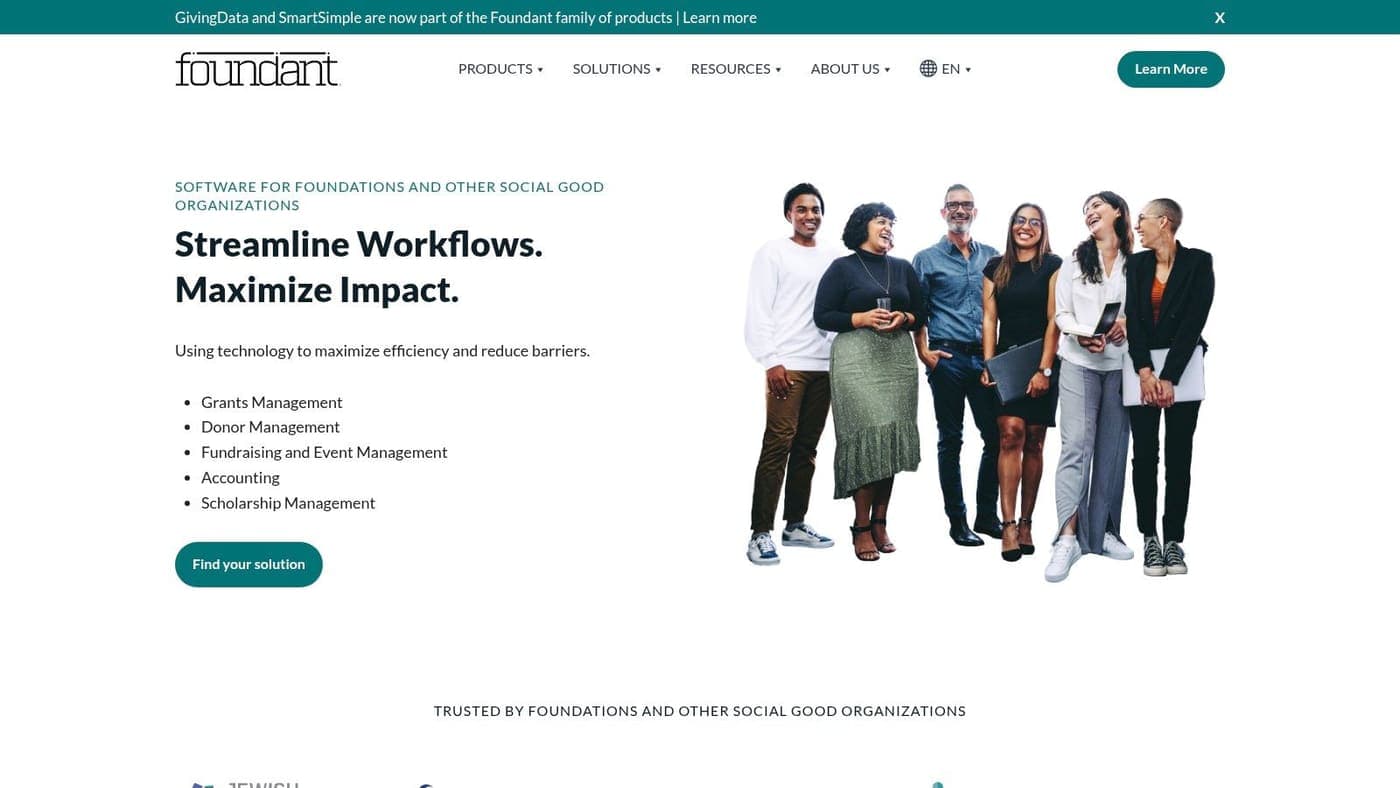
Foundant Grant Lifecycle Manager is a familiar name for foundations and fiscal sponsors that administer grants. It's known for usability, configurable workflows, and broad adoption among grantmakers who want applicants, reviewers, and staff to work in one system.
The benefit for leadership is predictability. Online applications, reviewer portals, payments, and reporting are all part of the package, so the grant cycle stays organized. For teams that want clean administration without constant tinkering, that matters.
Why grantmakers choose it
Foundant's reputation rests on making grantmaking manageable for humans. The platform is designed to support people doing the actual review and award work, not just the IT team setting it up.
That's a meaningful distinction for nonprofits that administer programs for others, because you want the process to feel clear for applicants and staff alike. The more transparent the workflow, the fewer support emails your team has to answer.
Where it isn't the right answer
Foundant is built for grantmakers, not for nonprofits mostly looking to discover and manage grants they receive. Pricing is quote-based, and implementation is part of the deal. That's fine for foundations, but it's a lot for a small recipient organization.
If your core issue is tracking awards you've already won, this related guide can help you think through that part of the process: grant tracking software for nonprofits.
Website: Foundant Grant Lifecycle Manager
Top 10 Nonprofit Grant Management Software Comparison
| Solution | Core features | Target audience | Key differentiator | UX / Security & Implementation | Pricing & value |
|---|---|---|---|---|---|
| AlignMint (Recommended) | Native fund accounting; donor CRM; volunteers, events, fundraising; Minty insights | Small–mid nonprofits, churches, schools, fiscal sponsors, finance/exec leads | True ledger→reports (Form 990-ready); unified ops; AI on live data | Bank-level encryption; 99.9% uptime; integrated workflows; migration support via sales | All-in-one subscription; free tier up to $100K/yr; contact for paid limits |
| Instrumentl | Funder/RFP discovery; pre-award collaboration; post-award budget vs actuals; integrations | Grantseekers focused on finding & winning grants | Large curated opportunity database + AI-assisted proposal tools | Centralized UI; published pricing; 14‑day trial | Transparent pricing; can be pricey if only light tracking needed |
| Fluxx Grantseeker | Portfolio tracking; deadlines, tasks, budgets; reporting schedules | Teams outgrowing spreadsheets managing 10–50+ grants | Portfolio-level tracking and team collaboration | Shared calendars and ownership; quick implementation (weeks) | Demo/quote required; purpose-built for grantseekers |
| Salesforce Nonprofit Cloud for Grantmaking | Application & budget workflows; community portals; extensive integrations | Orgs needing extensibility, partner platform, complex workflows | Highly configurable on Salesforce platform with broad partner network | Requires Salesforce admin skills; configurable; nonprofit discounts available | Published editions with discounts; implementation effort may raise total cost |
| SmartSimple Cloud for Grants Management | End-to-end grants, review panels, report builder; Grants.gov integration | Government, research, and large orgs with complex programs | Handles multi-stage, multi-entity programs with strong audit controls | Strong compliance & role-based access; deep configuration; longer setup | Enterprise/quote-based pricing |
| Blackbaud Grantmaking | Full grant lifecycle, reviewer portals, robust reporting; integrations | Foundations and complex nonprofits running sub-grants | Proven scale, depth, and security for large funders | Enterprise transition and support; guided implementation typical | Quote-based; often above small-org budget |
| Bonterra CyberGrants | Application, review, award, reporting; portals; CSR/volunteer integrations | Corporate funders and large institutional programs | Enterprise-grade grantmaking with CSR/employee-giving tie-ins | Scales for large programs; extensive admin tooling | Quote-based; enterprise-level pricing |
| AmpliFund | Pre/post-award management; federal compliance (Uniform Guidance); subrecipient tools | Public sector & nonprofits managing federal awards | Strong compliance, audit features and federal reporting support | Implementation as formal project; compliance-focused workflows | Quote-based; higher than lightweight options |
| Euna Grants (formerly eCivis) | Pre/post tracking; applicant/subrecipient portals; audit-ready dashboards | Governments, educational institutions, nonprofits working with public funders | Aligns to public‑sector processes; common choice for agencies | Real-time dashboards; configuration and implementation involved | Enterprise orientation; quote-based pricing |
| Foundant Grant Lifecycle Manager (GLM) | Online applications, reviewer portals, payments, reporting; configurable workflows | Foundations, community funds, grantmakers | Emphasis on usability for applicants/reviewers; large user community | User-friendly interface; implementation required | Quote-based; established provider in grantmaking market |
Your Buying Checklist and Where AlignMint Fits
Start with the headache that costs you sleep. If you need discovery, look at Instrumentl first. If you need full lifecycle tracking, Fluxx Grantseeker, Blackbaud Grantmaking, Bonterra CyberGrants, AmpliFund, Euna Grants, and Foundant all make more sense than a spreadsheet.
If your grants are tied to federal reporting, subrecipient monitoring, or strict audit trails, AmpliFund, SmartSimple Cloud for Grants Management, and Euna Grants deserve the closest look. If your board wants one view of the whole organization, not a stack of disconnected tools, AlignMint is the cleanest match because it ties grants to accounting, donors, volunteers, marketing, and reporting in one place.
Quick-fit recommendation by tool
- AlignMint: Best for small and mid-sized nonprofits, churches, schools, and fiscal sponsors that want true fund accounting plus grants, donors, volunteers, and marketing together.
- Instrumentl: Best for nonprofits that need stronger discovery and proposal support first.
- Fluxx Grantseeker: Best for teams outgrowing spreadsheets and managing active awards.
- Salesforce Nonprofit Cloud for Grantmaking: Best for organizations already committed to Salesforce and able to administer it.
- SmartSimple Cloud for Grants Management: Best for complex, compliance-heavy grant programs.
- Blackbaud Grantmaking: Best for mature grantmakers that want a long-standing enterprise system.
- Bonterra CyberGrants: Best for large institutional or CSR-style grantmaking.
- AmpliFund: Best for compliance-driven work, especially federal or public funding.
- Euna Grants: Best for public-sector aligned grant operations.
- Foundant Grant Lifecycle Manager: Best for foundations and fiscal sponsors that administer grants.
If your biggest pain is restricted funds, grant drawdowns, and clean reporting, don't buy a grants tracker and hope finance will patch the rest together. You need fund accounting software for nonprofits or you'll keep rebuilding the same reports twice. If you want a broader view of the finance side before you decide, this guide to best accounting software for nonprofits is a smart next stop, and it pairs well with AlignMint's fund accounting feature page.
For executive directors, the simplest buying test is this. Can the platform help you answer auditor questions, board questions, and funder questions without three different systems? If the answer is no, keep looking.
If you want one system that handles grants inside the bigger job of running the organization, AlignMint is the best fit. The free tier makes it easy to try, and the all-in-one setup is built for leaders who'd rather spend time on mission than on spreadsheet repair. For more context on how nonprofits connect structure, funding, and impact, this piece on addressing nonprofit funding and impact adds a useful strategic lens.
If you're tired of stitching together grant trackers, accounting files, and donor lists, try AlignMint. It is built for nonprofit leaders who need clear answers on grants, restricted funds, volunteers, and reporting without hiring another software wrangler. Start with the free tier if your organization raises under $100K a year, or book a walkthrough and see how one system can replace the pile of tools you're managing now.
Ready to see how AlignMint fits your workflow?
Schedule a free walkthrough — we will help you map donors, funds, and migration steps.