

How to Run a Silent Auction for Fundraising
Quick Answer: How to Run a Silent Auction for Fundraising
Silent auctions from procurement to checkout: items, bidding tech, volunteer roles, and post-event accounting so you know true profit before next year. The sections below walk through practical steps, examples, and what to watch for.
For related tools, see AlignMint features. A successful silent auction comes down to four things. You need solid planning, items people want, a smooth guest experience, and organized follow-up. Get the planning right, and the rest falls into place more easily.
Laying the Foundation for a Profitable Silent Auction
Before you think about donations, you need to decide what success looks like. A great auction starts with a clear plan, not a scramble for items. This is your chance to tie the event directly to your mission.
The first step is setting a specific financial goal. "Raising money" is a wish. A real goal sounds like, "We need to raise $15,000 to fund our after-school tutoring program." That gives your team a concrete target and a compelling story. Smooth event planning starts with this clarity.
Define Your Budget and Team
Once you have your fundraising goal, you can build a realistic budget. Factor in all potential costs like the venue, catering, software, and printing. Knowing your break-even point helps you track your true net revenue.
Next, pull together a small, dedicated auction committee. You don't need a huge team, just a few committed people with clear roles. A typical setup includes:
- An Auction Chair to lead the charge and keep everything on track.
- A Procurement Lead to focus on getting desirable items.
- A Logistics Lead to handle event-day details, from setup to checkout.
This is where an all-in-one platform helps you save time. When your volunteer management is part of your event tools, assigning tasks is simple. You can communicate with your committee in one place, not scattered spreadsheets.
Understand the Legal and Financial Details
Getting the administrative side right from the start saves you headaches later. This is especially true for tracking revenue and acknowledging donors properly. The right software can make these details much easier to handle.
For example, integrated online fundraising tools track every sale in one place. When the auction ends, that data flows directly into your donor database and fund accounting ledger. You can generate tax receipts instantly and see how the event impacted your funds.
The most successful auctions are those where the back-end work is as polished as the front-end event. Connecting your event management, donor CRM, and fund accounting in one system saves dozens of hours. It also gives you a true, real-time picture of your financial health.
There's a reason the market for online silent auction platforms is growing. Nonprofits are moving toward integrated solutions that help them run more efficient events.
Securing Auction Items That Get Donors Bidding
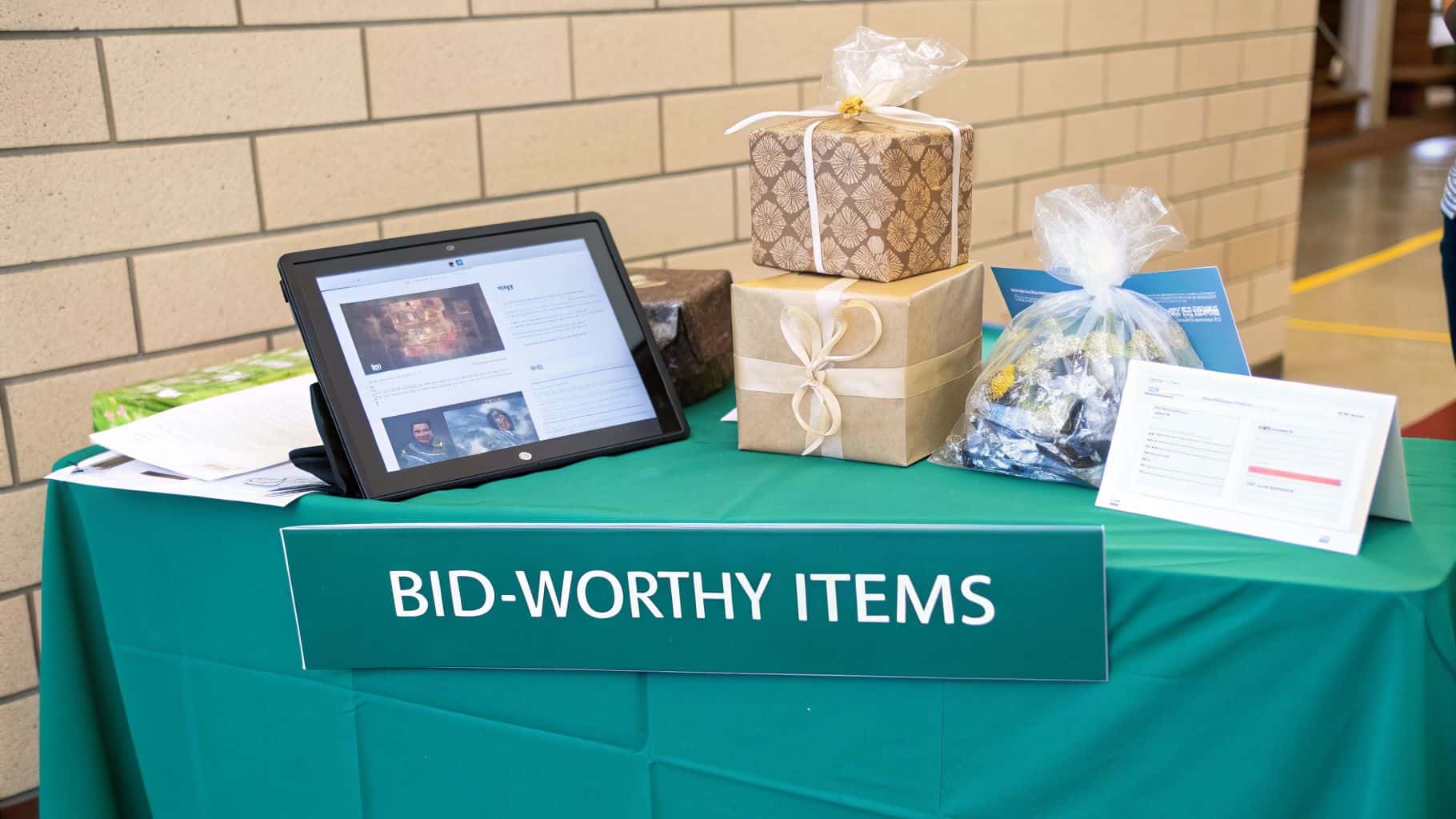
Let's be honest, the items you offer can make or break your auction. A room full of uninspired items leads to empty bid sheets. It is time to strategically source items your donors will be excited to win.
Your auction items are the engine of your event, so be smart about getting them. Before you make a single call, look at your donor management data. Knowing your audience is the first step toward finding items that spark real bidding.
Sourcing Items That Spark Competition
Start with the people already invested in your mission. Your board and loyal supporters are often your best source for high-quality items. They might have season tickets, a vacation home, or a professional connection.
From there, turn to local businesses. They want to support their community, but their time is limited. Using a professional winning event sponsorship proposal template makes a huge difference. Instead of a vague ask for "a donation," request "a dinner for four."
Experiences consistently outperform physical goods. Think about what your supporters can't buy online. This could be a private cooking class or a round of golf with a community leader.
Once you secure an item, tracking is essential. With an all-in-one system like AlignMint, you log each item directly into the platform. You capture its description, value, and donor information, which becomes part of their record in your CRM.
Presenting Items to Maximize Bids
How you present your items is almost as important as the items themselves. A blurry photo and a short description will not inspire anyone. Your job is to help donors imagine themselves winning.
- Take high-quality photos. Good lighting and a simple background make items look their best.
- Write compelling descriptions. Go beyond the basics. Instead of "Wine Basket," try "An Evening in Tuscany" and describe the wines and food pairings.
- Bundle smaller items. Combine mid-range donations into an attractive "Downtown Date Night" package.
- Set the right starting bid. We recommend a starting bid around 50% of the item's fair market value.
The revenue potential here is significant. Global auctions generate billions, and a few high-value items can drive success. Both sports memorabilia and travel packages are popular as the auction market is growing worldwide.
A well-curated auction catalog tells a story about your community. We dig deeper into this connected approach in our guide to nonprofit event management software.
Designing a Smooth Bidding Experience for Guests
A confusing bidding process is the fastest way to lose donations. If guests are frustrated, you have lost before the auction begins. Your top priority is an experience so easy that bidding feels effortless.
Whether your event is in-person or online, the mechanics must be simple. A smooth guest journey starts with registration and ends with payment. This is where an all-in-one system proves its worth.
Choosing Your Auction Format: In-Person vs Online
Deciding how guests will bid is your first major choice. As a leader short on time, efficiency is everything. This table breaks down key factors to help you decide.
| Consideration | In-Person Auction | Online Auction |
|---|---|---|
| Guest Experience | Familiar for some, but can lead to crowding and long checkout lines. | Bidding from anywhere on a smartphone is convenient and private. |
| Labor Required | High. Needs volunteers to monitor tables, decipher handwriting, and manually close items. | Low. Bidding, notifications, and payment are all automated. |
| Revenue Potential | Limited to the people in the room and the event's duration. | Higher. Outbid notifications and extended bidding windows drive up prices. |
| Data Management | High-risk. Manual data entry from bid sheets is prone to human error. | Low-risk. All data is captured digitally, flowing directly to reports. |
| Geographic Reach | Limited to attendees who can be physically present at the event. | Unlimited. Anyone with the link can participate from anywhere in the world. |
While paper has charm, the efficiency of online bidding is hard to ignore. Paper bid sheets are very labor-intensive. They create long checkout lines and a high risk of error.
Modern auction software automates almost everything. Guests bid from their phones and get instant outbid notifications. This is less work for your team and a better experience for guests.
Many platforms like GiveSmart or OneCause handle events well. The catch is they often exist separately from your core operations. This means you are still stuck exporting and importing data.
Our goal at AlignMint was to solve this disconnect. We built our event tools directly into our all-in-one platform. Your auction, donor management, and fund accounting are always in sync. When an auction closes, revenue is recorded automatically without you lifting a finger.
Setting Up for Success In-Person
If you're hosting an in-person event, the physical layout is very important. You need to create a natural flow that encourages guests to bid.
- Group items logically. Create themed sections like "Dining & Entertainment" or "Sports & Adventure."
- Give your items space. Overcrowding can make your offerings look less valuable.
- Use clear, compelling signage. Every item needs a display card with a title, description, value, and starting bid.
To get people excited and in the door, find great tips in our guide on how to promote an event effectively.
Optimizing the Online Experience
For an online auction, your bidding pages are your showroom. The experience must be mobile-friendly, as most guests will bid from their phones.
Make registration simple. Ask only for a name, email, and credit card. Every extra field is a chance for someone to drop out.
Data shows events using online software see revenue increases of 35-50%. These gains are driven by features like automated outbid notifications. You can learn more about the trends in the silent auction software market and how they can help you.
AlignMint's built-in marketing suite makes it easy to communicate with bidders. Because everything is connected, you can manage promo codes and track volunteer hours in the same system.
Managing Your Event Day with Confidence
All your planning comes down to this. A confident, organized event day means you can focus on your guests and mission. When your team has a clear plan, they feel empowered.
A smooth event day translates into a better guest experience. It also leads to more funds raised for your cause.
Assigning Clear Roles to Your Team
To make sure the day runs smoothly, everyone needs to know their responsibilities. Assign specific roles to dedicated individuals.
Think about the key jobs you'll need covered:
- Greeters: They offer a warm welcome and help with check-in.
- Bid Monitors: These volunteers circulate to encourage bidding and answer questions.
- Tech Support: Have one or two people who know your auction software inside and out.
- Checkout Crew: A dedicated team to manage payment and item pickup.
Managing these volunteers is simpler when your volunteer management tools are integrated. You can assign roles and track hours from the same platform you use for the auction.
A well-run event feels effortless to your guests, but that comes from careful preparation. When every volunteer knows their role, they can act as confident ambassadors for your organization.
Executing Your Event Timeline
A successful auction follows a planned timeline. Your schedule should build energy throughout the event. Think of it as a story with a clear beginning, middle, and end.
Here is a sample timeline you can adapt:
- Auction Opens: The auction should be live when your first guests arrive.
- Mid-Event Announcements: Have your director highlight items with no bids and create a sense of urgency.
- 15-Minute Warning: This announcement is crucial for sparking last-minute activity.
- Firm Closing: When the time comes, close the auction decisively.
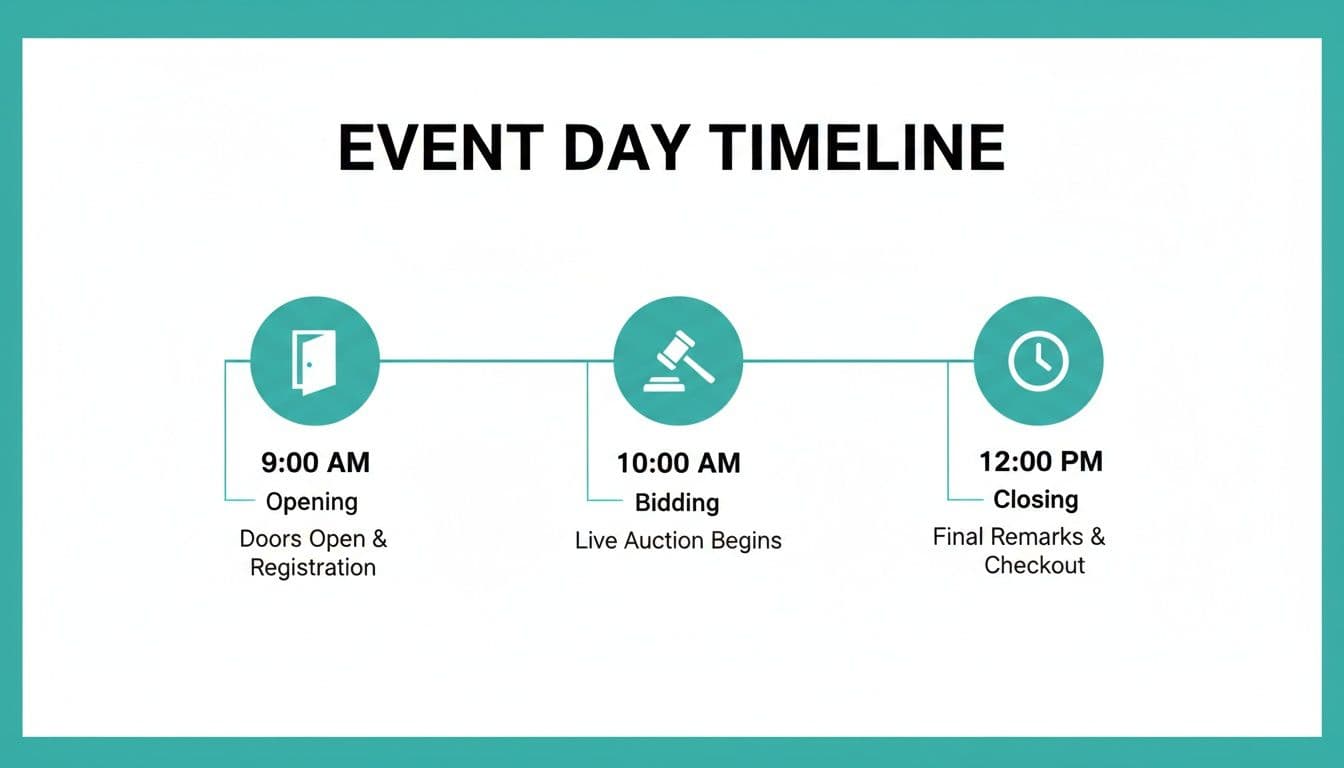
The end of the auction can be the most hectic moment. You can learn more about managing all the moving parts in our guide to planning events for nonprofits.
Handling Common Event Day Issues
Even with the best planning, small problems can pop up. Having a plan for these situations ensures your team can handle them with confidence.
Bid disputes can happen, especially with paper bid sheets. A designated "Auction Chair" should have the final say. Modern software nearly eliminates this problem by time-stamping every bid.
Payment glitches are another common issue. If a card is declined, have a team member discreetly pull the guest aside. An integrated system like AlignMint, which captures cards at registration, reduces these issues.
Wrapping Up Your Auction and Nurturing Donor Relationships
The last bid has been placed, but your work is not over. A smooth post-auction process secures your funds and builds donor relationships. A messy checkout can undo all the goodwill you have built.
Your goal is to make payment and acknowledgment feel effortless. This is your last impression, so make it a great one.
Streamlining Payments and Item Pickup
We have all seen the long checkout line that can sour an event. You can eliminate this bottleneck with a clear plan and the right tools. If you required guests to register with a credit card, you can process payments automatically.
For those paying at the event, set up a payment station separate from item pickup. Your payment team can process their payment, while your pickup team retrieves their prizes. Pre-sorting items by bidder number saves a tremendous amount of time.
The Power of Prompt Acknowledgment
A prompt and personal thank you is how you show donors you see them as partners. This is where having an integrated system is a game-changer.
When your event software connects to your donor management system, you do not waste hours exporting spreadsheets. This lets you:
- Send Immediate Tax Receipts: Automatically generate and email accurate tax receipts.
- Create Personalized Thank-You Notes: Mention the specific item they won. Our Minty assistant can even help you draft these notes, saving you time.
- Acknowledge Item Donors: Send a thank-you letter that includes the final selling price of their donation.
Acknowledging donors quickly is one of the most effective ways to improve retention. Our experience shows that donors thanked within 48 hours are four times more likely to give again.
Connecting Auction Data to Your Financials
The final step is making sure all revenue is accounted for properly. For many leaders using separate tools, this is the most tedious task. Manually entering every sale into QuickBooks can take days.
This is precisely why we built AlignMint as an all-in-one platform. When your silent auction ends, every dollar of revenue flows directly into your fund accounting ledger. There is no manual data entry.
With a single click, you can see your event's total revenue and net profit. Reports like your Statement of Activities are updated in real-time. This saves you hours and eliminates the risk of human error. For more on this, see our guide to nonprofit financial reporting.
Related:
- Online Silent Auction Sites - Compare auction platforms
- Nonprofit Event Ticketing Software - Registration and payments
- Fundraising Tools - Email, SMS, events, and donation pages in one platform
- Events & Ticketing - See how AlignMint handles event management
At AlignMint, we built our platform to solve these real-world challenges because we have been in your shoes. Our all-in-one platform connects your auction, donor management, and fund accounting. See how it works at getalignmint.org.
Frequently Asked Questions
Ready to try AlignMint with your nonprofit?
Start free — set up donor tools, giving pages, and Minty. Upgrade when you need accounting.