
Planning Events for Nonprofits: 2026 Checklist
For related tools, see AlignMint features. Planning an event for your nonprofit can feel overwhelming, but a clear checklist makes the process manageable. Your first job is to decide what a "win" looks like for your organization, then connect the budget, ticketing, volunteers, donor follow-up, and reporting around that goal.
This guide gives you a practical event planning framework your team can reuse for galas, walks, dinners, workshops, and benefit events.
Quick Answer: What Should a Nonprofit Event Plan Include?
A nonprofit event plan should include the goal, audience, budget, ticket or registration setup, volunteer roles, promotion plan, check-in process, donor follow-up, and post-event reporting. The plan should also show who owns each step and how revenue will be tracked after the event.
If your event raises money, do not treat planning and accounting as separate jobs. Ticket sales, sponsorships, donations, expenses, and restricted gifts should connect to your fund accounting, donor management, and event follow-up from the start.
| Planning area | What to decide | Why it matters |
|---|---|---|
| Goal | Net revenue, new donors, community attendance, or stewardship | The goal shapes the event format and follow-up. |
| Budget | Revenue targets, fixed costs, variable costs, and sponsor goals | Your team needs to know the true profit, not just gross sales. |
| Registration | Ticket tiers, guest details, capacity, and accessibility needs | Clean attendee data prevents event-day confusion. |
| Volunteers | Roles, shifts, training, and check-in ownership | Staff should not be coordinating every task manually. |
| Promotion | Email, text, social, board outreach, and partner invites | Supporters need repeated clear invitations. |
| Reporting | Fund allocation, donor updates, and board summary | The event should create a clean story after it ends. |
First Things First: Define Your Event's Purpose

As an executive director, you already know events can be a powerful engine for your mission. They are often our biggest opportunity to gather supporters and raise the funds we need.
If you've wondered if the effort is worth the return, the data is clear. One report found that 97% of nonprofits hosted an event, with 77% meeting or beating fundraising targets.
Events aren't just "nice-to-have" - they are a reliable anchor for revenue and engagement. A well-planned event is a strategic asset for your mission.
Get Specific With Your Goals
Before you book a venue, you have to get clear on your goals. Moving beyond a vague "raise money" objective is the first step toward a successful outcome. Are you focused on fundraising, acquiring new donors, or building community awareness?
Here are a few concrete examples of what this looks like in practice:
- Fundraising Goal: Raise $75,000 in net revenue to fund our summer youth program.
- Donor Acquisition Goal: Secure 100 new donors with an average first-time gift of $50.
- Awareness Goal: Generate 3 local media mentions and increase social media engagement by 25%.
By setting specific, measurable goals, you transform "success" from a wish into a trackable outcome. It gives your team a clear target to aim for and a benchmark to evaluate your performance.
Match the Format to Your Goal
Once your goals are set, you can choose an event format that helps you achieve them. The days of the one-size-fits-all gala being the only option are long gone. Today, you have a menu of choices for different audiences and objectives.
The table below breaks down popular formats and the goals they suit best. This is where you can start to see your event strategy take shape.
Choosing Your Event Format
| Event Format | Best For | Key Benefit | AlignMint Feature to Use |
|---|---|---|---|
| Virtual Gala or Conference | Awareness, Donor Acquisition | Broad reach, lower overhead, accessible to a national audience. | Ticketing, Livestream Integration, Online Giving Pages |
| Intimate Major Donor Dinner | Fundraising, Donor Stewardship | Deepens relationships with key supporters, ideal for large asks. | Guest Management, Personalized Email Invites |
| Community Fun Run or Walk | Community Building, Donor Acquisition | High visibility, great for acquiring new, smaller-dollar donors. | Peer-to-Peer Fundraising Pages, Volunteer Sign-up |
| Hybrid Event | Awareness, Fundraising | Combines the reach of virtual with the energy of an in-person event. | All of the above. Manage both attendee types in one place. |
| Educational Workshop/Webinar | Community Building, Prospecting | Positions your nonprofit as an expert, attracts new prospects. | Registration Forms, Automated Reminder Emails |
The key is to match the format to your mission's immediate needs. For a deeper dive into the tools that make any of these formats run smoothly, check out our guide to nonprofit event management software.
Budgeting and Tracking Your Event Finances
Let's tackle your event finances. This is often the most daunting part of planning. Getting it right is the difference between a one-time success and a repeatable fundraiser.
A good budget is your event's North Star. You also need a system to manage the money that flows through it. We'll walk you through building a realistic budget and tracking every dollar.
Why Your QuickBooks Workaround Is Holding You Back
If you've been in the nonprofit world a while, you know the drill. Many of us try to make tools like QuickBooks work, using "classes" to separate restricted money. You know the headache of spending hours pulling reports for a funder.
While it's a tool we all know, it wasn't built for how nonprofits operate. Our system was designed from the ground up for your world. We provide true fund accounting, not a workaround.
Imagine you get a grant for your gala's accessibility costs. With a proper system, you can tag those expenses directly to that grant. Generating a detailed statement for your funder is a one-click report, not a weekend project.
Building an Event Budget That Actually Works
A great event budget is a financial strategy. To see if your event will be profitable, you need to map out all costs.
Your budget needs line items for every possible expense. We're talking about everything. Here are the categories that should always be on your list:
- Venue Costs: Think beyond the rental fee. What about event insurance or security staff?
- Vendors: This includes your caterer, AV team, photographer, and any entertainment.
- Marketing & Promotion: Factor in social media ads, email marketing, and printed flyers.
- Staff & Volunteers: Will staff need overtime? Don't forget volunteer appreciation costs.
- Supplies: This is the catch-all for name tags, signage, decorations, and other small items.
Once expenses are laid out, you can project your revenue. This detailed planning is a huge part of effective nonprofit donor management.
The Power of Having Your Financials in One Place
The biggest frustration for event planners is piecing together finances from a dozen places. You might have Eventbrite for tickets and QuickBooks for bookkeeping. It's a recipe for wasted time.
We built AlignMint to end this chaos. Because our platform has true fund accounting, your event's financial data is connected.
When a sponsorship check arrives, it's recorded directly against your event's revenue goal. You always have a live, real-time view of your event's financial health. This arms you with data to apply smarter nonprofit marketing strategies.
Map Out Your Timeline and Rally Your Team
Once you've nailed down your goals and budget, it's time to build the roadmap. A detailed event timeline turns a massive undertaking into manageable steps.
The best way to do this is to work backward from the event date. For a big annual fundraiser, start this process a full 12 months out. This long-range view gives you breathing room to lock in the best venues.
This visual gives you a great high-level look at how the workload is spread out over the year.
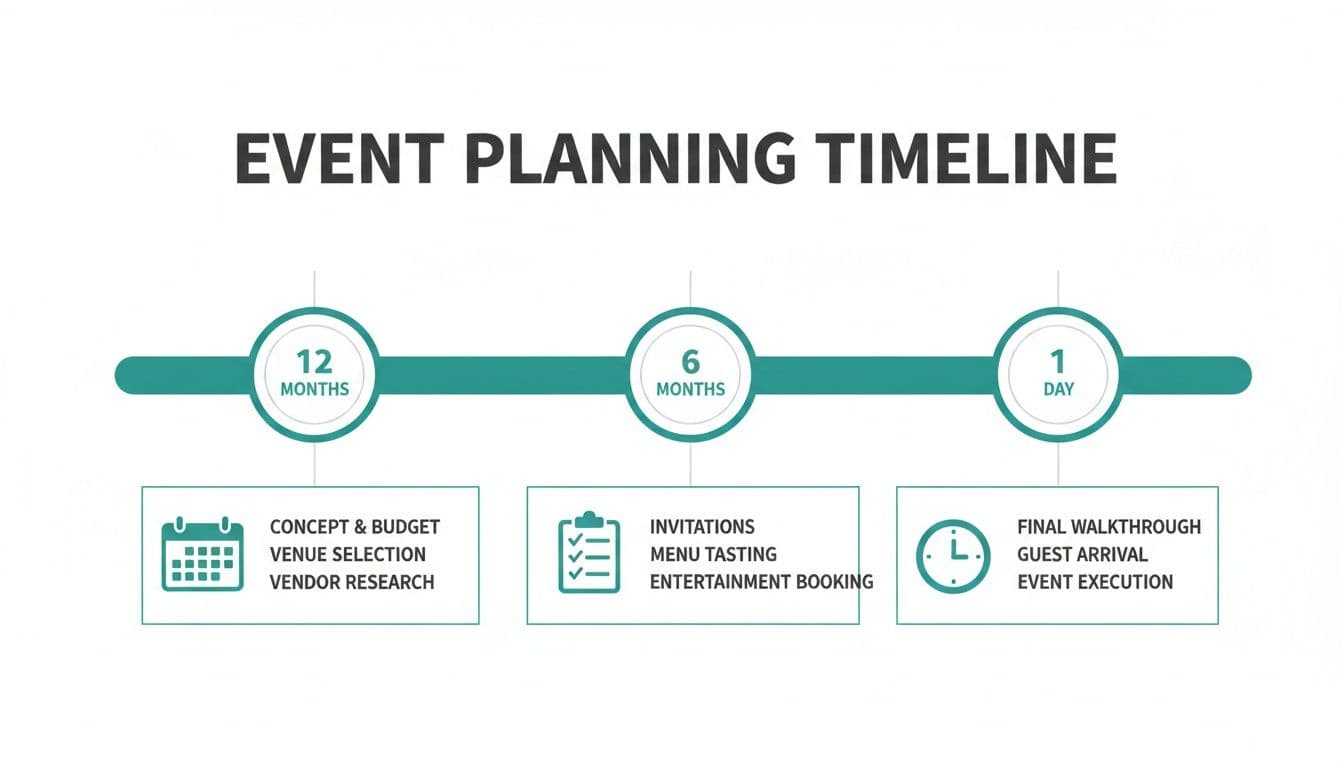
As you can see, the heavy, strategic decisions happen early. This frees up those final chaotic weeks for execution.
Build a Timeline That Actually Works
A great timeline is a central command center that assigns ownership for every task. It keeps your staff, key volunteers, and board on the same page. A good event planning checklist template can be a lifesaver here.
Here's a sample breakdown you can adapt:
- 10-12 Months Out: Lock in your goals, budget, and event date. Start your venue research.
- 6-9 Months Out: Secure your major players like caterers and entertainment.
- 4-5 Months Out: Launch the event website and open early-bird ticket sales.
- 2-3 Months Out: Time for the first big email invitation push. Finalize your program flow.
- 1-2 Months Out: Recruit and train your event-day volunteers.
- The Final Week: Confirm final numbers and logistics with every vendor.
A well-built timeline does more than prevent panic. It makes sure every action is a deliberate step toward hitting your goals.
Organize Your People (Without the Chaos)
Now for your most valuable resource: your people. You can't pull off a great event alone. But managing volunteers and staff can become a messy web of spreadsheets and emails.
Imagine having one central place for everything. Think of the hours you'd save if volunteers could sign up for shifts themselves.
This is what an integrated system gives you. Within AlignMint, our volunteer management tools are built right in. And because we offer plan-based user allowances (1 on Free, up to 10 on Plus, up to 25 on Pro, and unlimited on Enterprise), you can bring your entire team into the system. See how this works by reading our guide on volunteer management best practices.
Promoting Your Event and Selling Tickets Effectively
An empty room is an event planner's biggest fear. We'll make sure that doesn't happen. Strong promotion is about creating targeted invitations that make supporters feel valued.
Reach the Right People with Targeted Messages
You will always get a better response by sending the right message to the right group. If you have a built-in marketing suite, it's simple to segment your donor list. For example, offer an early-bird discount to past attendees.
This targeted approach lets you:
- Reward Loyalty: Send a "first look" at tickets to everyone who attended last year.
- Engage New Prospects: Craft a message for recent volunteers who haven't yet given.
- Court Major Donors: Send a personal note from you for a more formal invitation.
This is a headache when your donor data is in one system and your email is in another. When they're connected, these campaigns take minutes, not hours. For more ideas, read our guide on how to promote an event.
Make Buying Tickets Simple and Secure
You can create a beautiful online giving page in minutes. This makes it easy for people to buy tickets or donate. Set up different ticket levels and securely process payments on the page.
This removes the friction that causes people to abandon the process. Simplicity is a key part of thoughtful nonprofit donor management.
The Power of an All-in-One Approach
This is where you'll feel the biggest difference. Many nonprofits we talk to try to stitch together Eventbrite for tickets, Mailchimp for emails, and QuickBooks for accounting. While these are all good tools, the time spent taping them together is a drain.
The real cost of using separate tools isn't the subscription fees - it's the lost data and wasted time. Manually moving data between platforms risks errors and loses valuable insights.
When your event management is part of an all-in-one platform, information flows automatically. When someone buys a ticket, their details are instantly updated in your donor database.
It can be hard to visualize the difference until you see it laid out. Here's a quick comparison of what it's like to manage event tasks with separate tools versus an integrated platform.
Comparing All-in-One vs. Standalone Event Tools
| Task | Using Separate Tools (e.g., Eventbrite + Mailchimp + QuickBooks) | Using an All-in-One Platform (AlignMint) |
|---|---|---|
| Sending Invitations | Export a list from your CRM, import it into Mailchimp, and hope the fields match up. | Create a smart list in your CRM and send targeted emails directly from the platform. |
| Tracking Ticket Sales | Run a report in Eventbrite, then manually cross-reference it with your donor list to see who has bought tickets. | See every ticket purchase, donation, and attendee name in real-time, right inside their donor profile. |
| Thanking Attendees | Export the attendee list after the event, import it into Mailchimp, and send a generic thank-you email. | Set up an automated thank-you email that goes out instantly after a ticket purchase, with a personalized receipt. |
| Post-Event Follow-Up | Pull reports from three different systems to figure out who attended but didn't donate, or who bought a VIP ticket. | Instantly see a complete history of the supporter's engagement - event attendance, donations, and more - all in one place. |
| Reconciling Finances | Manually enter ticket sales revenue into QuickBooks, trying to match lump-sum payouts from Eventbrite. | Every ticket sale is automatically recorded in your fund accounting system, tied to the specific donor and event. |
As you can see, the all-in-one approach eliminates entire categories of manual work.
This unified view is incredibly powerful. You can even use our AI assistant, Minty, to ask questions in plain English. For instance, "Show me donors who attended the gala but haven't given this year." You get an instant list for your next follow-up call. Smart nonprofit marketing strategies are fueled by good data.
Your Event Day Is Here - It's Time for a Smooth Finish
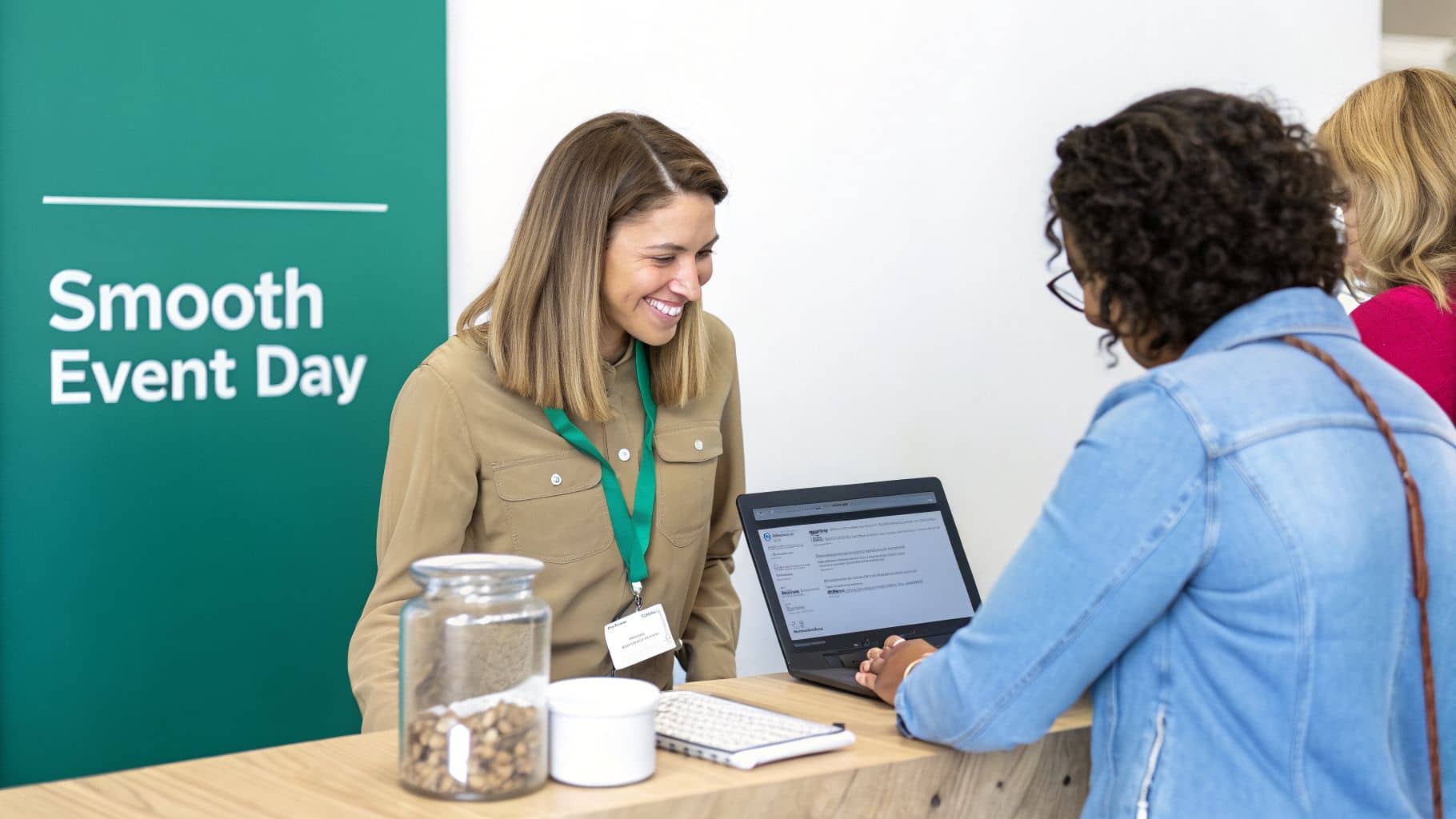
The day of your event is when everything comes together. Your focus shifts from logistics to people. A smooth, professional experience for every guest is now the top priority.
Imagine your team checking in guests and processing donations without fumbling between apps. This unified approach keeps the welcome line moving. It lets your team focus on connecting with donors, not wrestling with technology.
Executing a Flawless Event Day
A successful event runs on clear communication and instant access to information. Your staff and volunteers need to operate as a single, coordinated team. With a platform like AlignMint, everyone has the same real-time data.
Here's how that plays out on the day of:
- Quick Check-In: Look up attendees by name in seconds or scan their ticket's QR code.
- On-Site Donations: Easily process a credit card donation right in the system.
- Easy Volunteer Coordination: Quickly find a volunteer's assignment and contact info.
Recent data shows 74.5% of nonprofits have adopted hybrid models. And with 78% of planners committing to this format, tech that supports both is no longer optional.
Turning Attendees Into Loyal Supporters
Your work isn't finished when the last guest leaves. What you do in the 48 hours after your event is critical. This is your window to turn attendees into committed supporters.
The goal of post-event communication is to make every guest feel seen and appreciated. This simple act of stewardship is one of the highest-return activities you can do.
Because all your data lives in one place, follow-up can be fast and personal. You can set up workflows to send thank-you emails and receipts automatically. No one slips through the cracks. This post-event follow-up guide can give you a great framework.
With a few clicks, you can analyze your return on investment. You can see which channels brought in the most attendees. This is how you gather the insights to make your next event even better.
Your Next Step Toward Better Events
Hopefully, you now see how a structured approach transforms event planning. It's about working smarter to create experiences that resonate.
By bringing your planning, budgeting, volunteer management, and marketing into one place, you stop wasting time. You get a complete picture of your event's health. This frees you up to connect with the people who believe in your work. Running a successful silent auction or annual gala feels much simpler when everything is connected.
We built AlignMint because we are nonprofit leaders who have lived these challenges. We know the frustration of juggling too many tools and the need for clear, simple reporting.
That's why we created a single platform to handle it all. It connects everything from true fund accounting to your post-event thank yous. You can see how this connected method helps your broader efforts in our guide on nonprofit donor management.
If your organization raises under $100K a year, you can start with our free plan. For everyone else, our pricing is simple. You get everything, including plan-based user allowances (1 on Free, up to 10 on Plus, up to 25 on Pro, and unlimited on Enterprise), with no surprises.
Related:
- Nonprofit Event Ticketing Software - Registration, tickets, payments
- How to Run a Silent Auction - Items, bidding, checkout
- Fundraising Tools - Email, SMS, events, and Donor Journeys in one platform
- Events & Ticketing - See how AlignMint handles event management
At AlignMint, we built the all-in-one platform we wished we had when we were in your shoes. See how you can bring your accounting, fundraising, events, and marketing into a single system by exploring our platform today at getalignmint.org.
Frequently Asked Questions
Ready to try AlignMint with your nonprofit?
Start free — set up donor tools, giving pages, and Minty. Upgrade when you need accounting.