

Quick Answer: Hiring a Major Gift Officer
A guide for nonprofit leaders on how to find, hire, and support a major gift officer who builds real relationships and secures transformational gifts. The sections below walk through practical steps, examples, and what to watch for.
For related reading, see association fundraising professionals and nonprofit donor management.
As a leader, you know a few large gifts can change your organization's future. That is the job of a great major gift officer. They build real relationships that connect your mission with the passion of your most committed supporters. This guide shows you how to find, hire, and support this critical role.
What a Great Major Gift Officer Actually Does
Let's look past the job title. You need someone who does more than send appeal letters. A strong major gift officer is your ambassador to your most vital partners. Their main job is building deep, lasting relationships that fuel your work for years.
This role requires a patient, long-term process. It begins with identifying potential major donors and carefully cultivating those relationships. They listen more than they talk, seeking to understand a donor's personal story and motivations.
Moving Beyond Transactional Fundraising
You can break the cycle of simply asking for and receiving money. Your major gift officer can shift the dynamic from a simple donation to a meaningful investment in your mission.
They achieve this by:
- Connecting Passion to Projects: They match a donor's specific interests, like education or animal welfare, with your nonprofit's funding needs.
- Building Trust Over Time: They provide consistent, personal updates on the impact of past gifts, showing donors how their money made a difference.
- Creating a Community: They make top supporters feel like valued insiders and partners, not just names on a mailing list.
Their focus is on securing high-impact gifts that fund new programs and capital campaigns. They build a community of dedicated donors who are personally invested in your success.
The Foundation of Sustainable Growth
The role of a major gift officer is strategic, not just tactical. They are building and nurturing a portfolio of relationships. This is different from mass-market appeals or annual fund drives. Major gifts provide the transformational fuel needed for real growth.
For example, a donor giving $1,000 annually might be able to give $25,000 for a project they care about. A skilled major gift officer uncovers that potential and builds the bridge to make it happen. You can learn more about nurturing these relationships by understanding donor stewardship.
By focusing on this high-touch approach, you create a sustainable pipeline of support. This pipeline is less vulnerable to economic shifts than smaller, volume-based fundraising. This is a key piece of any solid nonprofit development plan.
The Skills and Metrics That Truly Matter
When hiring a major gift officer, it is easy to focus on the wrong things. We often look for a smooth talker or someone with a long list of past fundraising totals. But top-performing MGOs are defined by a genuine curiosity for people and strategic patience.
The best MGOs are exceptional listeners, not talkers. They seek to understand a donor's story and motivations long before a gift is mentioned. They know trust is the only real foundation for transformational giving.
The Soft Skills That Drive Hard Results
As you interview candidates, you need to look past the resume and screen for these essential traits. These are better predictors of success than a list of dollars raised. A great major gift officer consistently shows:
- Genuine Curiosity: They ask thoughtful, open-ended questions and listen to the answers. Their goal is to uncover a donor's true passions, not just find an opening for an ask.
- Strategic Patience: They understand that significant gifts require time. They do not rush the process, focusing instead on building a real, authentic connection first.
- High Emotional Intelligence: They can read a room and navigate delicate conversations with grace. They build rapport with a wide range of personalities.
- Resilience: They do not get discouraged by a "no" or a slow-moving relationship. They see it as a natural part of the journey, not a failure.
These qualities allow an MGO to build the authentic relationships necessary for a sustainable major gifts program. After all, proper donor stewardship requires this level of care to turn one-time major donors into lifelong partners.
The Numbers That Actually Predict Success
While soft skills are the engine, you still need a dashboard to see if you are moving. Focusing only on dollars raised is like driving by looking in the rearview mirror. Instead, you need to track the activities that lead to results.
Do not just measure the destination (dollars raised); measure the journey. Your key performance indicators (KPIs) should track the meaningful interactions that build momentum over time.
Focus on leading indicators (actions you can control) instead of just lagging indicators (the results that follow). Here are the core metrics that give you a clear, real-time view of your MGO's activity.
| Metric | What It Measures | Why It Matters for You |
|---|---|---|
| Meaningful Contacts | The number of substantive calls, emails, or meetings. | This tracks proactive outreach and relationship-building effort, not just busywork. |
| Face-to-Face Visits | The number of in-person or significant virtual meetings. | This is the gold standard for deepening relationships and moving a prospect forward. |
| New Prospects Qualified | The number of new potential donors identified for the portfolio. | This shows your pipeline is being actively filled, ensuring future sustainability. |
| Proposals Submitted | The number and value of formal gift proposals presented to donors. | This is a direct measure of how many qualified prospects are being asked for a gift. |
| Portfolio Velocity | The time it takes a prospect to move from one stage to the next. | This helps you spot bottlenecks in the cultivation cycle and see where donors are "stuck." |
Tracking these indicators gives you a real-time pulse on progress. With a unified system like ours, these data points are captured automatically. This gives you an always-on view of your major gifts engine without chasing down reports.
How to Find and Interview Your Next MGO
Finding your next major gift officer is one of the most important hires you will make. Your time is precious, and getting this right can transform your organization's future. The wrong fit can set your fundraising back for years.
A great hiring process must go beyond the resume to uncover true relationship-building talent. You are looking for someone with strategic patience and a genuine curiosity about people. You need a partner who can build deep connections with people who care about your mission.
Crafting the Right Interview Questions
To find that person, you have to ask the right questions. Forget obvious ones like, "What's the biggest gift you've ever closed?" That number tells you almost nothing about their ability to build trust.
Instead, focus your questions on behavior, resilience, and strategy. These questions reveal a candidate's true character and approach:
- "Tell me about a time a donor relationship didn't work out. What happened, and what did you learn?" This question uncovers self-awareness and resilience far better than any success story.
- "Describe how you would spend your first 90 days in this role." You are looking for a structured plan that prioritizes learning - about the mission, donors, and the team.
- "How do you stay connected with a donor when there is no active ask on the table?" This gets to the heart of long-term stewardship. The best answers will be about providing value and mission-focused updates.
Ask questions that test for emotional intelligence, not just fundraising totals. Your MGO's ability to handle nuance and build trust is more valuable than a single big win.
Checking for Mission and Culture Fit
Beyond skills and experience, your next MGO must believe in what you do. During the interview, listen for clues that they have done their homework on your organization. Do they ask thoughtful questions about your programs or the community you serve?
A candidate who is genuinely excited about your mission will bring an energy that donors can feel. You should also consider their personality and work style. If your team is highly collaborative, a "lone wolf" MGO could disrupt your internal culture.
Finally, think about how they will interact with your systems. A candidate who complains about data entry or resists using a donor management CRM will likely struggle. You need a partner who sees your systems as tools that free them up to spend more time with donors.
Setting Your New Hire Up for Success
You have hired a great major gift officer. Now onboarding begins. Give them the structure and tools they need to succeed from day one. An MGO's first 90 days are make-or-break, and a clear plan is the most important asset you can give them.
The most valuable thing you can hand your new MGO is a well-defined, focused donor portfolio. It is tempting to dump a long list of every potential donor onto their plate. But that is a recipe for burnout. This role is about depth, not breadth.
Building a Manageable and Strategic Portfolio
A focused portfolio of around 100-120 qualified prospects is the sweet spot. Anything more, and the personal relationship-building required becomes nearly impossible. The goal here is quality of interaction, not the quantity of names on a list.
This focus allows your MGO to dedicate their time where it will have the greatest impact. In fact, nearly half of top fundraisers would spend 60% of their time nurturing their top 20 prospects. You can see more on how fundraisers are zeroing in by reviewing these major giving trends.
This graphic shows how a structured hiring process is the first step toward a successful major gifts program.
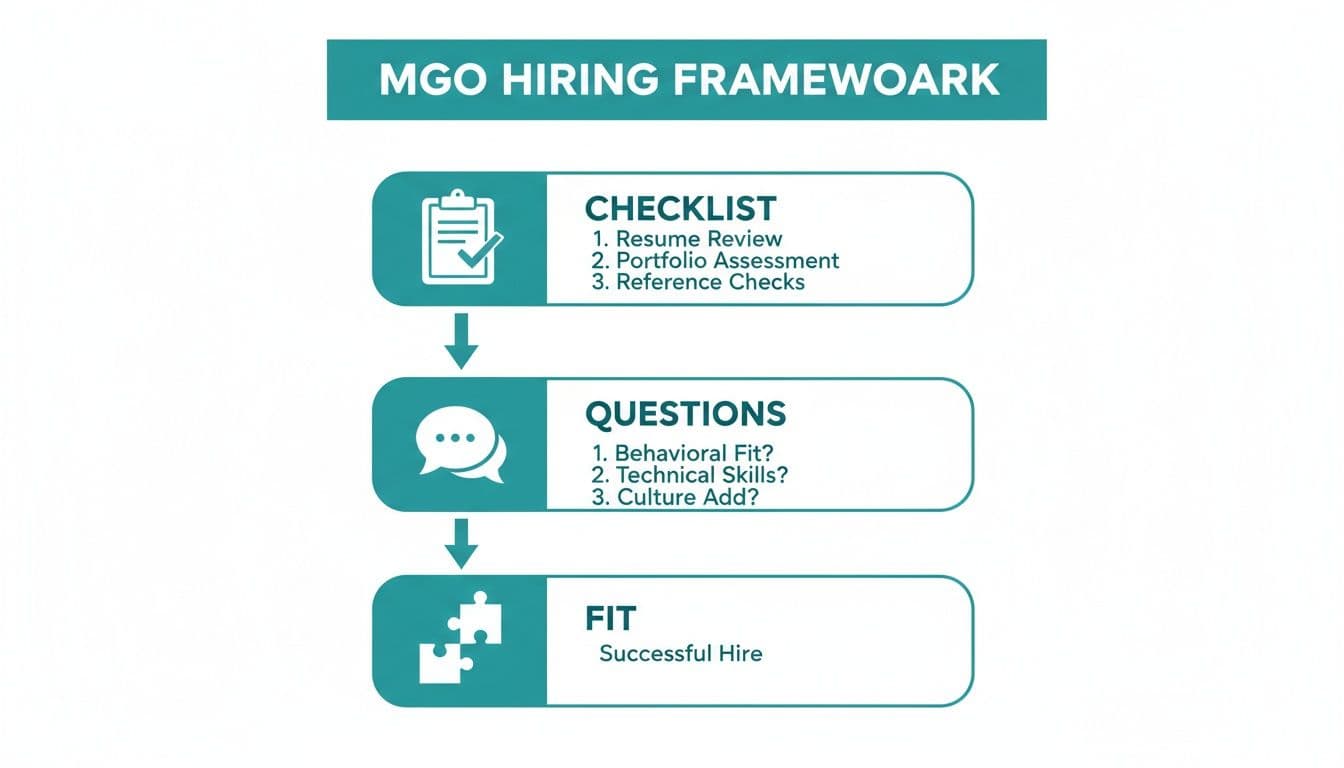
As you can see, success is not just about finding someone with fundraising experience. It is about a deliberate process that ensures they are the right fit for your mission and your team.
Equipping Them with the Right Tools
Beyond the portfolio, your new hire needs the right technology. An MGO's time is too valuable to be wasted toggling between spreadsheets and financial reports. They need a system that brings all that scattered information together into one coherent view.
A unified platform connecting donor information with financial data saves your MGO from administrative headaches. It lets them focus on building relationships, not hunting for information.
With our integrated system, they can see a donor's complete story in one place. Every donation, every event attended, every volunteer shift - it is all there. This unified view, combined with true fund accounting, lets them speak with confidence about a donor's impact.
Giving Your MGO the Right Tools for the Job
Your major gift officer's time is your nonprofit's most valuable asset. The more time they spend building relationships, the more high-impact gifts you will secure. Do not let their days get consumed by manual data entry or hunting for information.
The right platform also gives your MGO the data needed to capitalize on today's generosity. With total US charitable giving hitting $592.50 billion in 2024, the opportunity is massive. You can explore more on these fundraising statistics and what they mean for nonprofits.
A Complete Picture of Every Donor
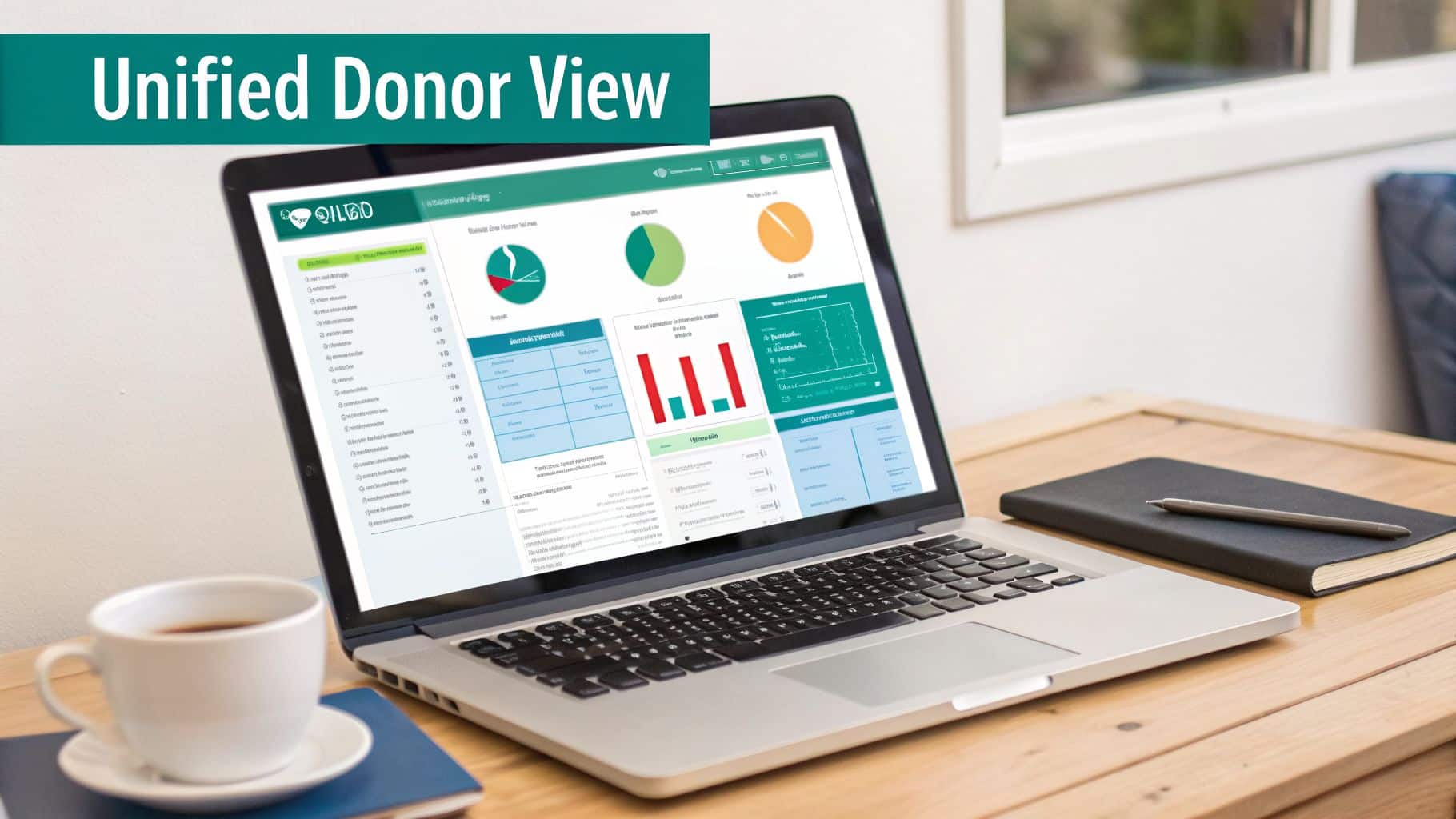
You can give your MGO a huge advantage with a system that puts everything in one place. Imagine all donor communications, giving history, and financial data on a single screen. This is what our all-in-one platform provides.
With AlignMint, your major gift officer sees a complete picture of a donor's engagement. They can instantly see everything from past event attendance to volunteer hours. This is a huge step up from separate systems like Bloomerang or DonorPerfect, where donor data is often disconnected from your financial information.
Connecting Fundraising to Finance
Your MGO can have smarter conversations with our built-in true fund accounting. When donor management is directly connected to your financials, your MGO can speak with total confidence about impact. They no longer have to ask your finance team for a report before a big meeting.
Instead of saying, "Let me get back to you," your major gift officer can immediately show a donor how a new gift can fill a specific gap. This transparency builds trust and accelerates the gift conversation.
This is the power of our integrated donor management software. It transforms conversations by arming your MGO with real-time, accurate financial details. They can discuss restricted gifts and program funding with complete certainty.
The Future of Major Gifts and Your Strategy
The world of philanthropy is changing. To build a sustainable future, you need to focus on deep, lasting relationships with individual donors. Old funding sources are not as reliable as they once were.
Resilient nonprofits are becoming less dependent on government funding. They are focusing instead on major and planned gifts. As noted in Orr Group's 2026 philanthropy trends, a historic wealth transfer has created a great environment for relationship-driven fundraising.
Using Intelligence to Guide Your MGO
Your MGO can work smarter, not just harder. Our technology can surface valuable insights from your donor data. This is not about replacing your MGO's gut feeling; it is about backing up their intuition with facts.
For instance, our built-in assistant, Minty, can answer plain-English questions about your own data. You can ask it to find every donor who attended your last three events but has not yet made a major gift. This instantly gives your MGO a pre-qualified list of warm prospects.
This technology does not replace the human touch of a great MGO. It empowers them by handling the data-sifting, freeing up their time for personal connections.
An All-in-One Approach for a Modern Strategy
A modern fundraising strategy falls apart without modern tools. When your systems are disconnected, your MGO wastes hours hunting for information. They check one system for donations, another for volunteer history, and then ask your finance team for details.
With an all-in-one platform like AlignMint, all that information is connected in one place. Donor profiles are linked directly to your true fund accounting data. This means your MGO can confidently discuss the real-time balance of a restricted fund.
By giving your team the right tools, you position your nonprofit to thrive. This approach helps you plan for long-term growth.
Ready to give your major gift officer the tools they need to succeed? See how AlignMint brings your fundraising, accounting, and donor data together in one simple, powerful platform. Get started for free at getalignmint.org.
Frequently Asked Questions
Ready to try AlignMint with your nonprofit?
Start free — set up donor tools, giving pages, and Minty. Upgrade when you need accounting.