


10 Proven Church Growth Strategies for a Thriving Ministry
Quick Answer: Church Growth Strategies
Church growth strategies work best when outreach, small groups, digital giving, and volunteer engagement connect to the same records. Start with one clear next step for guests, one giving path, and one volunteer follow-up rhythm. See church fund accounting when growth increases designated gifts and board reporting needs.
For related tools, see AlignMint features. Growing your church today feels more complex than ever. You are trying to deepen spiritual formation while also managing budgets, volunteers, and outreach programs. This guide offers proven church growth strategies to help you build a thriving and sustainable ministry with confidence.
We wrote this for leaders like you, focusing on practical steps that work. Many of our insights come from working with churches and nonprofits, so we understand your challenges. This article will show you how to connect your operations so you can focus on your mission.
1. Make Giving Easy with Digital Options
You can increase generosity by making it simple for people to give. Digital giving allows your congregation to support your mission easily from your website or a mobile phone. This removes the hassle of remembering a checkbook or carrying cash.

When you make giving convenient, you often see an increase in both the frequency and amount of donations. This approach can stabilize your church's finances and fund new community programs. With AlignMint, you can create beautiful online giving pages that connect directly to our true fund accounting system.
How to Get Started
- Make it Obvious: Announce your digital giving options during services. Also, place clear instructions on your website's homepage.
- Keep it Simple: Your online giving page should take no more than two or three clicks to complete a donation.
- Offer Recurring Giving: Provide an option for members to set up automatic, recurring donations. This creates predictable income for your budget.
- Connect Your Systems: To implement digital giving, understanding how payment gateways work is fundamental. Connecting your giving platform to a central system helps you see a complete picture of your donors' activity.
2. Build Deeper Connections Through Small Groups
You can build a more connected community by expanding your small group ministry. These groups create an environment for fellowship and study that is hard to achieve on Sunday mornings. This helps people move from being attendees to active participants.
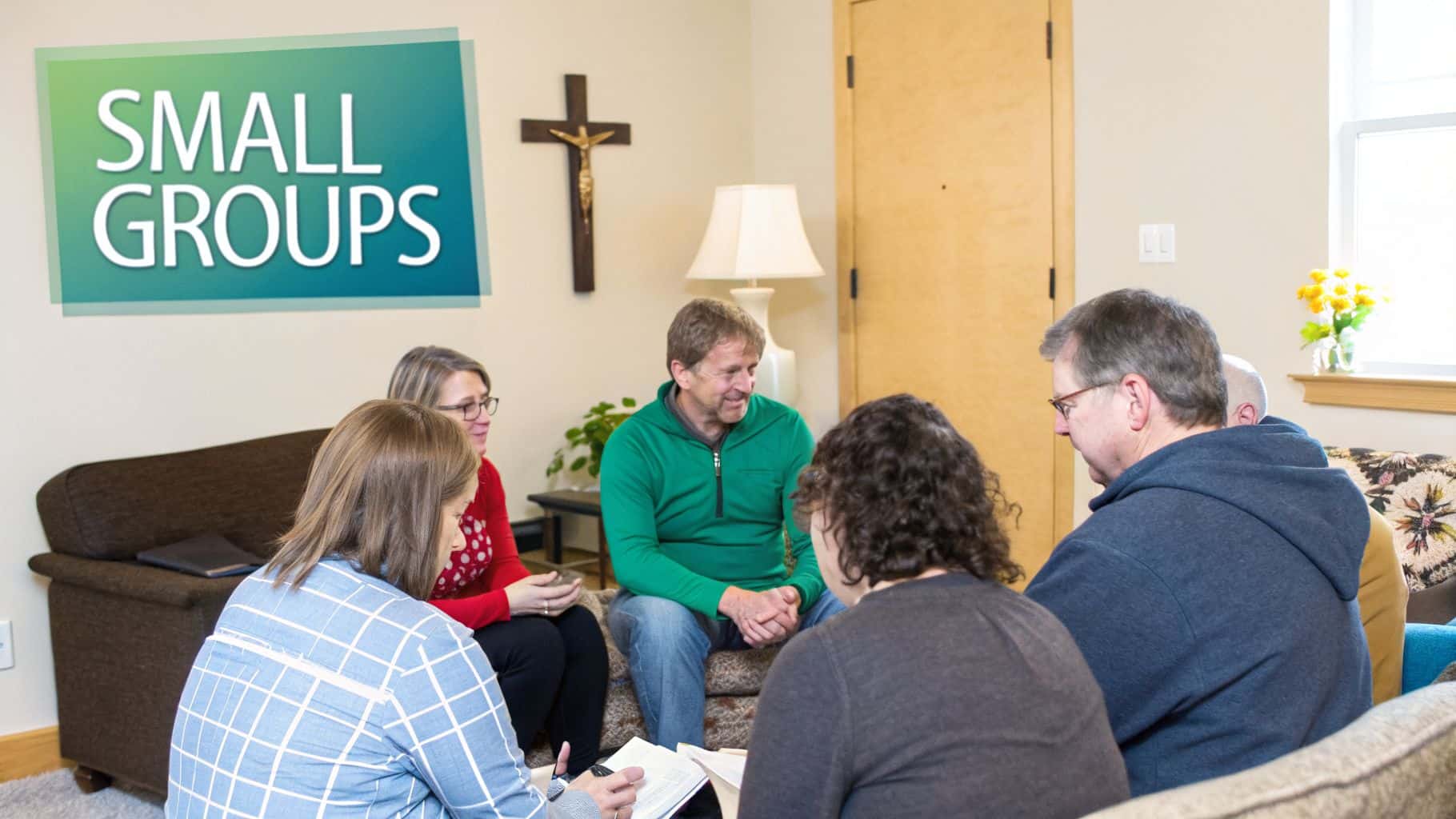
This strategy turns your large congregation into a network of smaller, supportive communities. It also creates a natural pathway for developing new leaders. As groups grow, they can multiply, extending your church's care without needing more buildings or staff.
How to Get Started
- Offer Variety: Provide different types of groups that meet people's needs. Include in-person, online, and hybrid options at various times.
- Create Clear Pathways: Develop a simple process for people to find and join a group. Promote this on your website and during services.
- Equip Your Leaders: Build a strong training program for your small group leaders. They are essential to the health of this ministry.
- Track Your Progress: Use a system to monitor group attendance and see who is not yet connected. Understanding church volunteer management is key to supporting these vital leaders.
3. Show Your Faith Through Community Service
You can demonstrate your church's values through practical community service. By creating initiatives that meet local needs, you build a positive reputation in your town. This creates natural, low-pressure ways for people to connect with your mission.
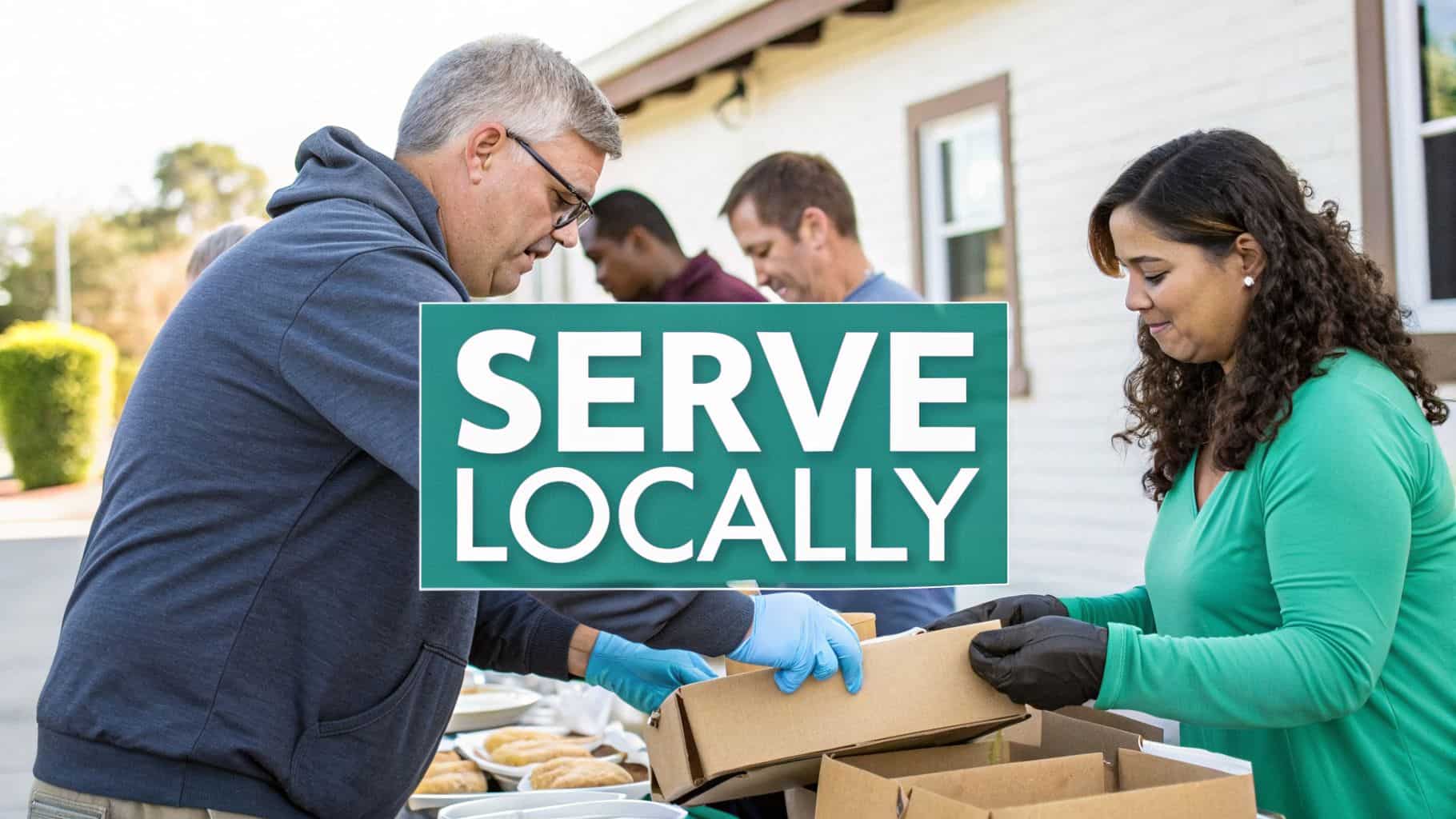
This strategy turns your church into a community hub, not just a Sunday destination. It can attract people looking for hope and help, creating organic opportunities for them to explore faith. Platforms like Planning Center are good for scheduling volunteers for events. However, they lack integrated accounting to track program costs.
How to Get Started
- Start Focused: Begin with one or two high-impact programs you can run well. Expand as your capacity grows.
- Partner for Impact: Work with local nonprofits to benefit from their expertise instead of starting from scratch.
- Create Clear Pathways: Design a simple journey for a volunteer to get more involved, like joining a small group.
- Measure and Share: Use a volunteer management system to track service hours and people helped. Share these stories through your built-in marketing suite to inspire support.
4. Reach New Neighborhoods with a Multi-Site Strategy
You can reach new communities by launching additional campuses. This approach is for churches that have reached the limits of their current building. These locations often show the main service on video while having their own local pastors and volunteer teams.
This model enables you to expand your reach into different neighborhoods or cities. It allows you to maintain a consistent culture while creating distinct community hubs. To do this well, you need strong financial controls to manage funds across locations.
How to Get Started
- Invest in Technology: High-quality video and sound are critical for an engaging worship experience at every campus.
- Establish Local Leadership: Empower dedicated campus pastors and local leaders to provide pastoral care and build community.
- Centralize Key Operations: Unify your core systems to maintain consistency. AlignMint provides true fund accounting, not just classes like QuickBooks, for financial integrity.
- Replicate Systems: For financial clarity across locations, it is important to understand the details of multi-campus church accounting.
5. Help Visitors Feel at Home from Day One
You can improve growth by making first-time visitors feel seen and welcomed. This means creating a clear pathway that guides a visitor from their first visit to becoming an engaged member. It moves beyond a friendly handshake to an intentional journey.
When you design this journey, you help people find a place to belong. This strategy honors the effort a person made to visit your church. It is one of the most effective ways to help your community grow.
How to Get Started
- Create Clear Next Steps: Use simple signs to show people where to get coffee or check in their kids.
- Train Your Hospitality Team: Your greeters are the face of your church. Train them to answer common questions and make personal connections.
- Automate Your Initial Follow-Up: Use your management system to send a thank-you email from the pastor within 24 hours.
- Capture Visitor Information Simply: A simple digital check-in or physical card works well. This helps you connect people to programs and small groups that match their interests.
6. Fund Your Vision with Strategic Giving Campaigns
You can unite your congregation around a significant goal through a giving campaign. These campaigns fund major projects like a new building or technology upgrades. By sharing a compelling vision, you invite members to own the church's future.
When people see a tangible need and a clear plan, they often give sacrificially. This approach creates momentum that extends beyond the financial goal itself. It builds a legacy for the next generation.
How to Get Started
- Cast a Compelling Vision: Explain not just what you are building, but why it matters for your mission. Use video testimonies to make it personal.
- Be Transparent with Finances: Clearly outline the total cost and what has been raised. This builds trust and encourages participation.
- Offer Multiple Ways to Give: Allow for one-time gifts, multi-year pledges, and non-cash gifts like stock.
- Track Pledges and Progress: Understanding how a CRM supports donor management is critical for tracking these commitments and providing personalized updates.
7. Reach More People with Digital Marketing
You can connect with people beyond your building by meeting them online. A digital marketing strategy lets you build community and share your message on platforms like Facebook and Instagram. This is essential for reaching younger generations.
When your church shows up online with authentic content, it creates regular touchpoints for engagement. This strategy moves your church from being a weekly event to a daily presence in people's lives. AlignMint's built-in marketing suite lets you send emails and manage social media from one place.
How to Get Started
- Be Consistent: Post engaging content 3-5 times per week. This includes sermon clips, volunteer stories, and event news.
- Prioritize Video: Create and share short videos, like testimonies or sermon recaps. Video often gets more engagement than images.
- Build Your Email List: Use your website and social media to offer helpful resources in exchange for an email address.
- Engage Authentically: Your online presence should be a conversation. Respond to comments and messages to show you care and are building a strong church community.
8. Guide Spiritual Growth with a Discipleship Pathway
You can ensure healthy growth by creating a clear plan for spiritual development. A discipleship pathway guides members from being new visitors to becoming mature leaders. This structured approach helps people see their next step and deepens their commitment.
This ensures you are not just gathering a crowd but are developing a congregation. It creates a reliable pipeline of future volunteers and leaders. They will be equipped to carry the mission forward.
How to Get Started
- Define Clear Stages: Map out your discipleship process with distinct stages. Each stage should have a clear purpose and simple next steps.
- Offer Multiple Entry Points: Provide various ways for people to engage, such as small groups, classes, or service opportunities.
- Celebrate Milestones: Publicly acknowledge when members take a new step. This encourages them and inspires others.
- Track Progression: Use a volunteer management system to see where individuals are on their journey. This helps you provide timely invitations and support.
9. Invest in Future Leaders with a Development Plan
You can ensure long-term health by developing future leaders within your church. This means identifying, training, and preparing future pastors and key staff. This approach prevents burnout and provides stability during transitions.
When you intentionally invest in your team, you create a pipeline of talent ready for more responsibility. This strategy secures your church's future. It ensures the mission continues, no matter who is in the lead role.
How to Get Started
- Create a Leadership Pipeline: Document clear roles and advancement steps for potential leaders. Make the path from volunteer to staff member clear.
- Assign Mentors: Pair high-potential individuals with experienced leaders who can provide coaching and guidance.
- Invest in Training: Set aside a budget for professional development. Allow staff and key volunteers to attend conferences or pursue education.
- Plan for Succession: Knowing how to track volunteer hours and skills in a system helps you identify potential successors. This data shows who is ready for the next step.
10. Amplify Your Impact Through Strategic Partnerships
You can achieve greater impact by collaborating with other churches and organizations. Building these relationships allows you to share resources and expand your reach. This works on the principle that we can accomplish more together.
Church planting networks like the Acts 29 Network help new churches get started with support and accountability. Partnering with a local food bank for a service day can introduce your ministry to new families. AlignMint's fiscal sponsorship tools are also helpful for managing these partnerships.
How to Get Started
- Start Small: Begin with one or two partnership opportunities to learn the process.
- Align on Vision: Focus on partners who share your core values and mission. This prevents future conflicts.
- Create Win-Win Initiatives: Design projects where every partner receives a clear benefit. This could be new volunteers or shared resources.
- Establish Clear Expectations: You can manage joint projects and coordinate volunteer efforts and hours for events with a good system.
Church Growth Strategies: A Quick Comparison
| Strategy | Implementation Complexity | Resource Requirements | Expected Outcomes | Ideal Use Cases | Key Advantages |
|---|---|---|---|---|---|
| Digital Giving | Medium | Payment processors, platform fees | Increased giving, better data | Modernizing payments, reaching younger donors | Convenient giving, recurring gifts |
| Small Groups | Medium-High | Volunteer leaders, training programs | Higher engagement and retention | Prioritizing community and discipleship | Deep relational connection, leadership that grows with you |
| Community Outreach | Medium-High | Volunteers, program staff, funding | Improved local reputation, new attendees | Aiming for visible public service | Demonstrates faith in action, attracts helpers |
| Multi-Site Expansion | High | Significant capital, video tech, staff | Geographic growth, larger capacity | Large churches expanding regionally | Scales reach with a unified vision |
| Guest Experience | Medium | Visitor-tracking tech, trained teams | Higher return rates | Converting visitors into members | Predictable next steps, better retention |
| Giving Campaigns | High | Campaign staff, marketing, tracking tools | Significant one-time giving | Capital projects, facility upgrades | Mobilizes large gifts, creates ownership |
| Digital Marketing | Medium | Content creators, ad budget, tools | Increased online engagement, reach | Seeking online growth, event promotion | Low-cost reach, measurable results |
| Discipleship Pathways | High | Curriculum, mentors, tracking systems | Deeper commitment, higher retention | Emphasizing spiritual maturity | Systematic member progression |
| Leadership Development | Medium-High | Senior leader time, training budget | Leadership continuity, reduced dependency | Preparing for growth or transitions | Builds sustainable leadership |
| Strategic Partnerships | Medium | Time for relationship-building | Extended reach, shared costs | Seeking coalition impact, resource sharing | Amplifies influence, enables cost-sharing |
Bring Your Growth Strategy Together in One Place
We have explored ten powerful church growth strategies. From digital giving and small groups to partnerships, the potential for growth is immense. These ideas offer a clear path to expand your ministry's reach and deepen its impact.
The common thread is connection. Growth happens when your outreach is connected to your discipleship, and your finances are connected to your vision. The most effective strategies do not operate in isolation. They build on one another, moving your ministry forward.
From Ideas to Integrated Action
Putting these ideas into practice can feel like a heavy lift. You might be managing finances in one system, donors in another, and volunteers on a spreadsheet. This fragmented approach creates extra work and prevents you from seeing the complete picture.
Imagine knowing which community project brought in the most new visitors who then became regular givers. This is the kind of insight that turns good strategies into great results. To achieve this, you need a way to connect your people, programs, and finances.
Key Takeaway: Real church growth is about creating a connected system where every part of your ministry works together. When your data is unified, you can make smarter decisions and focus your energy on people.
This is why we built AlignMint as an all-in-one platform. You can manage everything from online giving and donor management to your marketing and volunteers in one place. We even offer a free plan for churches with budgets under $100K and plan-based user allowances (1 on Free, up to 10 on Plus, up to 25 on Pro, and unlimited on Enterprise). Our AI assistant, Minty, can also help you analyze data and draft communications. This simplifies your work and gives you the clear reporting needed to lead with confidence.
Ready to stop managing software and start growing your ministry? AlignMint was built by nonprofit leaders to unify your accounting, donors, volunteers, and marketing. Learn more about AlignMint today.
Frequently Asked Questions
Ready to try AlignMint with your nonprofit?
Start free — set up donor tools, giving pages, and Minty. Upgrade when you need accounting.