

Managing a church's campaigns, events, recurring gifts, and donor relationships can consume every available hour. You may be tracking donations in one system, volunteers in another, and restricted funds in a spreadsheet that only one person understands.
These church fundraising tips give you a practical way forward. They focus on clearer donor communication, stronger financial controls, better volunteer coordination, and fewer disconnected tools, so your team can raise support without adding administrative strain.
Quick Answer: Church Fundraising Tips
Church fundraising works when giving pages, donor records, restricted funds, and volunteer capacity share one system. Digital giving now sits beside envelopes, so stewardship has to cover both without losing the restriction or the thank-you.
Pair this with church financial management and fundraising. For giving pages, see nonprofit donation page best practices.
1. Build a Donor Database That Connects Giving to Impact
A donor database becomes valuable when it shows more than names and gift totals. You need to know who gives, what they support, how often they give, and which conversations deserve attention next.
Start by bringing your existing donor records into one central system. Then connect each gift to the appropriate ministry, campaign, or fund. That connection lets you send accurate receipts, identify lapsed supporters, and explain the purpose behind giving without searching through multiple files.
Managing nonprofit donors and finances works best when donor information and financial records remain connected. AlignMint combines accounting, donor management, events, volunteer records, and marketing, giving your team one shared view instead of separate spreadsheets and applications.
Make stewardship easier to personalize
Your communications should reflect the donor's relationship with the church. A first-time giver needs a warm welcome, while a long-standing supporter may appreciate a ministry update or a personal call from a leader.
Create simple segments such as:
- First-time givers: Thank them promptly and explain how their gift supports the church's mission.
- Recurring donors: Share regular progress updates that reinforce the value of dependable support.
- Legacy supporters: Provide detailed stewardship and personal contact from trusted leaders.
- Lapsed donors: Assign a quarterly re-engagement task and lead with gratitude, not pressure.
Automated acknowledgments can free volunteers from repetitive receipt work. Fund tags also help donors understand where their money goes, which supports the transparency that donors increasingly expect.

Review donor trends quarterly. Look for changes in frequency, fund preference, and engagement, then give a named staff member or volunteer responsibility for follow-up.
2. Create Simple Online Giving Pages That Convert Casual Visitors
A visitor may feel ready to give after a service, livestream, community event, or social post. If the giving page takes too long to find or asks unnecessary questions, that moment can disappear.
Build a separate page for each meaningful appeal when the purpose differs. A building project, youth mission, benevolence fund, and general ministry should each explain the need in plain language. Donors should understand the purpose before they reach the payment form.
The nonprofit donation page best practices guide offers a useful framework for reducing friction. AlignMint's point-and-click page builder supports giving pages without requiring your staff to hire a designer or write code.
Design for both mobile and familiar giving habits
Digital giving now sits alongside checks, cash, envelopes, and in-service collections. A 2026 sector report found that digital giving represented 41% of total donations among churches that offer it, while recurring gifts represented 35% of digital giving. The 2026 Protestant Annual Church Giving Report provides that benchmark.
Offer digital choices without implying that older or traditional donors are behind. Keep envelope giving visible, add a QR code to printed materials, and make recurring giving available for people who prefer automatic support.
Your page should include:
- A clear purpose: Explain the ministry or project in direct terms.
- Suggested amounts: Tie each level to a real ministry outcome when accurate.
- Recurring giving: Present monthly support as an option, not an obligation.
- A short form: Ask only for information your church needs.
- Immediate thanks: Confirm the gift and explain what happens next.
Use a short pastoral video only when it adds clarity and warmth. The page still needs to work for visitors who prefer reading and giving discreetly.
3. Segment Donors by Giving Pattern and Capacity, Then Steward Strategically
A church shouldn't send every donor the same appeal. Communication becomes more respectful and more useful when you consider giving frequency, ministry interest, recent contact, and likely capacity.
Begin with three practical groups, monthly donors, annual donors, and occasional donors. Add a lapsed segment for anyone who has stopped giving, then assign a specific person to review that group regularly. You don't need a complicated scoring model to begin making better decisions.
Treat donor segments as living records
A donor may move from occasional giving to recurring support. A family may pause donations during a difficult season. A major supporter may need a personal conversation rather than another mass email. Update segments when circumstances change instead of treating them as permanent labels.
Giving patterns also require context. A frequent donor with smaller gifts may have a deeper long-term relationship than someone who made one large contribution. Review the history before deciding who deserves a personal call or a personalized invitation.
Practical rule: Segment first by relationship and behavior, then decide what each group needs to hear.
Use your database to assign stewardship tasks. One volunteer can thank first-time donors, a pastor can call selected long-term supporters, and a finance leader can prepare updates for restricted-fund donors.
Church fundraising increasingly depends on both broad participation and careful major-donor stewardship. Giving USA 2025 reported that religion received $146.54 billion in 2024, representing 23% of all U.S. charitable giving, while religion's share fell from 34% in 2011. The Lake Institute's summary of Giving USA 2025 shows why churches need both wide participation and focused relationship work.
Review your segments quarterly. Measure second gifts, recurring conversions, and re-engagement activity, not just campaign totals.
4. Use Fund Accounting to Show Donors Exactly Where Restricted Gifts Go
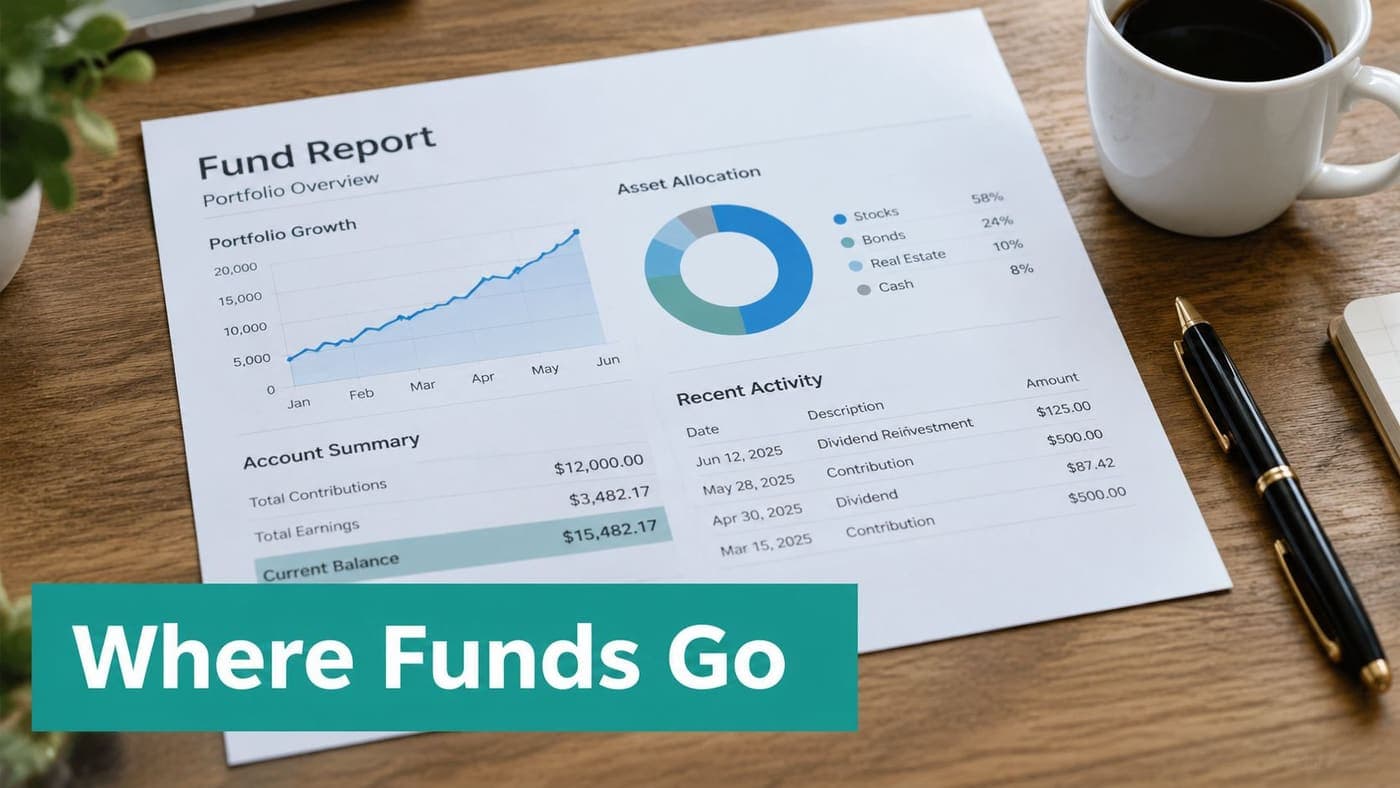
Restricted giving creates trust only when your accounting system can follow the restriction. A donation for youth ministry, building work, missions, or community meals shouldn't disappear into one general revenue balance.
True fund accounting keeps restricted and unrestricted activity distinct. Under FASB ASC 958, nonprofits report net assets in two classes, with donor restrictions and without donor restrictions. A restricted gift stays in the restricted class until the donor's purpose or time condition is satisfied, then the organization records a release from restriction. This guide to nonprofit fund accounting explains that mechanism.
Set up controls before the campaign begins
Create each major fund when you approve the appeal. Train the person receiving donations to tag gifts immediately, then review restricted balances monthly. This prevents a backlog and gives leadership an early warning when spending doesn't match the stated purpose.
Use fund reports in leadership meetings and congregation updates. Donors don't need a complicated accounting lecture, but they do need clear answers about received gifts, approved spending, remaining balances, and next steps.
A true fund accounting system differs from using classes in QuickBooks. QuickBooks can support many small organizations for familiar bookkeeping tasks, while dedicated nonprofit accounting tools model funds, programs, grants, and restrictions directly. The right choice depends on your reporting needs, but restricted gifts require disciplined tracking regardless of software.
AlignMint provides fund accounting for nonprofits, including restricted funds, grants, programs, and reporting designed for nonprofit operations. You can also review this modern guide to fund accounting for churches when establishing your internal process.
Prepare a restricted-fund report for the annual meeting. Clear reporting protects the church, supports donor confidence, and helps ministry leaders make decisions with current information.

5. Launch Text and Email Campaign Series Timed to Peak Giving Seasons
Your strongest appeal can underperform if it arrives without preparation. Plan campaign messages around the times your congregation already pays close attention, then support those appeals with useful updates throughout the year.
A study of more than 37,000 churches found that 38.74% of all gifts arrived on Sunday, and nearly one-third of total giving value came that day. December accounted for 13.79% of annual church giving volume, compared with 6.98% in January. The church giving benchmark report provides a practical reason to coordinate in-service announcements, email, text, and online giving pages.
Build a short sequence instead of one large request
Choose two important campaign windows and plan each well in advance. A sequence might include an introduction, a ministry story, a progress update, and a final reminder. Each message should have one clear action.
Keep the tone pastoral and specific. Explain what the church is doing, whom it serves, and what the congregation's support makes possible. Avoid sending a generic “please give” message without showing the need or reporting progress.
Use a simple campaign rhythm:
- First message: Introduce the purpose and invite initial support.
- Middle message: Share a verified update, story, or milestone.
- Final message: State the deadline and make the giving path obvious.
- Follow-up: Thank donors and report what happened next.
AlignMint includes email and text campaigns, giving pages, events, and campaign reporting in one platform. You can connect the appeal to donor records and fund activity instead of rebuilding lists in Mailchimp or another separate service.
For a seasonal outreach idea, review Valentine's Day fundraising and adapt the principle to your own congregation. Monthly impact updates also keep donors connected between major appeals.
6. Organize Volunteer Capacity to Scale Programs Without Hiring
Your church may have enough goodwill to expand a ministry, but not enough visibility to know whether volunteers can sustain it. Paper sign-up sheets and informal messages hide gaps until a program is already struggling.
A volunteer management system records skills, availability, schedules, groups, background checks, and service hours. That information helps you decide whether a meals ministry, youth program, school partnership, or community outreach effort can grow responsibly.
Give volunteers a simple way to participate
Start with your most active volunteers. Let them test the portal, confirm their profiles, and demonstrate the new process to others. Ask people to record hours soon after service, while the details remain fresh.
Monthly impact reports make volunteer contributions visible. Share which programs volunteers supported, what tasks they completed, and where the church still needs help. This recognition strengthens retention without turning service into a transaction.
AlignMint connects volunteer management with donors, finances, events, and communications. Your team can see whether a fundraising appeal created enough volunteer interest to support the ministry it funds. That connection matters when you report results to the board or congregation.
The best volunteer report answers one question: What did people make possible through their time?
Use capacity gaps to support funding requests. If a program repeatedly lacks coordination, show the hours being managed, the missed opportunities, and the workload carried by unpaid leaders. A paid coordinator may become easier to justify when leadership can see the evidence.
Keep the process accessible for volunteers who aren't comfortable with technology. Offer a short orientation, provide a paper alternative during transition, and make one staff member responsible for support.
7. Run Events That Break Even or Profit by Building Revenue Into the Design
A well-attended event can still weaken your ministry budget. Count every cost before announcing the event, then set revenue targets that protect the purpose of the gathering.
Begin with the net amount you need. Include venue, food, permits, payment processing, printing, supplies, entertainment, and staff time where appropriate. Then decide whether ticket sales, sponsorships, donations, concessions, or merchandise will cover the plan.
Put revenue decisions before event details
Secure sponsors before public promotion whenever possible. Offer clear recognition that fits your church's values, such as printed acknowledgment, event signage, or a mention during the program. Don't promise benefits your church can't deliver.
Use promo codes for different outreach channels. That tells you whether personal invitations, email, social posts, or partner organizations attracted attendees. Send attendee information to your donor database promptly, with consent and accurate contact details.
A simple event often produces better stewardship than an elaborate one. A breakfast, benefit concert, community sports day, or family activity can raise support while introducing new people to the church's work. The event should serve the mission, not force the mission to serve the event.
Check the net result
Afterward, compare projected and actual revenue, expenses, attendance, new contacts, and follow-up activity. An event that breaks even may still have value if it creates strong relationships, but leadership should name that outcome clearly.
Use one giving page for event donations and another for general support when the purposes differ. That keeps restricted and unrestricted activity clear and lets attendees choose how they want to help.
8. Build a Marketing Calendar and Track Campaign ROI So You Invest Smarter
Last-minute promotion creates pressure, duplicate messages, competing events, and repeated appeals without clear follow-up. Build one shared calendar for worship announcements, email, text, social media, events, grant deadlines, volunteer recruitment, and financial reporting. Begin with major giving seasons, then work backward to set preparation dates and approvals.
Give every campaign a clear measurement plan
Before launch, record the purpose, audience, fund, channels, owner, and desired action. Afterward, review donations, attendance, new contacts, recurring conversions, and completed follow-up. Use those results to repeat, revise, or retire campaigns.
Measure relationship outcomes alongside immediate revenue. A community event may introduce future donors, while an impact email may strengthen retention without generating a direct gift. Record both results in the same campaign review.
AlignMint connects email, text, giving pages, events, and donor records in one marketing suite. That shared record reduces duplicate entry and keeps outreach connected to financial activity, rather than splitting information across Mailchimp, Eventbrite, and spreadsheets. For event promotion, apply effective corporate function layout strategies to keep communications aligned with the attendee experience.
Review the calendar weekly and campaign results quarterly. Assign one owner, maintain one current calendar, and hold one short review meeting. This simple discipline helps church leaders direct staff time and fundraising costs toward campaigns that produce stronger financial and relationship outcomes.
9. Use AI to Surface Donor Insights Without Learning New Tools or Hiring Analysts
You don't need to become a data analyst to ask better questions about your church. You need access to reliable records and an assistant that can help you find patterns in plain language.
Minty, AlignMint's built-in assistant, can answer questions about your organization's real data without requiring exports or separate add-ons. Ask which donors haven't given recently, how much a fund received, or which programs need closer review.
Start with questions that lead to action
Use direct prompts such as:
- Review recent giving: Ask how much the church raised during a selected period.
- Find follow-up priorities: Ask for donors whose giving frequency has declined.
- Compare ministry support: Ask which funds received less attention than expected.
- Prepare a leadership discussion: Ask for a concise summary of campaign activity.
- Check unusual changes: Ask when giving patterns shifted and which records support that finding.
AI can save time, but it doesn't replace judgment. Verify surprising results before contacting a donor, changing a budget, or reporting a trend to the board. Confirm that fund restrictions and gift designations have been recorded correctly.
The AI-powered nonprofit donor analytics guide provides additional context for using AI in donor stewardship. Review insights monthly with finance and ministry leaders, then assign a human owner to each follow-up action.
The outcome isn't a clever report. It's a faster decision about whom to thank, which ministry needs attention, and what your congregation should hear next.
10. Centralize All Operations in One Platform So Your Team Isn't Switching Between Tools
Separate tools can each perform useful jobs. QuickBooks is familiar for general bookkeeping, Donorbox supports donation collection, Mailchimp supports email communication, Eventbrite supports event registration, and Google Forms can handle simple sign-ups.
The problem appears when your staff must move the same information between them. Donor records get duplicated, restricted-fund details fall out of sync, and reports require manual reconciliation.
Move toward one shared operating record
AlignMint brings accounting, CRM, volunteer management, events, marketing, and online giving into one platform. It includes true fund accounting rather than relying on QuickBooks classes, built-in marketing tools, Minty, and plan-based access without per-seat fees. Nonprofits raising under $100,000 per year can use AlignMint's free tier.
Start with an audit before changing software. List the tasks handled by every current tool, identify duplicate entry, and note which reports your finance committee requires. This prevents you from choosing a platform that solves one problem while creating another.
Use a phased migration:
- First phase: Move current-year accounting and active donor records.
- Second phase: Add online giving pages, campaigns, and recurring gifts.
- Third phase: Bring in events, volunteers, and communication workflows.
- Final phase: Archive older records after confirming reporting and retention needs.
Assign one power user to learn the workflows and support the rest of the team. Schedule weekly check-ins during the first month, and don't force every historical record into the first migration.
A unified system should make work easier to explain. When finance, ministry, and development leaders see the same fund, donor, volunteer, and campaign information, they can make decisions from shared facts.
10-Point Church Fundraising Strategy Comparison
| Item | Implementation complexity | Resource requirements | Expected outcomes | Ideal use cases | Key advantages |
|---|---|---|---|---|---|
| Build a Donor Database That Connects Giving to Impact | Medium, data migration and staff training required | CRM platform, migration time, staff training, data governance | Faster receipting, personalized stewardship, clearer donor impact visibility | Mid-size churches or nonprofits scaling donor relationships and restricted funds tracking | Unified donor records, fund-accounting link, automated receipts |
| Create Simple Online Giving Pages That Convert Casual Visitors | Low, drag-and-drop setup, minimal technical work | Page builder, payment processing, clear copy and mobile optimization | Higher first-time conversions, faster campaign launches, increased mobile giving | Time-sensitive campaigns, emergency appeals, organizations wanting easy online giving | Fast setup, mobile-responsive templates, integrated payments |
| Segment Donors by Giving Pattern and Capacity, Then Steward Strategically | Medium, segmentation rules and workflows to configure | Clean giving data, staff to define segments and run targeted campaigns | Improved retention, higher lifetime value, better major-donor identification | Organizations with diverse donor profiles seeking targeted stewardship | Automated segmentation, capacity modeling, segment-specific workflows |
| Use Fund Accounting to Show Donors Exactly Where Restricted Gifts Go | Medium–High, requires fund modeling and disciplined tagging | Fund-aware accounting system, trained staff, regular reporting cadence | Increased donor trust, simplified grant/Form 990 compliance, transparent reports | Churches and nonprofits receiving restricted gifts or grant funding | True restricted-fund tracking, donor-facing fund balances, compliance reporting |
| Launch Text and Email Campaign Series Timed to Peak Giving Seasons | Low–Medium, template setup and automation configuration | Email/SMS tool, content creation, audience segmentation, testing | Higher seasonal revenue, predictable giving, measurable campaign ROI | Year-end and seasonal fundraising, donor acquisition and retention campaigns | Automation, low marginal cost, A/B testing, multi-channel attribution |
| Organize Volunteer Capacity to Scale Programs Without Hiring | Low–Medium, portal setup and volunteer adoption effort | Volunteer management system, outreach to volunteers, initial training | Clear capacity visibility, better scheduling, improved volunteer retention | Volunteer-driven programs seeking to expand without new hires | Self-service scheduling, skills/background tracking, capacity reports |
| Run Events That Break Even or Profit by Building Revenue Into the Design | Medium, pricing strategy, ticketing and sponsor management | Event/ticketing platform, sponsorship outreach, budgeting controls | Profitable events, clear event ROI, faster post-event follow-up | Fundraising galas, ticketed community events, donor cultivation events | Integrated ticketing/accounting, sponsor tracking, real-time profitability |
| Build a Marketing Calendar and Track Campaign ROI So You Invest Smarter | Low–Medium, planning and attribution setup | Marketing calendar tool, campaign templates, analytics and team coordination | Fewer conflicting asks, better ROI decisions, coordinated messaging | Organizations running multiple campaigns or limited marketing staff | Centralized planning, attribution reporting, reusable asset library |
| Leverage AI to Surface Donor Insights Without Learning New Tools or Hiring Analysts | Low, natural-language interface, minimal user training | AI-enabled analytics, clean data, leadership review process | Instant insights, identified risks/opportunities, data-driven actions | Leaders without analytics teams who need quick, actionable insights | Plain-English queries, predictive alerts, no dedicated analyst required |
| Centralize All Operations in One Platform So Your Team Isn't Switching Between Tools | High, full migration and phased adoption recommended | Platform subscription, migration effort, power user, staff training | Reduced duplicate work, lower subscription costs, single source of truth | Organizations using many separate tools seeking consolidation | Unified data, integrated modules, real-time sync, plan-based access |
Take Control of Your Church's Future
Strong church fundraising doesn't depend on asking more often. It depends on making every giving opportunity clear, trustworthy, easy to complete, and connected to the ministry your congregation cares about.
Start by choosing the pressure point that costs your team the most time. If donor follow-up is inconsistent, organize your database and create simple segments. If restricted gifts are difficult to explain, establish fund accounting before the next appeal. If volunteers carry too much administrative work, give them a central place to manage schedules and hours.
Your giving experience should support different donor habits. Some members will give through a Sunday collection, check, envelope, or bank transfer. Others will prefer a mobile page, text message, recurring gift, or QR code. Digital giving is now a mainstream channel among churches that offer it, but a strong fundraising program doesn't discard familiar methods.
Financial communication also deserves attention. A 2024 church-giving report found that churches offering online giving recorded a 3.5% increase in donations, compared with 1.7% for churches without recorded online giving. The same report said 73% of churches experienced increased or steady adoption of digital donation methods, and 57% of churches reporting higher congregational giving credited spending transparency as part of the reason. The report summary from Nonprofit PRO connects digital access with clear stewardship communication.
Retention deserves its own measurement plan. Faith-based nonprofits reported 59% gross donor retention, while 41% of first-time donors made a second gift, and active donor acquisition was 24%. The 2025 Faith-Based Nonprofit Fundraising Benchmark Report shows why your team should track first gift to second gift conversion, time to second gift, and retention by ministry segment.
Compliance belongs in the same operating rhythm. The IRS instructions state that organizations with gross receipts under $50,000 generally file Form 990-N. Organizations with $50,000 to $200,000 in gross receipts and assets under $500,000 may file Form 990-EZ, while organizations with $200,000 or more in gross receipts or $500,000 or more in assets file the full Form 990. The filing is due 4.5 months after the fiscal year end, typically May 15 for calendar-year organizations. These nonprofit accounting guidelines explain the thresholds and deadline.
Governance also shapes fundraising. The Church of England's church fundraising guide treats every request for giving, from regular giving promotion to a fete, as fundraising and says approvals should identify purpose, time frame, and methods. In Catholic settings, Canon 1262 requires written diocesan approval for fundraising appeals, including their purpose, time frame, and methods, as described by the United States Conference of Catholic Bishops.
Choose the systems and habits that match your church's capacity. Then improve them consistently, report transparently, thank people promptly, and let your ministry results guide the next appeal.
AlignMint brings true fund accounting, donor management, volunteer coordination, events, online giving, marketing, and Minty into one platform with plan-based access and no per-seat fees. Visit AlignMint to review the free tier for nonprofits raising under $100K and see whether it fits your church's fundraising workflow.
Ready to try AlignMint with your nonprofit?
Start free — set up donor tools, giving pages, and Minty. Upgrade when you need accounting.