

What Is Cost Allocation? a Guide for Nonprofits
You know the moment. A board member leans forward, looks at the packet, and asks how much of a gift reached the people you serve. You want a clean answer, not a scramble through classes, spreadsheets, and half-finished notes.
Cost allocation is the tool that turns shared expenses into clear, defensible numbers. Done well, it helps you protect donor trust, explain program margins, and keep your books ready for audits without living inside a spreadsheet.
Quick Answer: Cost Allocation for Nonprofits
Cost allocation distributes shared expenses among programs, grants, and administrative functions using a reasonable, documented basis. Use a driver that reflects how the cost is incurred, apply it consistently, and retain the source records behind the calculation.
For the accounting structure behind these allocations, see fund accounting. For related reading, compare fund accounting for nonprofits with the nonprofit budget template.
The Moment Every Director Dreads
The meeting room is quiet, and the question lands anyway. Your finance person has the bank activity, your QuickBooks file has classes, and your program team knows the mission, but nobody has a simple answer yet.
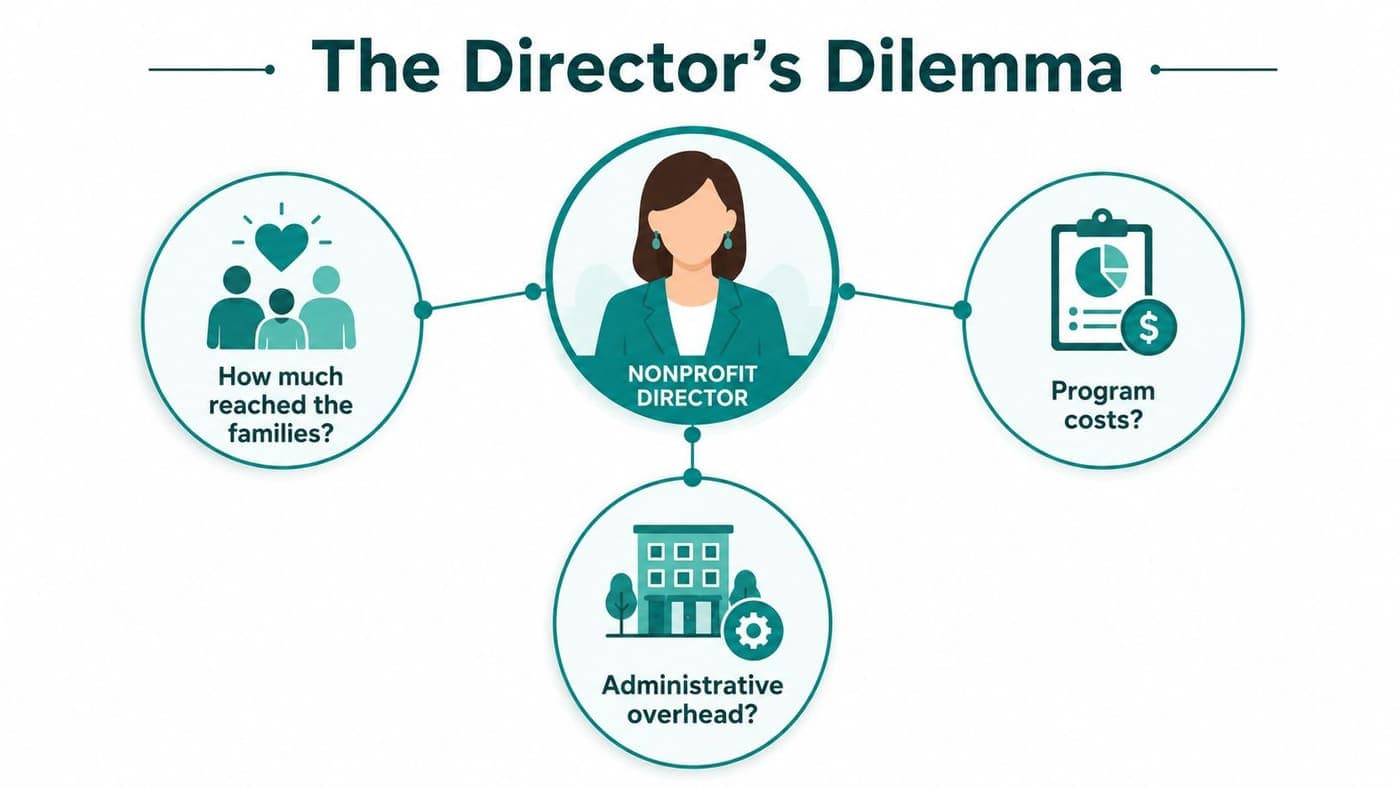
That is where cost allocation earns its keep. It helps you show which dollars supported direct services, which covered shared overhead, and how the pieces fit together in a way the board can trust.
| What Cost Allocation Solves | Without Allocation | With Allocation |
|---|---|---|
| Donor questions | You give a rough answer or promise to follow up | You can explain the share of shared costs clearly |
| Board reporting | Program results and overhead stay mixed together | Program, admin, and support costs are separated |
| Grant reporting | Shared expenses are hard to justify | Shared expenses are tied to a documented method |
| Month-end close | Staff rebuild numbers by hand | Shared costs flow through a repeatable process |
Practical rule: if you can't explain the split in plain English, the split is probably too loose for a board packet.
For nonprofits, this is more than bookkeeping. It is part of how you show stewardship, answer questions with confidence, and keep the monthly close from becoming a rescue mission.
If you've been making do with class codes and a few heroic spreadsheets, you're not alone. The rest of this article builds the idea step by step, from simple examples to policy and compliance.
What Cost Allocation Actually Means
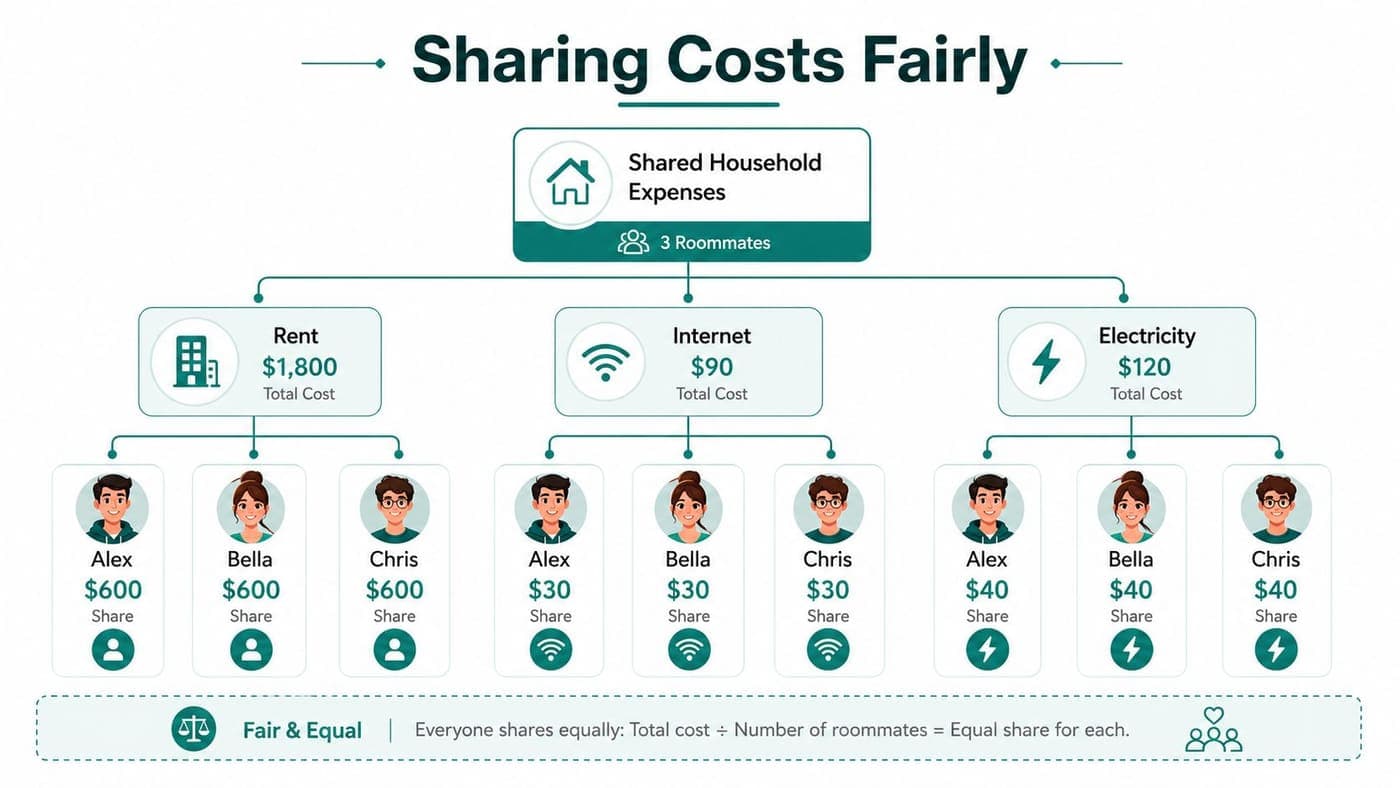
Think of three roommates sharing rent, internet, and electricity. Nobody owns the full bill alone, so they agree on a fair way to split it.
That's the basic idea behind cost allocation. In nonprofit finance, we take shared costs and assign them to the programs, grants, departments, or services that benefit from them.
Direct costs and indirect costs
A direct cost is easy to point to. If a tutor works only on one after-school grant, that salary belongs there cleanly.
An indirect cost supports more than one activity, so it needs a method. Rent, office admin, and a shared phone plan usually fall into that group.
A useful mental model is the coffee shop. Espresso beans for one latte are direct, but the espresso machine, the counter staff, and the Wi-Fi are shared. The coffee shop still has to decide how to attach those shared dollars to each drink if it wants to know what a drink really costs.
Cost objects are the destinations
The thing receiving the cost is the cost object. That can be a program, a grant, a department, a product line, or a service.
Simple test: if a dollar can't be charged to one place without guessing, it probably belongs in allocation instead of direct coding.
The method matters because it shapes the story your numbers tell. A fair driver makes the report believable. A weak driver makes the report look neat but mean very little.
For a plain-English glossary you can keep handy, see our cost allocation glossary. If you already use structured finance tools, you'll recognize that the logic sits beside fund accounting, not outside it.
Choosing the Right Allocation Base
The biggest mistake in allocation is not the math, it's the driver. The allocation base should match how the cost is used.
Match the driver to the expense
Headcount works well when the cost rises with the number of people involved. Benefits, some admin support, and shared training often fit there. It gets shaky when a team includes part-time staff or remote workers, because one person is not always one equal share.
FTE, or full-time equivalents, is better when part-time effort matters. It gives you a cleaner picture of labor-driven costs because it reflects time, not just bodies.
Square footage fits rent, storage, and office occupancy. If one program uses more space, it should carry more of the occupancy cost.
Labor hours make sense when staff time drives the expense. That's common for project support, case management, and contract work.
Usage logs are often the right choice for software, video tools, and cloud services. If one team uses the system heavily, it should carry more of the bill.
Transaction counts can work for payment processing, reimbursements, or service volume. The more a unit triggers activity, the more of the cost it should absorb.
Revenue share has a narrow use. It can make sense when the expense follows income, but it becomes circular if you use it to allocate fundraising costs back onto fundraising itself.
Practical rule: the best base is the one your team can defend with data and explain to a stranger in one sentence.
For a deeper finance setup, our fund accounting guide shows how restricted funds and program reporting sit inside the same structure. If you're comparing options for staying organized, it also helps to see how control costs boost profit 2026 frames time and expense tracking in a broader finance context.

The point is fairness, but also usefulness. A driver that matches reality gives you cleaner program costs, better board conversations, and fewer arguments during grant review.
A Worked Example Across Three Programs
A small nonprofit has three programs, a youth mentoring program, a food pantry, and after-school tutoring. They share one office, one admin team, and one utilities bill.
The organization first groups shared expenses into cost pools. That matters because you do not usually allocate each invoice separately, you collect similar costs first and then distribute them by the right driver.
The shared pools
Suppose the shared monthly costs include rent, utilities, and one admin salary. Rent is best allocated by square footage, utilities by use or another agreed proxy, and admin salary by FTE.
Here's the working logic:
| Cost Pool | Driver | Program A | Program B | Program C |
|---|---|---|---|---|
| Rent | Square footage | 40% | 30% | 30% |
| Utilities | Usage | 35% | 25% | 40% |
| Admin salary | FTE | 2 FTE | 1 FTE | 1 FTE |
Now the FTE piece. If the admin team has 4 FTE out of 8 total, that's 50 percent of the labor pool. If a part-time remote worker spends half their time on one program and half on another, you count that as 0.5 FTE instead of guessing.
Why the math matters
A reader usually gets tripped up here by mixed staff. One person can support more than one program, but that doesn't mean you split them by instinct.
If your office has 1,200 square feet out of 3,000, the share is 40 percent. That is a cleaner rent split than headcount when some staff are remote and some are on site.
The same logic works for software. If one program triggers more usage, it should carry more of the subscription cost. That keeps the numbers tied to benefit instead of tradition.
For a budgeting companion, our nonprofit budget template can help you line up shared costs before month-end surprises show up.
The payoff is practical. Once the pool and base are set, the same method can be reused every month without rebuilding the logic from scratch.
Compliance, Form 990, and Grant Rules
Cost allocation is not just for internal management. It shows up again when you report to the IRS, your grantmaker, or an auditor.
The Statement of Functional Expenses on Form 990 depends on allocated salaries, rent, and other shared costs being classified by function. The IRS doesn't just care about the final totals, it cares that the method behind them is reasonable and documented, and the functional expense reporting framework is part of how that story gets told. The same numbers often support the board's view of overhead and the public's view of stewardship.
For federal grants, the rules are even more explicit. Uniform Guidance expects organizations to separate shared costs, use documented criteria, and support indirect recovery with an approved method when one applies. The federal cost principles are the place to confirm the rule that applies to your award. That's why a good allocation table can do double duty, it helps you manage the month and defend the year.
Keep the paper trail light but real
A strong file does not need to be bulky. It needs to be consistent.
- Write the method down: Explain the base, the pool, and the reason it fits.
- Keep source records close: Save headcount, square footage, usage logs, or timesheet support.
- Review when reality changes: Update the method when staffing, space, or program mix shifts.
- Make one person responsible: Someone should own the numbers, not “the team.”
For grant-seeking teams, the same discipline helps with opportunity planning too. If you want a tool that tracks federal opportunities, AI for Government Contracting is worth looking at for context.
The best audit file is the one you can explain without searching through six folders.
If you want a simple compliance reference, our Form 990 checklist keeps the reporting pieces in one place. That matters because the board, the IRS, and funders are all reading from the same financial backbone.
Why QuickBooks Classes and Spreadsheets Fall Short
QuickBooks classes can help you sort expenses by purpose, and that's useful. They're a familiar starting point for many small nonprofits, and they do give you a way to separate broad buckets.
The trouble starts when allocation becomes monthly work instead of a bookkeeping feature. You still have to pull class reports, rebuild functional expense totals, and move shared costs by hand across spreadsheets.
Aplos does true fund accounting, which is a real strength for nonprofits. The gap shows up when donor records, volunteer activity, and reporting live in separate places, because your allocation numbers and your program story stop matching each other in one system.
That's where an all-in-one platform changes the workflow. If accounting, CRM, volunteers, events, and marketing live together, allocation-ready numbers show up as part of normal work instead of a monthly project. AlignMint takes that approach with true fund accounting, a donor-centric CRM, volunteer tracking, and a built-in marketing suite in one place.
What the gap looks like in practice
You can usually spot the problem by the number of tabs open on month-end. One file tracks grants, one tracks donations, another tracks volunteers, and none of them agree automatically.
Useful question: if your team has to rebuild the same allocation every month, the system is asking people to do software's job.
That does not mean every nonprofit needs a heavy platform. It does mean the finance tool should match nonprofit reality, not small-business accounting habits.
Writing Your Cost Allocation Policy
A good policy keeps the debate out of month-end close. It tells staff what gets pooled, how it gets split, and when the method gets reviewed.
The four parts every policy needs
Start with purpose. Say why the policy exists in plain language, so board members and managers can read it without translation.
Then list the cost pools. Group shared expenses by category, such as occupancy, admin labor, and technology.
Next, name the approved bases. State which driver goes with each pool, and why that driver reflects benefit received.
Finish with the review cadence. Revisit the policy once a year, or sooner if staffing, space, or program mix changes.
Signs the current method is hiding a problem
A few clues usually show up before the board asks a hard question.
- One program always looks thin: That can mean overhead is sitting in the wrong place.
- A grant never fully covers its share: The allocation may be too generous to unrestricted activity.
- Staff keep redoing the same numbers: The process may be too manual to trust.
- Nobody can explain the split quickly: The policy is probably living in someone's head instead of on paper.
Keep the language simple. Store the policy where the finance lead and executive director can both find it, and attach a template that shows how the current numbers flow.
For a practical starting point, our nonprofit chart of accounts template can help you line up the account structure with the allocation policy. That makes it easier to keep fund accounting, reporting, and board review in the same conversation.
When allocation is written down and tied to the right system, it stops feeling like a chore. It becomes part of how you protect trust, explain results, and lead with clean numbers.
If you're tired of rebuilding the same shared-cost spreadsheet every month, take a look at AlignMint. We bring fund accounting, donor management, volunteers, events, and marketing into one nonprofit system, so cost allocation fits naturally into the way your team already works.
Ready to try AlignMint with your nonprofit?
Start free — set up donor tools, giving pages, and Minty. Upgrade when you need accounting.