

For related tools, see AlignMint features.
Grants for Nonprofit Organisations: Your Complete Guide
Quick Answer: Grants for Nonprofit Organisations: Your Complete Guide
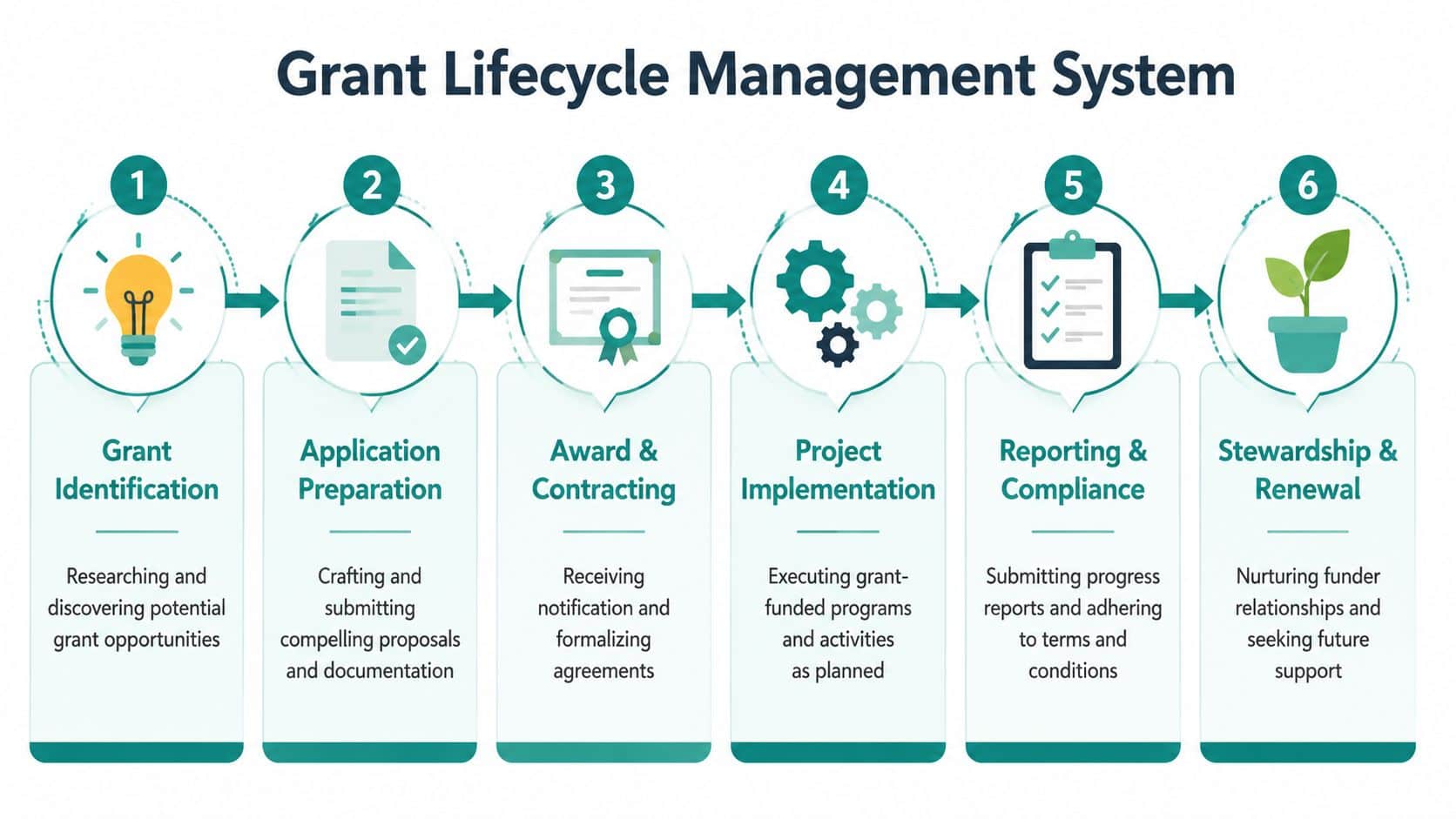
Grants for nonprofit organisations work best when you treat them as a full lifecycle: find realistic opportunities, apply with budgets you can defend, track every restricted dollar after award, and report outcomes from clean records instead of memory.
You probably know the feeling. A grant deadline is coming, your program team needs answers, finance needs a budget, and the funder wants reports in a format no one has ready.
That pressure isn't just about winning the award. It's about whether your organisation can manage the grant cleanly after the money arrives. This guide gives you a practical way to handle grants for nonprofit organisations from search to closeout, with less scrambling and fewer reporting headaches.
A Clear Path Through the Grant Funding Maze
For many directors, grants feel like a second job layered onto the one you already have. You search, sort, write, revise, chase attachments, then hope the reporting requirements won't bury your team six months later.
The mistake is treating grants as a writing task. They're really an operations task with a fundraising front end. If your records are scattered, your budgets vague, or your restricted funds hard to track, the stress starts long before submission and gets worse after award.
Practical rule: Don't judge a grant only by how hard it is to apply for. Judge it by how hard it will be to manage well.
A calmer approach starts with a simple sequence. Know which grant types fit your organisation. Filter for opportunities your team can handle. Build applications from clean financial and program data. Then set up post-award tracking before the first grant dollar is spent.
If you want more nonprofit operations guidance beyond grants, AlignMint keeps a growing nonprofit resource library that's built for busy leadership teams.
First Understand the Types of Grant Funding
Not all grants behave the same way. If you treat every opportunity as interchangeable, you'll waste time on poor-fit applications and accept reporting burdens your team can't comfortably carry.
One broad sign of why this matters. 119,000 foundations award more than $77 billion in grants each year, grants comprise 19% of all charitable giving, and the median grant award is $35,000, according to Double the Donation's grant statistics roundup. That tells you two things. Grant funding is large enough to matter, and diverse enough to require selectivity.
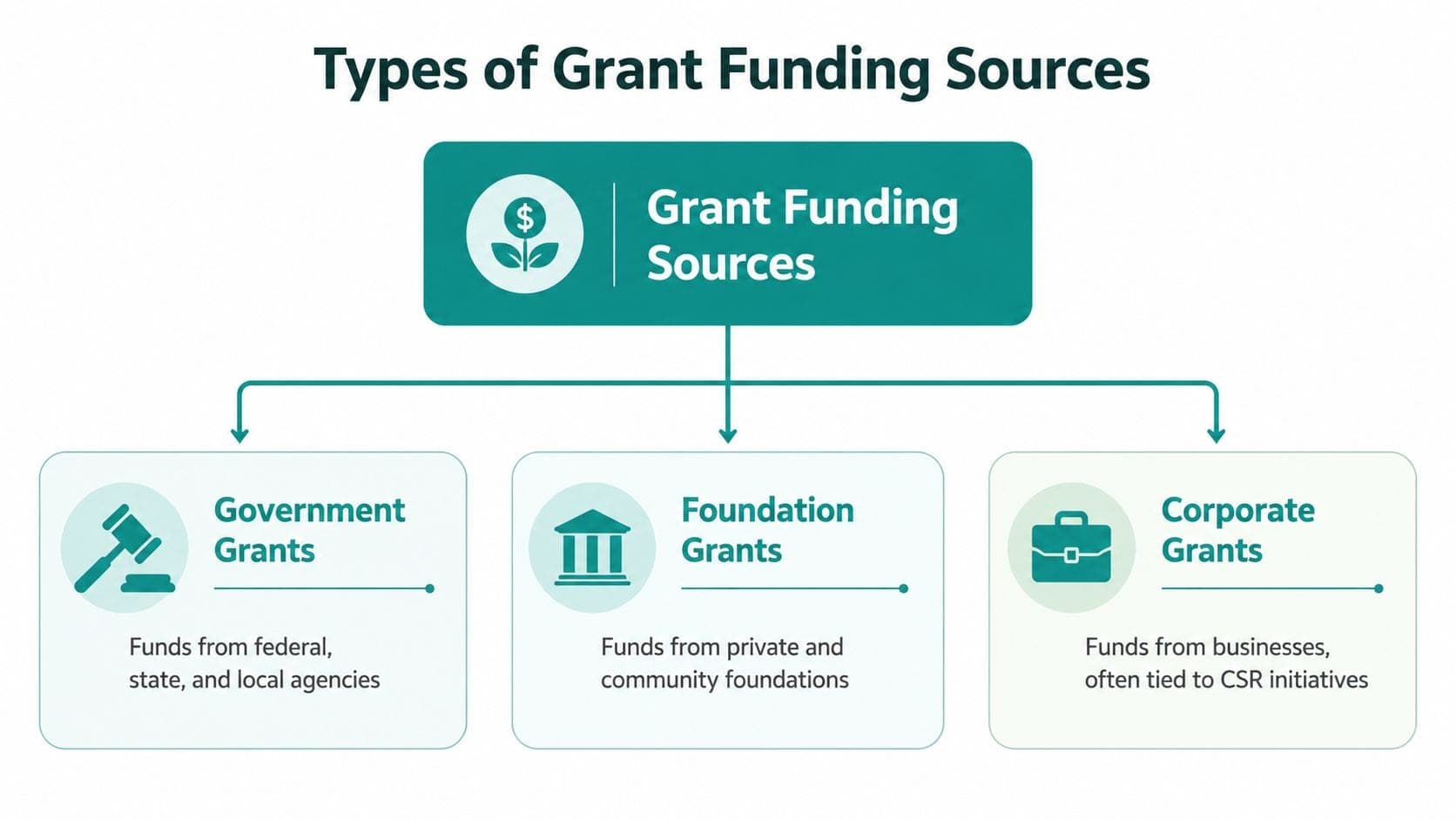
Government grants
Government grants can support serious program work, but they ask for discipline in return. These awards often come with detailed spending rules, formal reporting schedules, and little patience for loose documentation.
If your team is strong on compliance, this can be worthwhile. If you still close each month through email chains and spreadsheet checks, government funding can expose every weak point in your process.
A useful way to think about government grants is this:
| What they can offer | What they demand |
|---|---|
| Larger program support | Clear documentation |
| Multi-period stability | Timely reporting |
| Strong mission alignment with public priorities | Tight budget controls |
Foundation grants
Foundation grants are often the best starting point for small and mid-sized organisations. They can be more mission-driven, more flexible in tone, and easier to approach when your program fits the funder's priorities.
That said, foundation grants still require preparation. Reviewers want a strong case, a realistic budget, and evidence that your team can carry out the project without confusion once funds are awarded.
Some foundations support general operations. Others restrict dollars to a specific initiative, geography, or population. Read that distinction carefully before you invest writing time.
Corporate grants
Corporate grants usually connect to a company's community priorities, staff engagement, or market presence. That can work well if your organisation is local, visible, and able to show practical outcomes.
These grants can include more than cash. In-kind support such as software, hardware, cloud credits, or implementation help can reduce cash strain while still building your organisation's capacity. DonorDock's overview of nonprofit tech grants highlights how this kind of support can lower recurring costs and free unrestricted cash for programs.
Some grants bring money. Others bring capacity. Both matter, but they create different management work after award.
The strongest grant mix usually isn't all government, all foundation, or all corporate. It's a balanced portfolio your staff can administer.
How to Find Grants Your Nonprofit Can Actually Win
Most grant searches fail for one reason. The organisation starts with volume instead of fit.
A giant database can make you feel productive, but scrolling through hundreds of opportunities doesn't move you closer to funding. The harder part isn't discovery. It's deciding which grants are realistic for your staff time, reporting ability, geography, and budget structure. That's the core challenge noted in GoFundMe Pro's discussion of grants for nonprofits.
Build a grant fit profile
Before you search, write down your organisation's grant profile on one page. Keep it simple enough that a program director, finance lead, or board member could all use it the same way.
Include:
- Mission fit: The issue areas you can speak about with confidence and evidence.
- Geographic fit: The regions, counties, cities, or service areas where you operate.
- Budget fit: The size of grant your team can responsibly manage.
- Capacity fit: The level of reporting, documentation, and restricted tracking your staff can sustain.
- Time fit: Whether the application timeline matches your real calendar, not your ideal one.
This one-page filter saves more time than any search trick.
Screen opportunities before you fall in love with them
Many teams get stuck because they read the mission statement, see overlap, and assume the grant is worth pursuing. That's too shallow. You need a short go or no-go review before anyone starts drafting.
Ask these questions first:
-
Is the funder supporting our kind of organisation? Look for signs that they fund groups like yours in size, scope, and location.
-
Can we meet the reporting expectations? If the reporting asks for outcome tracking you don't currently collect, slow down.
-
Will the grant pay for what the program really costs? Restricted awards can look attractive and still create strain if they leave key expenses uncovered.
-
Is the effort worth the likely return? A small local grant with a short form may be better than a prestigious one with layers of compliance.
For public-sector opportunities, a focused tool such as SamSearch's government grants search can help narrow what would otherwise become a long and frustrating hunt.
Fewer applications can mean better results
Busy directors often feel pressure to keep the pipeline full. But a full pipeline of weak fits burns morale fast. Five well-matched applications usually do more good than a pile of rushed submissions.
If your team wants examples of where to look next, this roundup of available grants for nonprofits is a useful starting point. The key is still the same. Screen hard before you write.
The best grant prospect isn't the one with the biggest headline amount. It's the one your organisation can win, manage, and report on without chaos.
Preparing Your Grant Application with Confidence
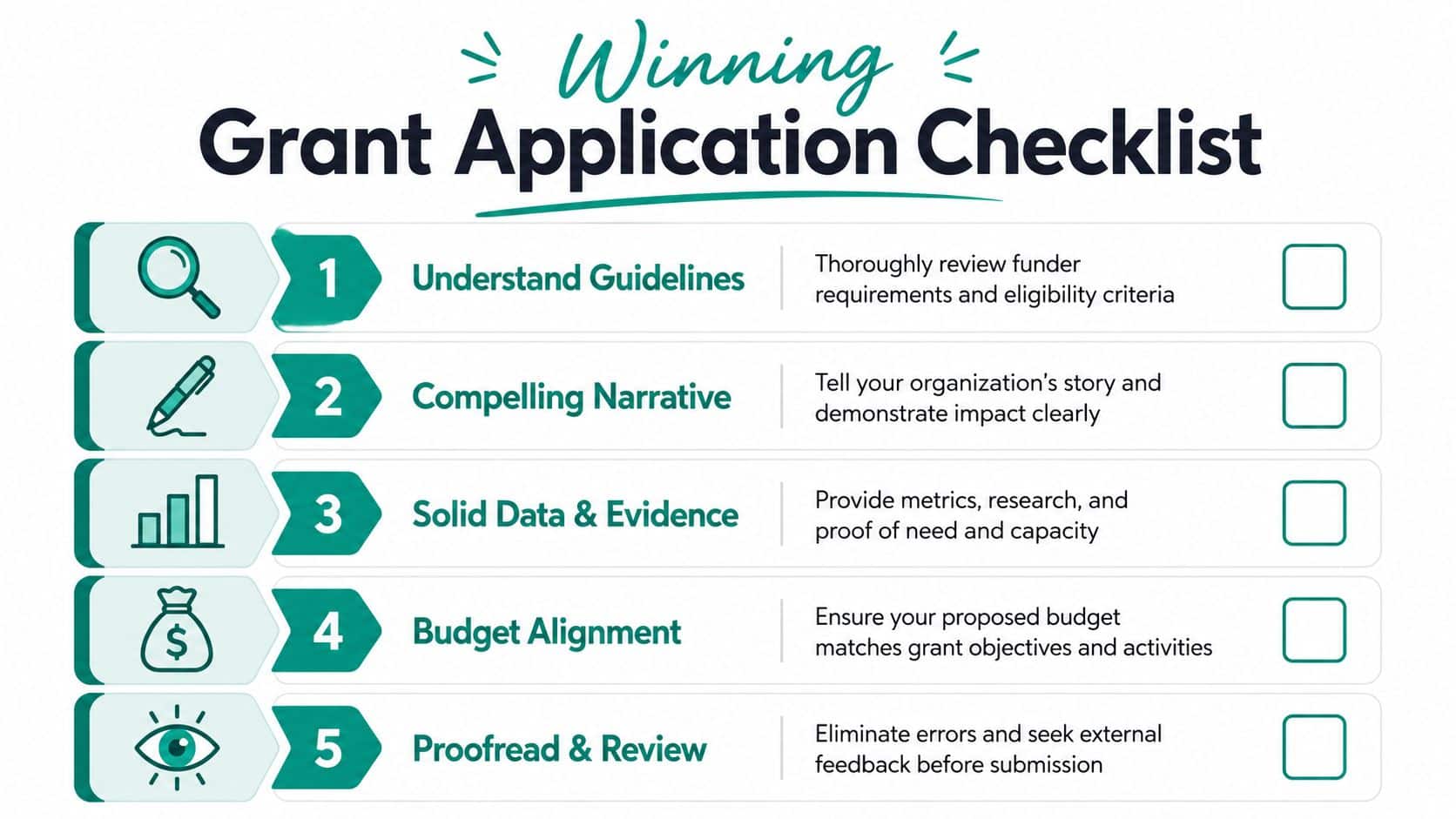
A strong application does two jobs at once. It makes the human case for your work, and it proves your organisation can carry the responsibility.
Many proposals fail because they lean too far in one direction. Some tell a moving story but provide weak financials. Others attach clean budgets and dry spreadsheets with no persuasive case for why the project matters. Funders usually want both.
Start with the problem you already solve
Don't invent a new project just to match a funding opportunity. The cleanest proposals come from existing work your team already understands, already tracks, and can already explain.
Write the core case in plain language:
- What problem are you addressing?
- Who is affected?
- What does your organisation do about it?
- Why is this the right time for support?
If your draft sounds like it could belong to any nonprofit, it isn't ready. Name the actual community, program, and change you expect to deliver.
Build a budget that tells the same story
A budget shouldn't feel like a separate attachment created by finance after the narrative is done. It should confirm the logic of the proposal.
Your budget needs to show that costs match activities. If you describe outreach, staff time should appear. If you promise service delivery, the line items should reflect what that work takes. If personnel or overhead are part of the plan, be direct and consistent.
A practical review table helps before submission:
| Proposal element | What to check |
|---|---|
| Narrative | Clear need, clear activities, clear outcomes |
| Budget | Costs align with the described work |
| Attachments | Financials, tax status, and required documents are current |
| Outcomes | Measures are realistic and already trackable |
| Review | A second reader checks for gaps and contradictions |
If you need a starting point, this grant proposal budget template can help your finance and development leads work from the same structure.
Show capacity, not just need
Funders don't only evaluate mission fit. They also assess whether your organisation can manage the award responsibly. BILL's guidance on operational grants notes that effective requests should include concrete metrics, transparent financial records, and evidence of past impact, because funders judge accountability as well as need. The same article points out that Google Ad Grants provides qualifying organisations up to $10,000 per month in search advertising credits and works best when nonprofits maintain strong conversion tracking and campaign structure, which is another reminder that capacity matters after approval, not just before it. See the full discussion in BILL's article on operational grants for nonprofits.
That principle applies to every grant application. If you promise outcomes you can't track, or submit financials that raise questions, the narrative won't rescue the proposal.
A grant application is really a trust document. The funder is asking, "If we say yes, can this team carry the project cleanly?"
For directors who want a practical outside perspective on writing stronger proposals, this guide to securing nonprofit grants from VolunteerBadge is worth reading.
You don't need perfect language. You need a proposal that is clear, believable, and internally consistent.
You Won the Grant Now What
At this juncture, many grant guides fall silent, and the critical effort commences.
The award letter feels like the finish line. In practice, it's the handoff from fundraising to operations. If your organisation doesn't make that shift quickly, even a well-won grant can create confusion, overspending, missed deadlines, and awkward conversations with the funder.
Government funding makes that especially clear. About 30% of U.S. nonprofits receive government grants, and for over 35,000 of them this funding makes up more than 50% of total revenue, according to Candid's analysis of nonprofit reliance on government grants. For organisations in that position, compliance isn't a side task. It's part of staying open.
Hold a grant kickoff meeting
As soon as the award is confirmed, bring the right people into one room. That usually means program, finance, development, and whoever will own reporting deadlines.
Cover these points:
- Purpose: Restate what the grant is funding and what it doesn't fund.
- Budget rules: Review approved categories, restrictions, and any costs that need prior approval.
- Reporting dates: Put every deadline on a shared calendar with an owner.
- Data collection: Confirm who will track outputs, outcomes, and supporting documentation.
- Spending authority: Decide who can approve expenses charged to the grant.
This one meeting prevents months of drift.
Separate restricted funds from general operating money
Many organisations often encounter difficulty. If grant dollars land in your bank account and then disappear into general bookkeeping, you lose visibility fast.
Restricted funding needs its own tracking structure. You should be able to answer basic questions without hunting through spreadsheets. What is left in the grant. What has been spent. Which expenses are allowable. Whether staff time charged to the award is documented.
QuickBooks can be helpful for many businesses, and some nonprofits make it work with careful setup. But true fund accounting is better suited to restricted grant management because it treats funds, programs, and restrictions as native parts of the ledger rather than workarounds. If you want to see what that looks like in practice, this overview of fund accounting software shows the difference.
Make reporting routine, not heroic
Bad grant reporting usually doesn't come from bad intentions. It comes from delayed recordkeeping. Staff keep notes in separate places. Receipts sit in inboxes. Program data lives in one file and finance data in another. Then the report due date arrives and everyone scrambles.
A healthier pattern looks like this:
| Monthly discipline | Why it matters |
|---|---|
| Reconcile grant expenses | Catches miscoding early |
| Review restricted balance | Prevents accidental overspending |
| Match program activity to spending | Keeps the narrative and finances aligned |
| Save supporting records | Makes reports and audits less painful |
If a grant report takes a crisis meeting to produce, the problem started months earlier.
The director's role isn't to do every step personally. It's to insist on a system where grant promises, spending, and reporting stay connected.
The Right System for Managing the Grant Lifecycle
Disconnected tools create most grant stress. One system holds donations, another holds accounting, a spreadsheet tracks restrictions, and someone on staff becomes the human bridge between all of them.
That setup can limp along before grants arrive. It breaks down after award, when teams need one version of the truth.
Recent grant activity also points in the same direction. Funding is moving toward restricted, outcome-specific, and locally targeted support, which means nonprofits need internal systems that can manage restricted awards, track drawdowns, and produce funder-ready reporting without adding manual work, as discussed in Instrumentl's review of current nonprofit healthcare grant patterns.
What a disconnected workflow looks like
Most directors know this pattern by heart.
A grant pledge comes in through one channel. Finance records it somewhere else. The development team updates notes in the CRM. Program staff track outputs in a spreadsheet. Then a board member or funder asks for the current balance, and no one wants to answer too quickly.
The issue isn't effort. It's fragmentation.
What a joined-up workflow does better
When grant, donor, finance, volunteer, event, and marketing records live together, routine work gets easier. You spend less time reconciling and more time managing.
A practical comparison makes the difference clear:
| Task | Disconnected tools | All-in-one nonprofit system |
|---|---|---|
| Record grant income | Entered in multiple places | Enter once, reflected across records |
| Track restricted balances | Spreadsheet dependent | Visible inside accounting records |
| Prepare funder updates | Pull from separate files | Use shared financial and activity data |
| Team access | Limited by tool silos or seat counts | Broader shared visibility |
| Answer leadership questions | Manual checking | Faster, cleaner responses |
This matters for more than accounting. It affects donor stewardship, volunteer reporting, event follow-up, and team communication as well.
What to look for in a system
If you're reviewing software, don't start with features. Start with pressure points.
Look for a system that helps you:
- See restricted balances clearly: You shouldn't need side spreadsheets for grant status.
- Connect fundraising and finance: Grant records and revenue records should agree.
- Support staff across functions: Development, finance, and programs need shared context.
- Handle communications in the same place: Funder updates and donor follow-up are easier when data isn't scattered.
- Avoid seat-based penalties: If more staff need visibility, cost shouldn't rise every time.
Many nonprofits compare options such as QuickBooks, Bloomerang, Neon CRM, Blackbaud, and Aplos. Each has strengths. QuickBooks is familiar. Bloomerang and Neon CRM are well known for donor management. Blackbaud has deep history in the sector. Aplos appeals to smaller organisations, churches, and faith-based teams. The gap often appears when you need grant tracking, restricted fund control, communications, and day-to-day operations to work together without exports and patchwork.
If grant oversight is becoming a bigger part of your workload, this guide to grant tracking software for nonprofits will help you evaluate what matters most.
Your Next Steps and Common Grant Questions
The organisations that handle grants well don't just write better proposals. They choose better-fit opportunities, submit cleaner financials, and manage the award with discipline after approval.
Your next move is simple. Tighten your grant fit criteria. Standardise your application process. Then review whether your current systems can track restricted funds, deadlines, and reporting without relying on memory and spreadsheets.
For a deeper look at the accounting side, this primer on Fund Accounting for Nonprofits is a useful next read.
Can we use grant money to pay for staff salaries
Often, yes. It depends on the grant agreement and the approved budget. If salaries, project management time, or administrative support are allowable, include them clearly and document them carefully.
What is the difference between a restricted and unrestricted grant
An unrestricted grant supports general operations. A restricted grant must be used only for the purpose described in the agreement. That's why your accounting method matters so much after award.
What's the biggest mistake after winning a grant
Teams celebrate the award but delay the setup. If spending rules, coding, timelines, and reporting responsibilities aren't clear at the start, the rest of the grant period becomes harder than it needs to be.
If you're ready to replace spreadsheets, disconnected tools, and manual grant tracking, take a look at AlignMint. We built it as an all-in-one platform for nonprofits that need true fund accounting, donor management, volunteers, events, marketing, team communication, and AI help in one place. You get unrestricted and restricted fund visibility, a built-in marketing suite, plan-based user allowances (1 on Free, up to 10 on Plus, up to 25 on Pro, and unlimited on Enterprise), and a free tier for nonprofits under $100K. If you want cleaner grant management without adding more software, AlignMint is worth a closer look.
Ready to try AlignMint with your nonprofit?
Start free — set up donor tools, giving pages, and Minty. Upgrade when you need accounting.