

For related tools, see AlignMint features.
Nonprofit Organization Grants: A Practical Guide for Leaders
Quick Answer: Nonprofit Organization Grants: A Practical Guide for Leaders
Nonprofit organization grants should be screened before anyone writes the proposal. The best fit supports work your team already does well, has reporting requirements you can meet, and can be tracked by fund from the first budget line through the final report.
Your program director has one spreadsheet. Finance has another. Development has deadlines in a shared calendar nobody fully trusts. Then a grant lands, and everyone says yes before anyone asks the harder question. Can we manage this well once the money arrives?
That's where many nonprofit organization grants go sideways. Finding opportunities matters, but the primary strain usually starts after the award. If you want grants to strengthen your organization instead of adding chaos, you need a practical way to choose, win, track, and report on them.
Understanding the Role of Grants in Your Funding Strategy
A grant arrives with real restrictions attached. The board sees revenue. Your program team sees a chance to expand. Finance sees a new set of rules to track. All three are right, which is why grants need a defined role in your funding strategy before you apply for them.
A grant is a funding tool with conditions, timelines, reporting duties, and a specific result the funder expects to see. That distinction is important because grants often get treated like flexible cash when they are anything but. If the money is restricted and your systems are loose, the pressure shows up later in spending, documentation, and reporting.
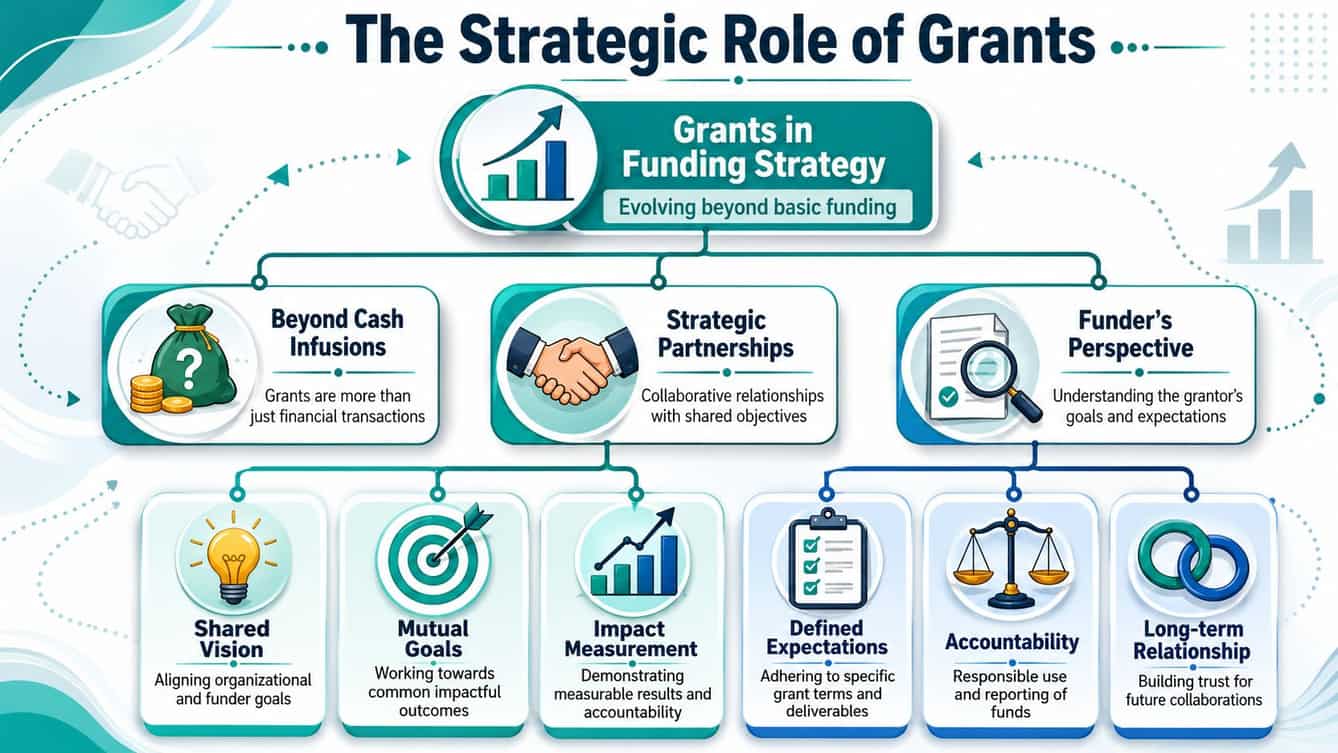
Grants work best when they support the plan you already have
Strong grants usually reinforce work your organization already knows how to deliver. They help fund a program with clear demand, support a defined expansion, or pay for improvements your team is ready to carry through. Weak grants pull staff into side projects, force awkward budget choices, and create obligations that outlast the award.
I have seen small nonprofits win grants that looked great on paper and still regret them a year later. The problem was not the funder. The problem was fit. The reporting load was heavy, the allowable expenses were narrow, and the grant pushed the team toward work they could not sustain after the grant period ended.
Apply for grants that match your strategy, your staffing, and your operational capacity.
Different grant types solve different problems
The grant itself should shape the request. A good funding strategy accounts for that up front.
- Operating support can help cover broad organizational costs when the funder allows flexibility.
- Program support funds a defined service, target population, or initiative, often with tighter spending rules.
- Capital support pays for facilities, equipment, or other major physical investments.
- Capacity-building support funds internal improvements such as planning, training, financial systems, and data practices.
Capacity-building support gets overlooked too often. Technical assistance grants and capacity-building support can pay for outside expertise and internal improvements that make the rest of your grant portfolio easier to manage. If your organization struggles with clean budgets, grant tracking, outcome data, or cross-team coordination, that kind of funding may produce more long-term value than another small restricted award.
Grants should strengthen your funding mix, not carry it
Grant revenue can help you grow, stabilize a program, or fund a specific improvement. It is less reliable as the piece holding up core operations month after month unless you have enough recurring support and enough discipline behind the scenes to manage it well.
That is the part many grant guides skip. The actual strain is not only winning the award. It is handling the full lifecycle after the yes. Someone has to track restricted spending, keep program activity aligned with the proposal, document outcomes, prepare reports, and make sure finance, development, and program staff are working from the same numbers. If those functions live in separate systems, grant revenue creates friction fast.
If you are assessing how grants fit into your broader financial model, this overview of grant tracking for nonprofits is a useful starting point. An integrated operating system matters here. It gives your team one place to connect budgets, deadlines, program delivery, and reporting so a grant supports the mission instead of creating another administrative scramble.
How to Find and Prioritize the Right Grant Opportunities
Monday starts with a full inbox. By noon, your team has flagged three grant opportunities that look promising. By Friday, you realize one was never a fit, one pays too little to justify the reporting burden, and one would force your staff to build a program you do not run. That is how grant work turns into churn.
The strongest grant pipeline starts with discipline, not volume. A grant is worth pursuing only if it fits your mission, your capacity, and the effort of managing it after the award. Smart prospecting saves writing time, protects staff energy, and reduces the odds of winning money your team cannot administer cleanly.

Use grant fit as your first filter
A wide grant market can make it feel like the answer is more searching. In practice, better filtering usually matters more.
Many organizations lose time on technically eligible opportunities that were weak bets from the start. The problem is not access to listings. It is the lack of a clear screen for deciding what deserves staff time. I have seen small teams spend two weeks on an application that never had a realistic path to funding, then scramble to catch up on donor follow-up, program support, and month-end finance work.
That cost is bigger than the application itself. Every grant you pursue creates downstream work if you win, including budget tracking, restricted spending controls, documentation, and reporting. If your systems are already fragmented, a poor-fit award can create more operational strain than value.
Four questions to ask before you apply
Use a short screen before anyone starts drafting.
-
Does the grant support work you already do well?
If you have to reshape your mission or invent a new program to match the guidelines, pass. A cleaner fit usually produces a stronger proposal and a much easier grant period.
-
Does the award justify the staff time?
Small grants can make sense. Some open doors to a new funder relationship or support a pilot with limited risk. But if the application is long, the compliance requirements are heavy, and the dollars are modest, the return may be poor.
-
Does the funder clearly align with your geography, population, and program model?
Broad mission overlap is not enough. Look for evidence that the funder gives in your region, supports your type of organization, and funds the population you serve.
-
Can your team manage the grant after the yes?
This question gets missed too often. If your finance, development, and program staff are already stretched, another restricted award may create deadlines and reconciliation work your team cannot absorb without errors.
Some of the best grant decisions are early no's.
Watch for signs that a grant will cost more than it gives back
Several warning signs show up before you ever write the narrative. The funder may not share prior grantee lists. The guidelines may be vague about award range, reporting frequency, or eligible expenses. The deadline may be close enough that your team would need to rush budget approvals or outcome estimates. Any one of those issues can be manageable. Three together usually mean stop.
Public listings can also hide big differences in effort. One local grant may involve a short form and a modest report. Another may require attachments, board materials, audited financials, logic models, and quarterly updates for the same or even less money. Treat those as different workloads, because they are.
If your development function is one person, or half of one, this matters even more. Each application has an opportunity cost.
A practical prioritization method
Use a red, yellow, green screen and make the decision before drafting starts.
| Priority | What it means | What to do |
|---|---|---|
| Green | Strong fit on mission, geography, award size, and internal capacity to track spending and outcomes | Apply |
| Yellow | Reasonable fit, but one issue needs clarification | Ask questions before committing staff time |
| Red | Weak alignment, poor return on effort, or likely reporting strain | Decline |
Keep the screen simple, but connect it to operations. A green-light grant should not only look fundable. It should also be manageable inside your real systems once awarded. That is the part many grant roundups ignore.
If you need places to start your search, use a curated list such as this roundup of available grants for nonprofits, then run every opportunity through the same go or no-go filter. Consistency matters. It keeps your team focused on grants that support the mission without creating avoidable chaos later.
Writing a Grant Proposal That Funders Actually Read
Most proposals fail long before the final budget table. They fail when the reader can't see a clear line from your request to a meaningful result.
Funders don't need more activity lists. They need evidence that your organization understands the problem, knows what it will do, and can show whether the project made a difference.
Lead with outcomes, not motion
A weak proposal says you'll hold workshops, train volunteers, or expand outreach. A stronger one explains what should change because those actions happen.
That shift matters because grantmakers increasingly evaluate proposals on measurable cost-effectiveness, often through a cost-per-outcome or social return lens. Stronger applications pair the financial request with baseline and follow-up outcome data so funders can see cause and effect, as described in Casebook's discussion of data in nonprofit funding.
If your program team already tracks participation, attendance, volunteer service, referrals, or follow-up results, you likely have more proposal material than you think.
What funders actually look for in the narrative
A readable proposal usually answers five questions cleanly:
- Who needs help: Define the population and the need in plain language.
- What you will do: Describe the program without excess detail.
- Why your organization is credible: Show relevant experience, partnerships, and delivery capacity.
- What will change: Name the outcomes you expect to track.
- How the budget connects to those outcomes: Show why the request is reasonable.
A budget gets attention when it reads like a plan, not a shopping list.
Build the financial case with the outcome case
Many proposals split into two unrelated documents. The narrative talks about impact. The budget talks about expense categories. Reviewers then have to connect the dots themselves.
Don't make them do that work.
If you request staff time, explain what outcomes that staffing supports. If you ask for outreach costs, show how outreach connects to participation or service delivery. If a funder cares about efficiency, a cost-per-outcome frame often lands better than a long list of line items.
For finance teams that need a cleaner starting point, this grant proposal budget template can help organize the request in a way that supports the story instead of competing with it.
Managing Grant Money with True Fund Accounting
A grant award can improve your year or wreck your month. The difference often comes down to how you track restricted money after the notice of award arrives.
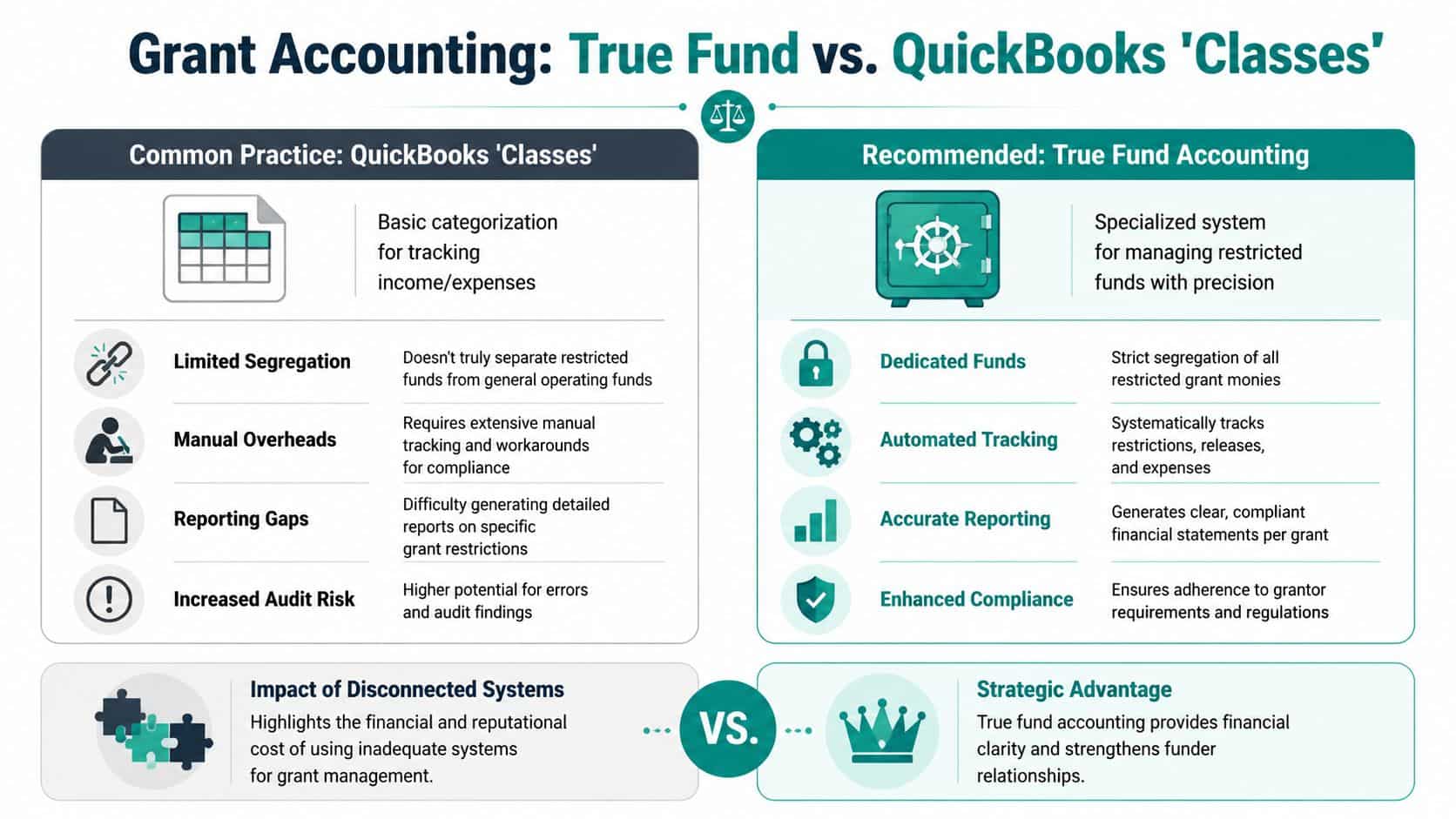
Too many nonprofits still manage grants with QuickBooks, spreadsheet tabs, and a lot of institutional memory. That approach can work for a while. It usually gets shaky when reporting deadlines stack up or when a board member asks how much remains in a specific grant.
Why restricted money needs cleaner treatment
Government funding alone shows the scale and seriousness of compliance. In the United States, there are more than 900 federal grant programs run by 26 grant-making agencies, and federal grants to states rose by 42% between 2008 and 2019 after inflation adjustment. In 2019, the federal government distributed $721 billion to states and local governments, with about 61% of those funds going to health care, according to Submittable's summary of grant statistics.
Even if your nonprofit never touches a federal award directly, the lesson carries over. Restricted funds need disciplined accounting, clear documentation, and reports you can trust.
QuickBooks classes versus true fund accounting
QuickBooks is familiar. For many organizations, that's its real advantage. It can handle basic bookkeeping well. But classes are still a workaround when you need to manage restrictions at the fund level.
Here's the practical difference.
| Approach | What happens in practice | Common result |
|---|---|---|
| QuickBooks classes | Staff tag transactions and build manual reports around those tags | Extra spreadsheets, more reconciliations, and room for errors |
| True fund accounting | Funds, restrictions, programs, and grants are built into the ledger structure | Clear balances, cleaner reporting, and better compliance visibility |
With classes, you're often asking staff to remember the rules. With true fund accounting, the system carries more of that burden.
The concepts that matter most
You don't need an accounting degree to manage this well. You do need a few concepts to stay clear.
- Restricted funds are money you can spend only as the grant terms allow.
- Fund balances tell you what remains available inside that restricted bucket.
- Grant drawdowns track what has been earned, received, or spent under the award rules.
- Inter-fund activity matters when shared costs or support services touch more than one program.
If those items live in separate files, reporting gets slow and mistakes get easier.
When finance has to rebuild grant balances by hand, your numbers may still be right. They just won't be fast.
For a deeper look at how nonprofit-specific ledgers handle these issues, this guide on fund accounting for nonprofits is worth reading.
Simplifying Grant Reporting and Proving Your Impact
Once the award starts, your reporting calendar becomes part of program management. That's why good reporting doesn't begin at the end of the grant period. It begins the day you set up the grant internally.
The strongest reports do two jobs at once. They show that you spent the money correctly, and they show that the project mattered.
Set up reporting before spending begins
A clean grant file should connect four things from the start:
- The approved budget so staff know what the grant covers
- Expense tracking tied to the right fund, program, or activity
- Outcome measures that reflect what the funder said it cares about
- Due dates and owners so reports don't become last-minute scrambles
If these live in different systems, someone ends up doing manual reconciliation near every deadline. That's tiring, but it's also risky.
Turn reports into stewardship
Too many nonprofits treat grant reports as compliance paperwork. Funders usually see them as evidence of judgment, follow-through, and honesty.
If results are mixed, say so plainly and explain what you learned. If spending lagged because hiring took longer than expected, explain the operational reason and the adjustment. Clear reporting builds more trust than polished vagueness.
A strong narrative report often includes:
- What was funded: Restate the purpose briefly.
- What happened: Focus on meaningful work completed.
- What changed: Tie activity to outcomes where you can.
- What comes next: Show how the grant moved the project forward.
That same discipline can strengthen the rest of your supporter communications. If you're trying to boost nonprofit supporter engagement, consistent reporting language can help your donor updates, appeals, and annual summaries sound more grounded and credible.
Connect finance and program evidence
The most convincing reports link spending and results instead of presenting them as separate stories. When a funder can see the expense categories, the deliverables, and the outcome logic in one coherent report, renewal discussions get easier.
That's also why your financial statements need to be understandable to non-accountants. If your team needs a clearer framework for board and grant reporting, this guide to nonprofit financial statements can help translate the finance side into something more usable.
A Better Way to Manage the Entire Grant Lifecycle
The grant lifecycle breaks down when each department sees only one piece of it. Development tracks deadlines. Programs track delivery. Finance tracks spending. Leadership tries to pull the whole picture together before a board meeting.
That setup isn't unusual. It's just expensive in staff time.
Disconnected tools create avoidable work
A specialized application tool can be useful. Submittable, for example, is well known for helping organizations manage submissions and reviews. QuickBooks is familiar for bookkeeping. Mailchimp is strong for email communication. Salesforce can support donor tracking with the right setup.
The gap is what happens between those systems after the award. Grant records, restrictions, donor context, volunteer support, and reporting deadlines often end up separated from one another.
What an integrated approach changes
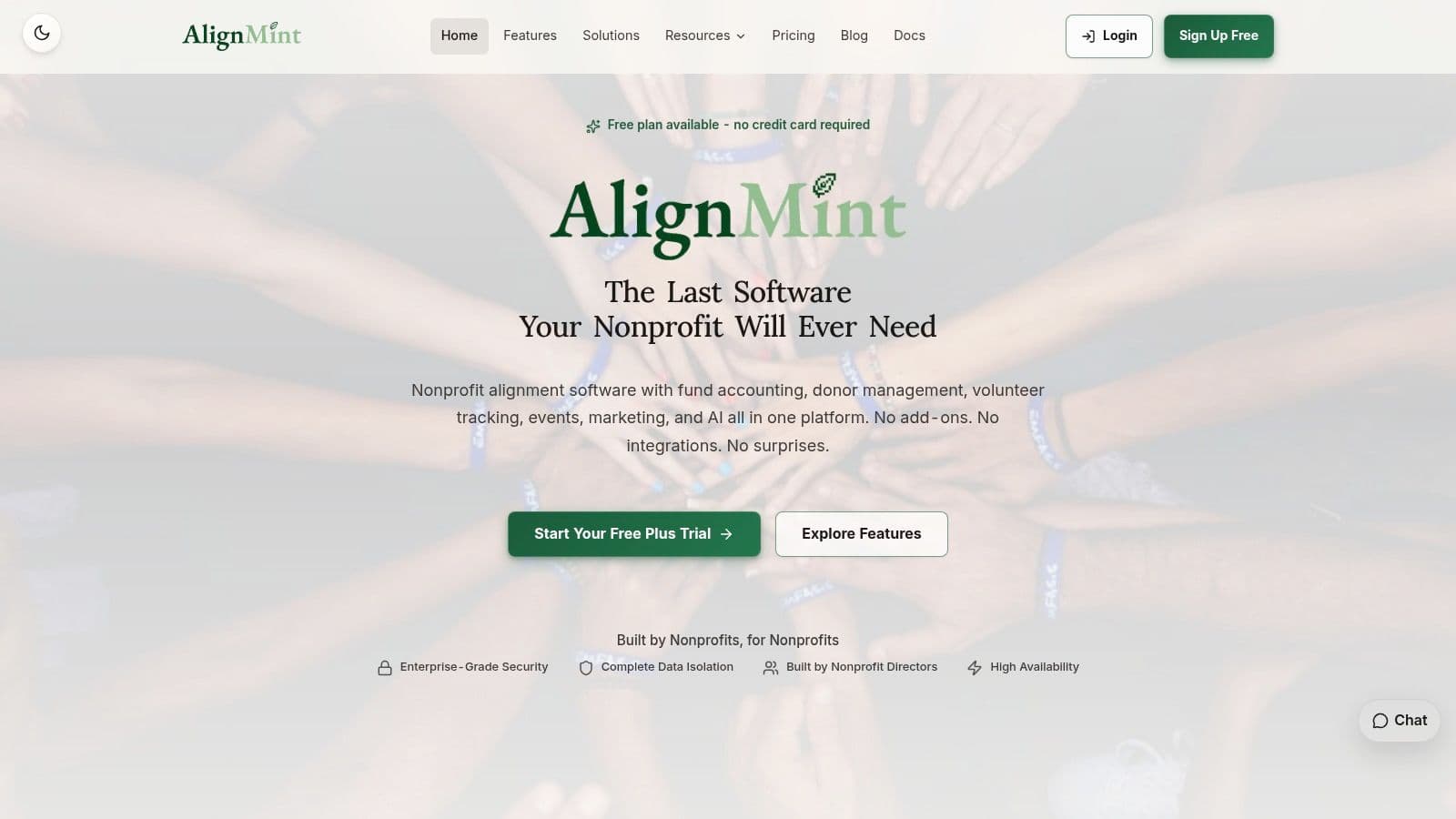
An all-in-one platform can reduce handoffs because accounting, CRM, volunteer records, events, and outreach tools live together. In practice, that means the same team can track a grant from proposal through restricted spending and final reporting without rebuilding the record in three places.
One option is AlignMint, which combines true fund accounting, donor management, volunteer management, marketing tools, and an AI assistant called Minty in a single nonprofit platform. It also offers a free tier for nonprofits under $100K and doesn't charge per-seat fees, which matters for organizations that need board members, finance staff, and program leads in the same system.
That doesn't make every specialized tool irrelevant. It does mean you should decide whether your current software stack helps you manage grants after the award, not just apply for them.
What to look for in grant management software
If you're reviewing options, keep the checklist practical.
- Native grant and fund tracking: You shouldn't need spreadsheet workarounds to see restricted balances.
- Shared visibility across teams: Finance, development, and program staff need the same record.
- Built-in reporting support: Reports should pull from live data, not copied data.
- Communication tools in the same system: Funder updates, donor messages, and internal follow-up shouldn't all require separate exports.
If you're comparing categories and features, this overview of grant management software is a good starting point.
If nonprofit organization grants are creating more manual work than mission progress, it may be time to simplify the system behind them. AlignMint brings fund accounting, donor records, volunteers, events, marketing, and grant tracking into one place, so your team can spend less time chasing spreadsheets and more time running grants well.
Ready to try AlignMint with your nonprofit?
Start free — set up donor tools, giving pages, and Minty. Upgrade when you need accounting.