

For related tools, see AlignMint features.
Winning Nonprofit Organizations Grants Guide
Quick Answer: Winning Nonprofit Organizations Grants Guide
Nonprofit organizations grants are not just revenue. They create operating commitments: eligibility rules, restricted budgets, deadlines, documentation, and reports. The best applications start with grants your team can realistically win and manage.
You finally land a grant, then your bookkeeper asks which expenses belong to which fund, your program lead has a different report deadline on her calendar, and the board wants to know how much is still available to spend. That's the moment many nonprofit leaders realize grants aren't just revenue. They're operating commitments.
If nonprofit organizations grants have ever felt more stressful than helpful, you're not doing anything wrong. The problem usually isn't finding money alone. It's managing the full grant lifecycle so the award strengthens your mission instead of creating accounting confusion.
Starting Your Journey with Nonprofit Grants
If your grant tracking lives in email, spreadsheets, and someone's memory, you're in familiar territory. Many executive directors reach a point where every restricted dollar feels harder to manage than it was to win.
A grant is funding given for a defined purpose, with rules attached. Those rules may cover what you can spend, when you can spend it, what results you must report, and what paperwork the funder expects along the way.
That distinction matters. Grants are not the same as unrestricted gifts from individual donors. They behave more like a formal agreement.
The scale of grant funding helps explain why so many nonprofits wrestle with it. In the United States, nonprofits received $240.7 billion in government grants, and 68% of nonprofits received at least some government funding, according to the Urban Institute's 2025 nonprofit government funding factsheets.
What grants mean in daily operations
Once you see grants as structured funding, your decisions get clearer. You stop asking only, "Can we win this?" and start asking, "Can we track this correctly after we win it?"
That shift affects budgeting, staffing, reporting, and board communication. It also affects cash flow, especially when reimbursement timing doesn't match payroll or vendor due dates.
Practical rule: Treat every grant as both a funding opportunity and an accounting project.
Smaller organizations often miss this at first. A grant can support real mission work, but it can also require separate coding, restricted fund tracking, and program-level reporting that general bookkeeping habits don't handle well.
Grants should fit your broader funding mix
Grants are important, but they shouldn't stand alone. If you also rely on events, online giving, or product-based fundraising, each revenue stream needs a different management approach.
For example, if your team is exploring merchandise-based campaigns alongside grant work, this guide to selling custom fundraising apparel gives practical ideas for a less restricted revenue source.
If you're still building your organization's foundation, our resource on how to start a nonprofit can help you get the basics in order before you chase more complex funding.
How to Find and Evaluate Grant Opportunities
The hardest part of grant research isn't lack of options. It's too many options that look promising at first glance and fall apart once you read the requirements.
A smarter approach starts broad, then narrows fast.
Start with the biggest search pools
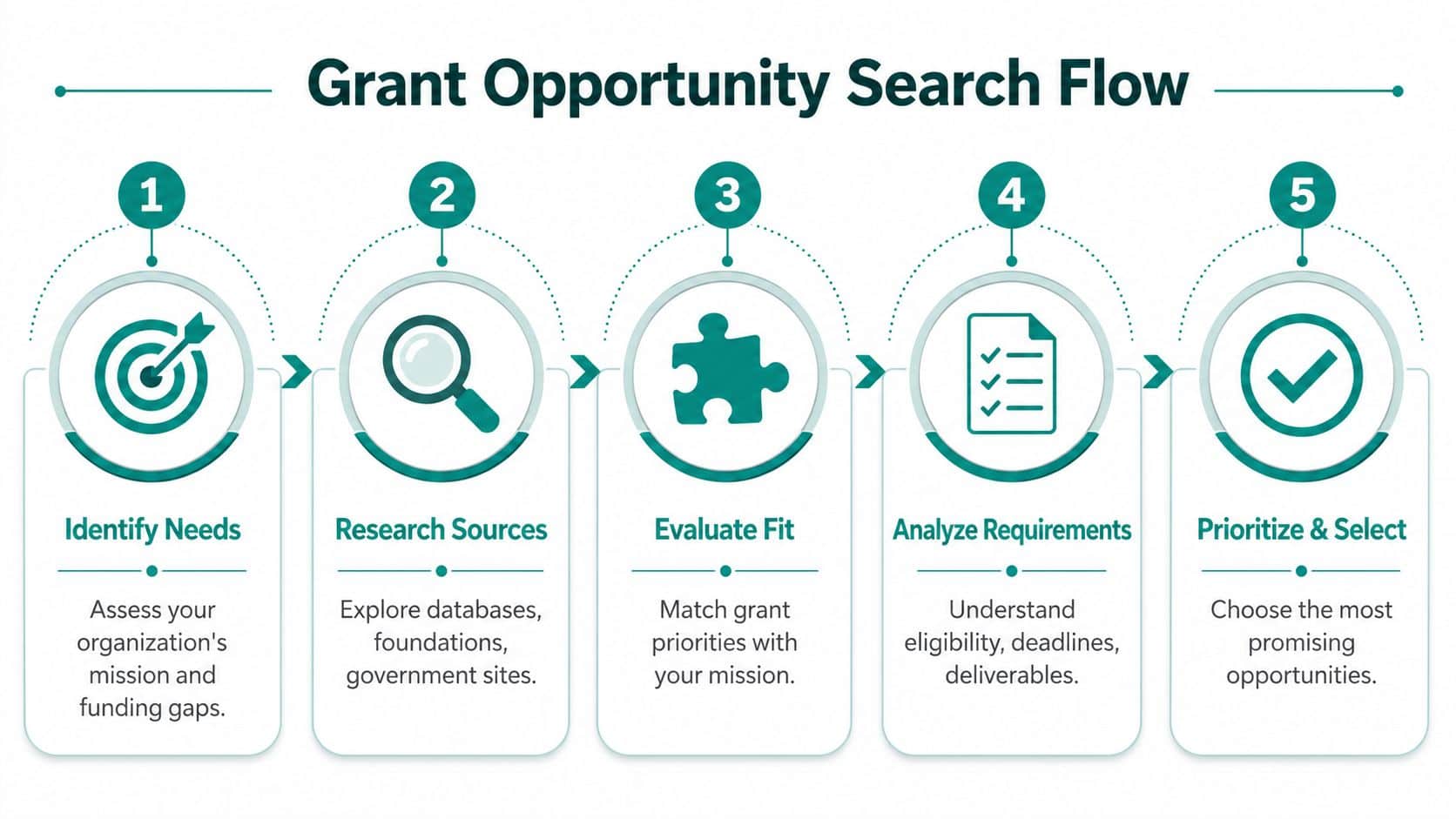
For nonprofit organizations grants, the most efficient workflow is to start with large databases and filter by legal status, geography, and mission fit. Grants.gov indexes federal opportunities from more than two dozen agencies and lets nonprofits search for 501(c)(3)-eligible funding.
That matters because random searching wastes time. A broad database helps you scan what exists, then screen out poor-fit opportunities before your team gets attached.
Here's a practical order that works well:
- Clarify the need first. Write down the program, cost, and purpose before you search.
- Search broad databases next. Federal opportunities belong in Grants.gov. Foundation and corporate opportunities often require a different prospecting process.
- Filter aggressively. Geography, legal status, mission area, and applicant type should narrow the list quickly.
- Read the restrictions before the narrative. Eligibility rules usually eliminate more opportunities than weak writing does.
- Shortlist only what your team can manage. Winning a grant you can't administer is expensive in another way.
Judge fit before effort
A grant can look generous and still be a bad fit. Some awards fund only narrow activities. Others want evidence, local partnerships, or reporting habits your team doesn't yet have.
Use a quick screen like this:
| Question | Why it matters |
|---|---|
| Does it match your mission? | Prevents mission drift |
| Can you document results? | Funders want evidence, not good intentions alone |
| Can finance track restrictions? | Post-award problems start here |
| Can staff meet deadlines? | Reports and renewals take real time |
| Is the award worth the admin load? | Small grants can create oversized work |
A grant that doesn't fit your operations is not a gift. It's an obligation.
Build a focused grant pipeline
Grant-seeking teams don't need a massive prospect list. They need a short, disciplined pipeline with notes on fit, deadlines, required documents, and internal owners.
That's where a grant tracker becomes more useful than a long bookmark folder. If you want a practical framework, our nonprofit grants guide pairs opportunity research with the operational questions that usually get ignored.
You'll also make better choices if grants sit inside a wider development plan. Our related post on developing a nonprofit fundraising strategy can help you decide where grants belong compared with donations, sponsorships, and events.
Crafting a Winning Grant Application
Many applications fail for a simple reason. They spend too much time proving need and not enough time proving execution.
Funders already know communities have needs. What they want to know is whether your organization can turn dollars into meaningful results.
Lead with outcomes, not activity
A strong proposal doesn't say only, "We run an important program." It shows what the program produces and how you know.
That's why applications are stronger when they quantify cost-effectiveness as a cost-per-outcome ratio. The point is to connect the request to measurable outputs, outcomes, and community reach so funders can compare spending against results, as explained in this overview of data in nonprofit funding opportunities.
Here's the difference in plain language:
- Weak framing: We need support for our after-school program.
- Stronger framing: This request funds a defined set of services, for a defined group, with a clear expected result and a clear cost attached.
You don't need fancy language. You need clarity.
What a persuasive application usually includes
Most winning proposals have a few traits in common:
- A sharp problem statement. It explains who is affected and why the issue matters now.
- A specific program plan. It shows what staff will do, for whom, and over what period.
- A realistic budget. Every line belongs to the program and can be defended.
- A measurement plan. You're prepared to track outputs and outcomes, not just effort.
Funders trust organizations that can explain both their mission and their math.
If your team struggles with budget presentation, start simple. Build a budget that ties each cost to a program activity, then connect that activity to an expected result. That one habit improves both proposal quality and later reporting.
Make your budget tell the same story as your narrative
A common mistake is writing a compelling narrative, then attaching a budget that feels generic. Funders notice that disconnect immediately.
Your budget should answer basic questions without forcing the reader to guess. Why this staffing level. Why these supplies. Why this timeline. Why this amount.
Our grant budget template can help you map costs to program outcomes in a way that's easier for both staff and funders to follow.
And if you're using donor data, volunteer hours, or past program records to support your case, keep those figures organized before deadline week. The best application process is calm, not heroic.
Managing Your Grant After the Award
Now, the true test begins. Winning the grant feels like the finish line, but operationally it's the starting line.
Most grant advice online focuses on applications. The harder issue for small and mid-sized organizations is what happens after the award, especially restricted funds, drawdowns, and reporting, as noted in this discussion of post-award compliance gaps.
Restricted money isn't general money
A restricted grant has rules. You can't spend it freely just because it's in the bank.
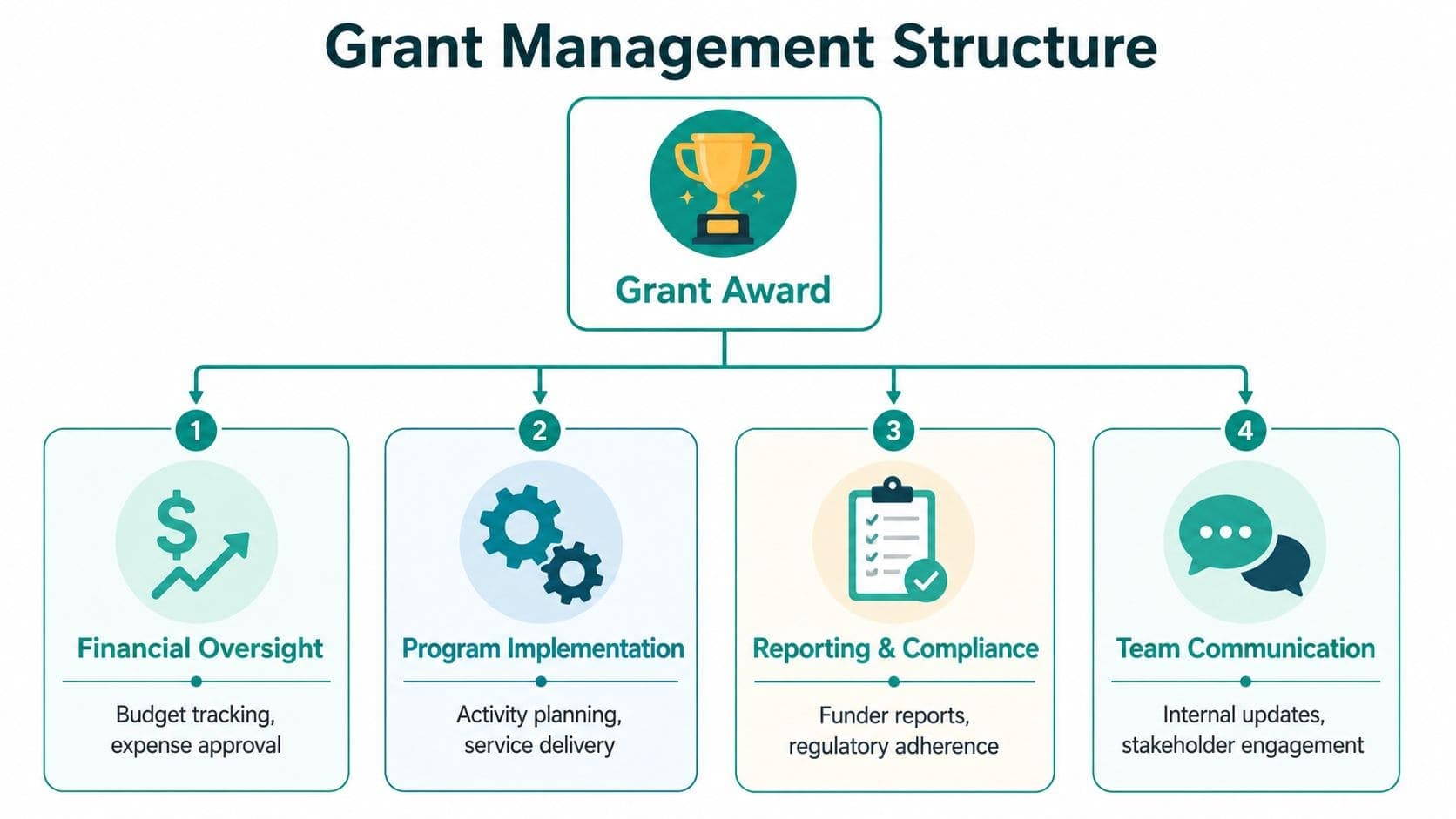
Sometimes the restriction is by program. Sometimes it's by time period, geography, or population served. In practice, you may need to answer all of these questions at once:
- Which fund did this expense belong to
- Was the cost allowed under the grant terms
- Has the money been received yet or only awarded
- What remains available to spend
- What must be reported back and when
That's why grant accounting becomes difficult so quickly. The challenge isn't entering transactions. It's preserving the meaning of each dollar.
Drawdowns and reimbursements create cash strain
Some grants pay upfront. Others reimburse after you incur approved costs. That difference can create stress for organizations without much cushion.
If payroll and vendor bills come due before reimbursement arrives, the grant may look healthy on paper while operations feel tight in real life. Executive directors need a way to separate three things clearly: award amount, cash received, and spendable balance under the restriction.
Many teams find themselves outgrowing spreadsheet workarounds.
Your board cares about more than the award letter. They need to know what is restricted, what is liquid, and what is reportable.
Why generic accounting setups break down
QuickBooks is familiar, and many nonprofits use it well for basic bookkeeping. Aplos and Blackbaud also serve nonprofits in different ways, and each has strengths depending on your size and process.
The gap appears when grants need to be tracked as real funds with program logic attached. In many generic setups, classes or tags become a patch for something deeper. They can help with categorization, but they don't always give finance and program staff one clean view of restrictions, reporting deadlines, and remaining balances.
A stronger post-award routine usually includes:
- A grant setup checklist with award dates, restrictions, reporting deadlines, and approved budget categories.
- A coding discipline so every expense hits the right fund and program from day one.
- A reporting calendar shared by finance, development, and program staff.
- Regular internal reviews to compare actual spending against both budget and deliverables.
If you want a detailed walkthrough, our grant management best practices article goes deeper into the workflows that keep restricted funding organized after award.
How Integrated Software Simplifies Grant Management
The biggest relief comes when your team can answer ordinary grant questions without digging through three systems and an old spreadsheet. You want one place to see the fund, the expense, the donor or grantmaker record, the program activity, and the report status.
That's the difference between stitched-together tools and an integrated setup.
What changes when systems talk to each other
When accounting, donor records, volunteers, events, and communications sit in separate products, your staff spends time reconciling instead of managing. Grant reporting becomes a scavenger hunt.
An integrated platform reduces that friction by keeping operational records connected. If your grant supports a program, you should be able to trace spending, outreach, participant activity, and related communications without rebuilding the story every quarter.
That matters for more than finance. Development staff need context. Program leaders need current balances. Board members need clear reports.
Benefit first, feature second
If you want fewer handoffs, look for software with true fund accounting, not just general ledger categories dressed up for nonprofits. If you want clearer reporting, look for a system that connects accounting with CRM records and program activity.
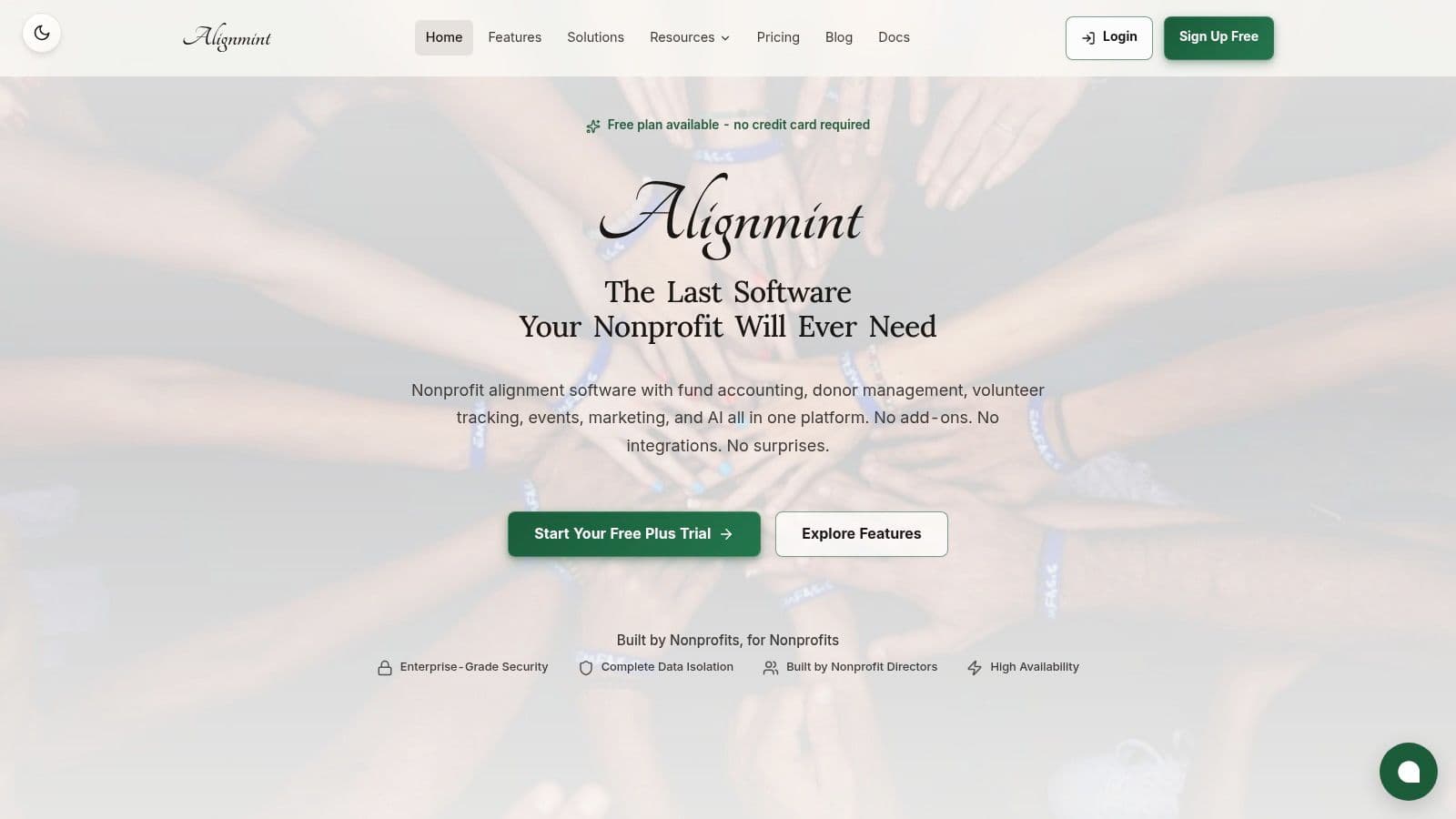
For example, AlignMint's grant management software is built as an all-in-one nonprofit operations platform that combines accounting, CRM, volunteers, events, team communication, and a built-in marketing suite. It also includes native fund accounting, plan-based user allowances (1 on Free, up to 10 on Plus, up to 25 on Pro, and unlimited on Enterprise), a free tier for nonprofits under $100K, and Minty for answering questions about your own data.
Software should reduce interpretation work. Your team shouldn't have to translate one system into another before making a decision.
What to compare before you switch
If you're evaluating tools, compare them around daily tasks, not marketing language.
- Restricted balance visibility. Can you see what remains in a grant without exporting data?
- Report preparation. Can finance and program staff produce a funder-ready view from the same records?
- Shared access. Can development, operations, and leadership work in one system without extra seat costs?
- Broader usefulness. Does the tool also help with donor management, volunteer coordination, online giving pages, and marketing emails?
You may still decide a point solution fits your current stage. But if grants are becoming a larger part of your operating model, disconnected tools often cost more in staff time than they save in subscription fees.
Common Pitfalls and Realistic Timelines
A lot of grant frustration comes from two bad assumptions. First, that more listings mean more realistic opportunities. Second, that winning the award is the hard part.
Recent listings show a more selective environment, with corporate and foundation funding often narrowed by mission, geography, and other criteria. This review of current grant listings makes the important point that more grants don't always mean easier funding. They can mean more application work for smaller awards and tighter fit requirements.
The mistakes that cost the most
The most expensive grant mistakes usually begin before the application is submitted.
- Chasing money outside your mission. Staff bends the program to fit the grant, then struggles to deliver.
- Ignoring administrative burden. Reporting, finance review, and document collection take more time than expected.
- Assuming cash arrives quickly. Some awards move slowly, especially when contracts or reimbursements are involved.
- Separating program and finance teams. One side promises outcomes. The other side inherits the reporting burden.
Those errors are common because leaders are busy, not careless.
A realistic way to think about timing
Grant timelines vary widely, so it helps to plan in stages instead of dates. Research takes longer when opportunities are a weak fit. Application assembly slows down when budgets, attachments, and approvals live in different places. Contracting can take time after a verbal yes. Payment may arrive on a different schedule than your spending needs.
That's why grants should sit inside a broader revenue plan. Sometimes an unrestricted donor campaign, sponsorship effort, or earned-income project is the better next move.
If your work includes sponsored projects or shared administrative structures, our related post on whether fiscal sponsorship is right for your project can help you think through the tradeoffs before you add another funding path.
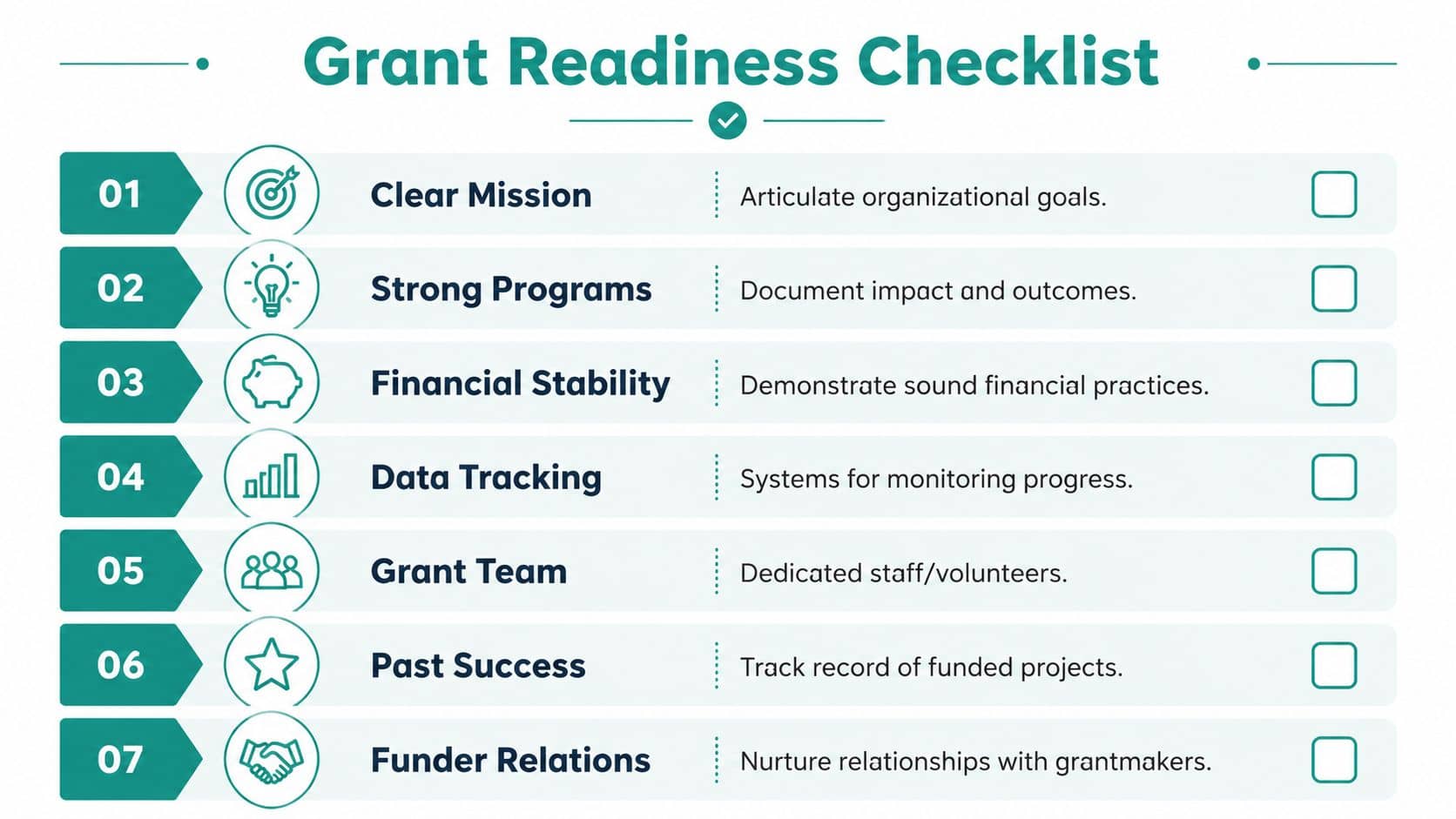
Your Grant Readiness Checklist and Next Steps
Good grant work is cyclical. You research carefully, apply clearly, track restrictions faithfully, report on results, and use what you learn to improve the next round.
That cycle works best when your team knows where grant management lives. Not just who writes the proposal, but who codes the expenses, who watches deadlines, and who confirms the final report matches the books.
A simple readiness check
Use this list before you pursue your next opportunity:
- Mission fit is clear. You can explain why this grant supports work you already do well.
- Programs are defined. Staff can describe services, intended outcomes, and how progress is tracked.
- Budgets are credible. Finance can tie requested costs to actual program activity.
- Restrictions can be tracked. Your system can separate grant funds from unrestricted revenue.
- Reporting ownership is assigned. Everyone knows who handles finance, narrative updates, and deadlines.
- Data is accessible. You can pull records without rebuilding them by hand.
- Leadership is realistic. You've weighed the grant's workload against other funding options.
The strongest grant candidate isn't the organization with the best language. It's the one that can carry the grant from application through closeout.
If several items on that checklist feel shaky, pause before submitting more applications. Tightening your internal process now will save your team time, stress, and avoidable cleanup later.
If your organization needs a simpler way to manage grants, restricted funds, donor records, volunteers, events, and marketing in one place, take a look at AlignMint. We built it for nonprofit leaders who want cleaner fund accounting, fewer disconnected tools, and a practical system their whole team can use without per-seat fees.
Ready to try AlignMint with your nonprofit?
Start free — set up donor tools, giving pages, and Minty. Upgrade when you need accounting.