

The best youth group fundraiser usually isn't the trendiest one. It's the one that matches your participants' ages, skills, schedules, and access to the community. Young people already make a substantial contribution to charitable fundraising, with 20% of young people in a UK government survey saying they had raised money for charity during the previous 12 months. UK youth participation findings
This guide compares eight youth group fundraising ideas by coordination demands, volunteer assignments, safety, costs, promotion, and online donation workflows. AlignMint can connect donation pages, donor records, volunteer hours, events, marketing, and fund accounting, although some organizations may prefer separate tools when those better fit their existing operations.
Quick Answer: Youth Group Fundraising Ideas
The best youth group fundraiser matches ages, skills, safety, and adult capacity. Pick one idea your team can run cleanly, then connect gifts, volunteers, and receipts in the same record instead of handing cash to students.
Compare fundraising challenge ideas with fundraising. For auctions, see online silent auction sites.
1. Peer-to-Peer Fundraising Campaigns
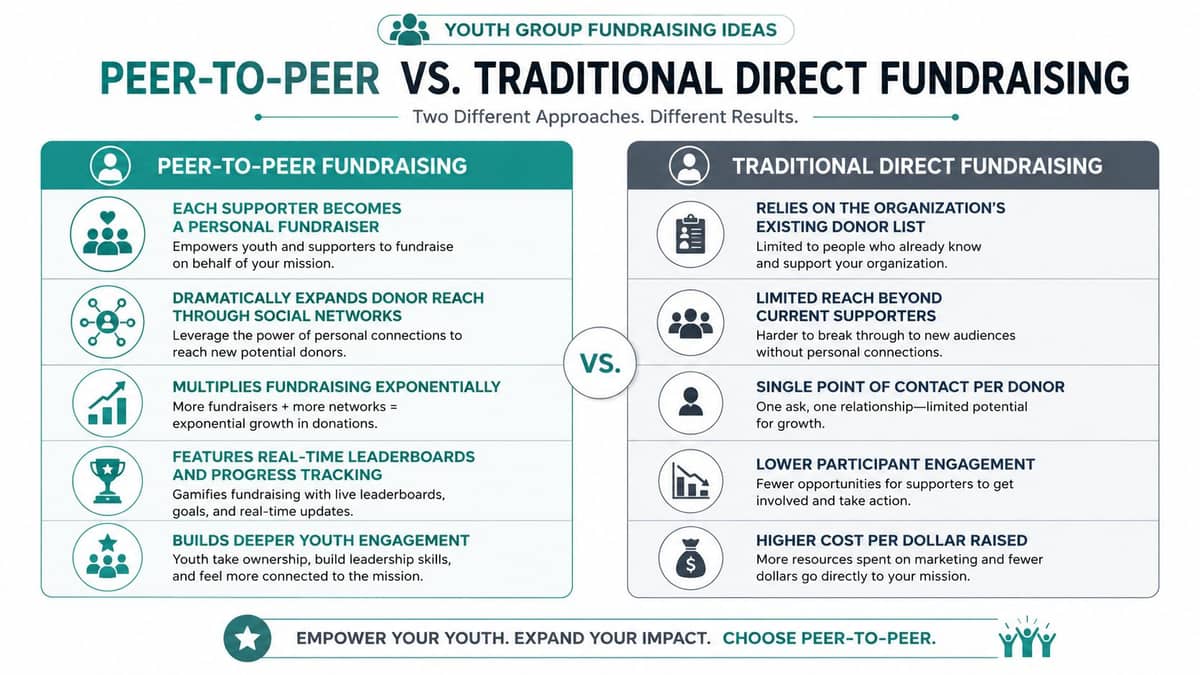
Peer-to-peer fundraising gives each young participant a personal way to invite support. Instead of asking one organization to reach its existing donor list, your youth members share their connection to a mission with relatives, friends, teammates, classmates, and neighbors.
This approach fits school clubs raising funds for service projects, church youth groups supporting mission travel, and scouts funding outdoor activities. It also works for local sports groups covering equipment or travel costs. The strongest campaigns give participants a clear story, an attainable personal goal, and a simple link that supporters can open on a phone.
Create the campaign around one shared purpose. A school club might explain how donations support a community project, while a church group could connect gifts to transportation, meals, or program access. Avoid asking young people to make claims about impact they can't verify. Authentic, specific stories build more trust than polished slogans.
Practical rule: Give every youth fundraiser approved language, but let each participant explain the mission in their own voice.
Keep the adult workload controlled
Assign one adult to campaign administration, one youth team to storytelling and updates, and one person to review donations and receipts. Young participants can record short videos, write personal messages, and share campaign milestones. Adults should approve public content, monitor comments, and protect personal information.
Your donor management system should connect each gift to the correct fundraiser without forcing volunteers to reconcile scattered spreadsheets. A campaign landing page should accept one-time gifts, support recurring options, and issue receipts automatically where appropriate. For planning ideas on campaign structure, see crowd fundraising for nonprofits.
The model has a real trade-off. Peer campaigns can expand your reach, but they depend on consistent participant follow-up. A short launch meeting, ready-to-edit email copy, social captions, and weekly progress updates will usually work better than asking families to “share the link” without guidance.
2. Volunteer Service-Based Fundraising Events
Service events work because supporters receive something useful while helping your youth group. Yard cleanup, car washes, holiday decoration assistance, donated moving help, and community beautification projects all give young people a visible role.
A church youth group might schedule a car wash after worship services, while scouts could organize spring yard work for older neighbors. A school club could offer technology tutoring to younger students. The best service is simple enough to perform consistently, safe for the participants, and easy for customers to understand before they commit.
Start by defining the service boundary. Decide what youth may do, what requires adult supervision, which tools are permitted, how far volunteers may travel, and what happens if weather interrupts the event. Don't promise specialized work unless an appropriately qualified adult can supervise it.
Assign roles before promotion begins
Use a small operating plan with an adult event lead, youth crew leaders, a safety monitor, a booking coordinator, and a payment reviewer. Youth can greet customers, perform approved tasks, photograph completed work with permission, and thank supporters. Adults should handle transport, customer disputes, cash controls, and any work involving hazards.
Ask customers to donate through your online giving page rather than handing money directly to young volunteers. That creates a cleaner record for receipts and makes it easier to connect each booking to the event. Store customer contact details only when you have a legitimate reason and a clear communication plan.
The downside is that service campaigns require quality control. A disappointing job can damage community trust faster than a product sale that arrives late. Use a short training session, a written service description, and a follow-up message asking whether the work met expectations.
3. Social Media Challenges and Viral Campaigns
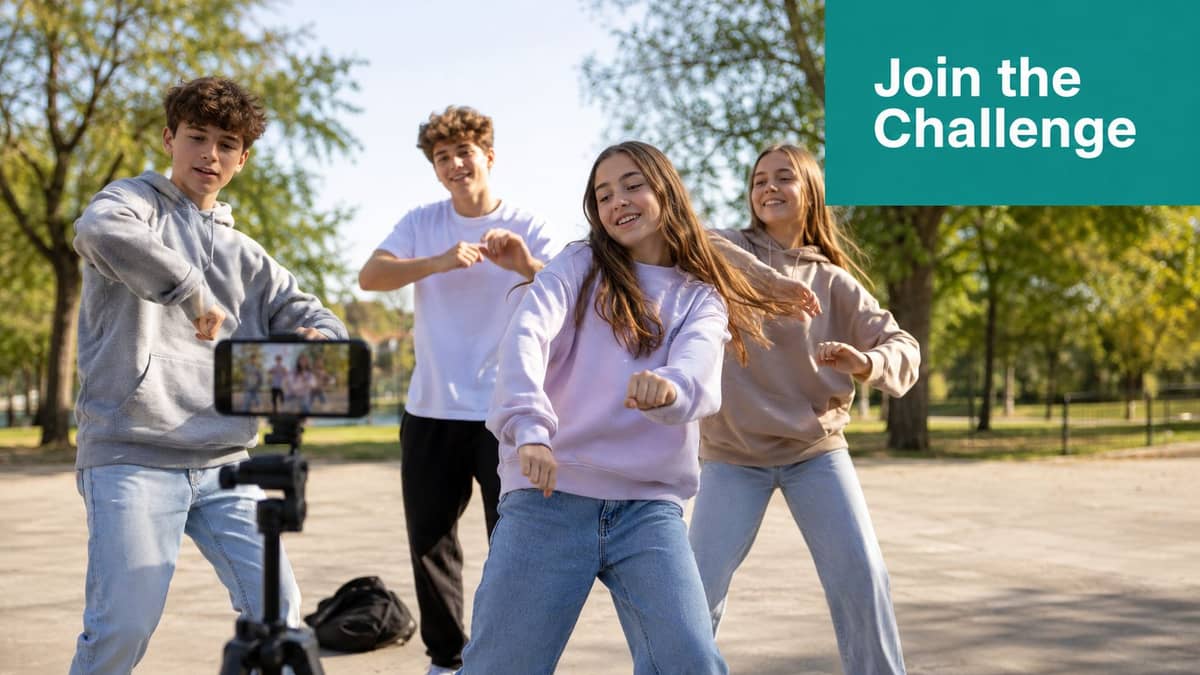
A social media challenge can attract attention quickly, but visibility alone doesn't fund a program. The challenge needs a clear action, a clear mission connection, and a donation page that works for people who never participate.
Youth groups can run a dance, fitness, talent, cleanup, art, or themed video challenge. A school dance team might publish a short routine and invite families to recreate it. A church youth group could document a community cleanup. A student advocacy group could invite participants to share supportive messages about mental health, provided the campaign includes careful moderation and appropriate safeguarding.
Keep the creative task accessible. If participation requires advanced editing, expensive equipment, or public personal disclosures, many supporters will opt out. Young people can lead the creative process, but adults should review music, locations, permissions, comments, and any content involving minors.
Turn attention into completed gifts
Create one campaign page before publishing the first video. Include the purpose, fundraising destination, privacy notice, donation button, and a short explanation of how the group will report results. A viewer should be able to give without creating an account or joining the challenge.
Use a simple publishing calendar. Youth volunteers can create content, respond to approved comments, and nominate community partners. An adult communications lead should control account access, review posts, and remove unsafe content. For additional campaign approaches, see social media fundraising ideas.
The campaign can also support volunteer recruitment and donor management. Tag participants by campaign role, record volunteer contributions, and send a follow-up message that thanks both donors and creators. If your group works with minors, review your safeguarding process and consider a youth volunteer background check policy before assigning public-facing roles.
The main trade-off is unpredictability. A challenge may receive little organic sharing, so budget your plan around the audience you can reach directly rather than assuming a post will spread widely.
4. Youth-Led Auction Events
Auctions combine fundraising with a social event, which makes them a natural fit for school communities, churches, scouts, and youth arts groups. Items might include student artwork, donated gift baskets, local experiences, handmade crafts, tickets, lessons, or services.
A school club could run a silent auction featuring student work and family donations. A church youth group might auction crafts and donated services online. Scouts could organize a community auction with outdoor experiences contributed by local supporters. Young auctioneers can introduce items, explain their significance, and practice public speaking while adults manage bidding rules and payment controls.
Choose the auction format carefully
An in-person auction creates energy but requires a venue, check-in process, item display, bid tracking, payment collection, and collection arrangements. A virtual auction widens access but depends on clear item descriptions, reliable closing times, and prompt communication with winning bidders.
Assign an adult auction manager, a youth presentation team, an item intake volunteer, a payment and reconciliation lead, and a delivery coordinator. Use donated goods only when ownership, condition, restrictions, and collection details are clear. Don't list an experience until the donor confirms its terms in writing.
Your promotion should explain both the item and the mission. Email, text, social posts, church announcements, school newsletters, and direct messages to likely supporters can all help. A dedicated registration and donation workflow reduces paper handling and makes it easier to acknowledge bidders who don't win.
For planning support, review online silent auction sites. The important financial distinction is between gross bids and usable proceeds. Record processing costs, donated goods, event expenses, and any gift restricted to a particular program separately, so your final report reflects what the group can spend.
5. Skill-Based Service Workshops and Classes
Skill-based workshops let young people raise funds by teaching something they already know. Coding, photography, music, art, fitness, tutoring, social media basics, and resume preparation can all work when the youth instructors have genuine competence and adult support.
A robotics team might teach coding to middle school students. A student music group could offer beginner lessons. A youth art collective might host a painting class for families or adults. These workshops create an earned-income experience while helping young instructors build confidence, preparation habits, and communication skills.
Begin with a narrow class promise. “Introduction to photography for beginners” is easier to promote than “creative media workshop.” Define the audience, class length, materials, maximum attendance, location, cancellation policy, and instructor responsibilities before accepting registrations.
Protect quality and participant safety
Assign an adult program owner, youth instructors, a registration coordinator, and a room or equipment supervisor. Adults should remain present when minors teach or attend, especially when the class includes younger children or online communication. Don't give youth responsibility for private participant information beyond what they need for the class.
A free introductory session can help the community understand the group's abilities, but don't promise a continuing series until you know the volunteer schedule. Paid classes need dependable preparation. If the first session feels improvised, participants may not return or recommend it.
Collect permission before using participant photographs or testimonials. Record attendees in your donor or contact system only when future communication is appropriate and consent has been addressed. A follow-up email can thank participants, share the outcome, and invite them to another class or related campaign.
The trade-off is capacity. A workshop may produce stronger community relationships than a simple sale, but it requires more preparation from fewer, more specialized youth volunteers.
6. Sponsorship and Corporate Partnership Packages
Sponsorship packages can bring local businesses into the life of a youth group without turning every interaction into a donation request. A business might support an event, a program, transportation, equipment, or a season of activities in exchange for appropriate recognition.
This model fits school clubs with visible events, church youth programs with community service work, scout groups with local partnerships, and youth arts organizations with performances. The right prospect usually has a practical connection to your audience or mission, such as a neighborhood business, family service provider, employer, or community institution.
Keep the proposal short. Explain the youth group's purpose, the activity being funded, the audience or community reached, the sponsorship options, and the recognition each level includes. Recognition might involve a logo, event mention, program listing, social post, or invitation to volunteer, but only promise what your team can deliver consistently.
Let young people participate appropriately
Youth can help research local businesses, prepare a presentation, rehearse the mission story, and thank sponsors. Adults should approve commitments, review contracts, protect youth privacy, and handle tax or accounting questions. A young person shouldn't be placed alone in a negotiation with a business representative.
Create one sponsor record for each business. Track the agreement, promised recognition, payment status, contact person, renewal date, and follow-up owner. If a sponsor directs funds to a specific program, record that restriction clearly rather than treating the money as general operating support.
The strongest partnerships aren't one-time logo purchases. Invite sponsors to a service day, share a concise impact update, and ask what community involvement matters to them. For a practical starting point, see sponsorship proposal templates for nonprofits.
The trade-off is relationship management. Sponsorships can produce meaningful support, but they require dependable communication after the money arrives.
7. Online Donation Pages and Monthly Giving Programs
A dedicated online donation page gives every youth fundraiser a reliable destination. It can support a mission trip appeal, school scholarship fund, church youth program, scout service project, or emergency campaign without requiring supporters to attend an event or carry cash.
The page should answer four questions quickly. Who are you, what will the gift support, why does it matter now, and how can someone give? Use authentic youth voices, approved photographs, and specific program language. Don't promise a measurable result unless your organization can document it.
Monthly giving adds a second pathway for supporters who want to help throughout the year. It may suit a youth mentoring program, a scholarship initiative, or a church program with recurring transportation and activity costs. Present recurring giving as an option rather than pressuring donors into it.
Build the payment workflow before launch
Your page should accept mobile-friendly payments, send appropriate receipts, and record donor information in one place. The 2026 M+R Benchmarks study reported that average online revenue rose 15% in 2025, with one-time revenue rising 17%, monthly revenue rising 12%, and mobile revenue rising 48% across its nonprofit sample. Those figures support a practical decision, not a promise of results for your group: make mobile giving and recurring options easy to use.
Payment wallets can further reduce typing on phones. The same benchmark reporting identified use of PayPal on 79% of nonprofit donation pages, Google Pay on 58%, Apple Pay on 57%, and Venmo on 44%. Digital giving trend details
Assign an adult page owner, a youth content team, and a finance reviewer. Send recurring donors brief impact updates, record restricted gifts accurately, and avoid creating several pages that fragment donor history. For page design guidance, see nonprofit donation page best practices. You can also share the page through charity cards for remote teams when employers or distributed supporters want a simple giving option.
8. Product-Based Fundraising and Resale
Product sales remain useful because supporters understand the exchange. Cookies, candles, wrapping paper, seasonal items, spirit wear, snacks, and youth-made crafts can work for school clubs, church groups, and scouts, especially when families already buy or gift those products.
The central choice is inventory risk. Preorders reduce leftover stock, while bulk purchasing may improve the economics but requires cash and storage. Donated resale goods avoid manufacturing costs but demand sorting, pricing, transportation, and a clear plan for unsold items.
A school club might sell branded apparel before a major event. A scout troop could run a seasonal craft sale. A church youth group could combine handmade products with a digital order form for relatives who live elsewhere. Product selection should reflect the group's identity and the buying habits of its supporters.
Make selling simple for families
Give each youth participant a clear target, approved graphics, a short product explanation, and a mobile payment option. Adults should handle inventory records, money controls, delivery, refunds, and any age-related restrictions. Youth can demonstrate products, create promotional content, greet buyers, and thank customers.
Track product revenue separately from donations. Record purchasing costs, payment fees, shipping, damaged stock, and unsold inventory before announcing the net result. If a donor gives money specifically for a trip or project, don't blend that gift into unrestricted product proceeds.
Product sales can build entrepreneurial skills, but they often create more administration than a digital appeal. Review design tips for school pride apparel if apparel suits your audience, then choose a short selling window that fits the school, church, or scout calendar.
8-Point Comparison of Youth Group Fundraising Ideas
| Approach | Implementation complexity | Resource requirements | Expected outcomes | Ideal use cases | Key advantages |
|---|---|---|---|---|---|
| Peer-to-Peer Fundraising Campaigns | Moderate: platform setup and fundraiser training | CRM integration, social sharing tools, staff support | Expanded donor reach, many small gifts, potential recurring donors | Events, annual campaigns, emergency appeals, youth networks | Scales via supporters, lower acquisition cost, high youth engagement |
| Volunteer Service-Based Fundraising Events | High: logistics, scheduling, liability management | Volunteer management tools, insurance, equipment, staff time | Immediate funds, visible community impact, youth skill-building | Car washes, yard work, holiday services, community projects | Provides tangible value, media-friendly, builds community relationships |
| Social Media Challenges and Viral Campaigns | Low–Moderate: creative concept and seeding required | Social team, influencer partnerships, landing/donation page | Large reach potential, user-generated content, unpredictable funds | Short-term awareness pushes, youth engagement, viral drives | Low production cost, high organic reach, appeals strongly to youth |
| Youth-Led Auction Events (In-Person or Virtual) | High: item procurement, event coordination, bidding tech | Donor outreach, auction platform, event staff/auctioneer | High revenue potential from big-ticket items, strong donor engagement | Galas, silent auctions, virtual bidding events | Generates large gifts, entertains donors, builds donor relationships |
| Skill-Based Service Workshops and Classes | Moderate: curriculum prep and instructor coordination | Skilled youth instructors, venue/virtual tools, marketing | Sustainable revenue, repeated offerings, youth leadership growth | Coding, art, music, tutoring, fitness workshops | Positions youth as experts, low overhead, repeatable and educational |
| Sponsorship and Corporate Partnership Packages | High: sales process, customized benefits, stewardship | Business development staff, proposal materials, reporting systems | Larger, predictable gifts; multi-year or program funding | Program underwriting, event sponsorships, corporate partnerships | Predictable revenue, corporate visibility, long-term relationships |
| Online Donation Page and Monthly Giving Programs | Low: one-time setup and copy/design work | Donation platform, content and visuals, email/text promotion | Predictable recurring income, low friction donations, automated receipts | Ongoing operations, monthly donor acquisition, emergency appeals | Automated revenue, flexible, mobile-friendly, minimal ongoing effort |
| Product-Based Fundraising (Sales and Resale) | Moderate: inventory, order fulfillment, sales coordination | Upfront capital, supplier relationships, storage and shipping | Quick cash flow, seasonal repeatability, variable profit margins | Cookie sales, spirit wear, holiday items, community resale events | Rapid cash conversion, teaches sales skills, repeatable seasonal model |
Turn One Successful Event Into a Repeatable Program
Choose one idea by testing it against youth fit, volunteer capacity, upfront cost, and realistic community demand. A peer campaign may suit confident older students with active networks, while a service event may fit younger participants who need visible, supervised tasks. A product sale can be easier to explain, but it may create inventory work that a small volunteer team can't absorb.
Start with a named adult owner and a youth leadership team. The adult owner should make decisions, protect participants, review communications, and maintain financial controls. Youth leaders can shape the message, assign peer roles, create content, welcome supporters, and report what they learn.
Build a simple budget before announcing the campaign. Include supplies, venue costs, payment processing, transportation, printing, prizes or recognition, refunds, and expected staff or volunteer time. If the fundraiser receives gifts restricted to a mission trip, scholarship, program, or project, identify those restrictions before money is spent.
Fund accounting matters because restricted contributions must remain separate from unrestricted operating funds. A CPA guidance source explains that restricted contributions are recorded in net assets with donor restrictions when recognized, and the remaining balance stays subject to those restrictions. Restricted fund accounting guidance
A formal fund-accounting method creates a self-balancing set of accounts for each fund established through legal, contractual, or voluntary action. It reports general funds alongside one or more restricted funds, which is different from using ordinary classes as a substitute for fund accounting. Fund accounting method guidance
Give the campaign a repeatable operating rhythm
Prepare a promotion calendar with launch, reminder, midpoint update, final call, thank-you message, and impact report. Choose the channels your families already use, such as email, school notices, church announcements, group text, social media, or event signage. One clear page and one clear action will usually serve supporters better than several competing links.
Set payment and safety procedures before the first public ask. Decide who can handle cash, who approves refunds, how youth travel, which adults supervise, how photos are approved, and where customer or donor information is stored. If an event involves homes, tools, online communication, or minors' images, document the boundaries in writing.
After the campaign, review more than the total raised. Record donors, volunteers, hours, expenses, restricted gifts, attendance, completed tasks, follow-up assignments, and unanswered questions together. This creates institutional memory without asking the next chairperson to reconstruct the campaign from scattered spreadsheets.
AlignMint brings accounting, donor management, volunteer management, events, marketing, and online giving into one platform. It includes true fund accounting, a donor-centered CRM, volunteer records, event tools, built-in email and text marketing, online giving pages, and Minty, an assistant that can answer questions about your organization's data. It also offers a free tier for nonprofits raising under $100K and plan-based access without per-seat fees.
Organizations can choose separate tools when those tools better match their needs. If you want fewer handoffs between fundraising, volunteers, donor records, and restricted funds, explore AlignMint's nonprofit operations platform.
If your next youth fundraiser needs cleaner donation records, safer volunteer coordination, and clearer restricted-fund reporting, AlignMint brings those workflows together in one place. Visit AlignMint to review the free tier for nonprofits raising under $100K and decide whether it fits your organization.
Ready to try AlignMint with your nonprofit?
Start free — set up donor tools, giving pages, and Minty. Upgrade when you need accounting.