

Event Tickets Promo Code Strategy for Nonprofits
Two weeks before your gala, the 250-seat room has sold only 80 tickets. The email blast produced little response, your board wants answers, and nobody has time for another unfocused marketing push.
An event tickets promo code can do more than lower the price. Used properly, it connects each outreach channel to checkout, shows which audience bought, and gives your next campaign better information.
Quick Answer: Event Ticket Promo Codes
An event ticket promo code is useful when each code belongs to one audience and one rule. Unique codes show which channel sold the seat, and the fee and comp rules need to be decided before checkout so the event report matches the books.
Start with how to create promo codes and events. For checkout, see event ticketing software for nonprofits.
Why Your Nonprofit Event Tickets Promo Code Strategy Matters
A generic discount code creates activity, but a planned code creates evidence. Give your board chair one code, your community partner another, and your email list a third. When sales arrive, you can see which relationship or message earned the seat.
That distinction matters for small nonprofits. You may not have a marketing department, an analyst, or time to compare every campaign manually. A unique code gives each channel a simple identifier that your ticketing report can recognize.
Eventbrite has cited a benchmark that events using promo codes receive 2x more views and achieve a 15% higher sell-through rate (Eventbrite event statistics). Treat that as a useful reference point, not a promise. Your result will depend on the audience, offer, timing, and event.
Practical rule: Don't ask only whether a code sold tickets. Ask which audience it reached, which message moved them, and whether those buyers matter beyond one event.
Turn every outreach channel into a test
Use codes to test a subject line, reward a partner referral, or give board members a trackable offer for their personal networks. You can also reconnect with lapsed donors who considered attending previously but never completed a purchase.
For example, send your supporters an early-access code, give a neighborhood association a partner code, and provide board members with individual codes. Each audience receives a clear reason to act, while your report preserves the source of the sale.
Promoting a nonprofit event works better when promotion and ticketing share the same tracking logic. Otherwise, your team may know that tickets sold without knowing which effort created demand.
Discounting should produce learning
According to the September 23, 2026 snapshot, 468 verified event ticketing coupon codes and 144 verified site-wide deals were reported, with See Tickets, Eventbrite, and Tixr among active discount sources (SimplyCodes event ticketing data). The Eventbrite page listed 33 active single-use codes, with an average discount of 23% over the trailing 90 days, while verified Eventbrite codes averaged 24% during that period.
Those figures show that ticket discounts are a normal part of digital event commerce. Your nonprofit still needs discipline. A code should have an audience, a purpose, an expiration, and a reportable result.
Choosing the Right Promo Code Types for Your Event
Choose the code based on the behavior you need, not the discount format a platform displays first. A percentage code can encourage early action, while an access code can protect a reserved experience without reducing every ticket price.
Match the mechanic to the audience
An early-bird percentage code can help fill lower-priced fundraising tiers before you need to promote premium seating. A fixed-dollar code may suit staff at a partner organization or families connected to your youth program because the saving feels concrete.
A comp or 100%-off code can cover sponsors, volunteers, speakers, media guests, and honored participants. Cap it carefully. Complimentary tickets affect headcount, catering, seating, and reporting even when no ticket revenue changes hands.
Access codes serve a different purpose. Use one to reveal VIP reception tickets, reserved seating, donor-only inventory, or a hidden invitation category. The buyer may receive a discount, access to a ticket type, or both, depending on your platform's rules.
Fee-waiver codes can support donor stewardship when you want the supporter to experience the advertised ticket price without a customer-facing service fee. Confirm the accounting treatment first. A waived customer fee may still leave processing costs for your organization.
| Code Type | Best Nonprofit Use | Watch Out For |
|---|---|---|
| Percentage off | Early-bird or broad audience campaigns | Premium tickets may lose too much margin |
| Fixed dollar off | Partner staff, families, or local groups | The saving may be too small for expensive tickets |
| Comp or 100% off | Sponsors, volunteers, and guests | Uncapped use distorts attendance and costs |
| Access code | VIP, donor-only, or hidden ticket inventory | Buyers may confuse access with a discount |
| Fee waiver | Stewardship and full-price donor experiences | Backend fees may still apply |
For a practical comparison of coupon setup across systems, review how to use Square coupons from ViralRef. The mechanics differ, but the planning question stays the same: what should the buyer receive, and what should your team measure?
Your quick rule is simple. Use percentage discounts to create urgency, fixed-dollar discounts to serve defined groups, comps to honor people, access codes to control inventory, and fee waivers when the donor experience justifies the cost. Your nonprofit event ticketing software should make those rules visible before you publish the offer.
Building and Launching Your Promo Codes Step by Step
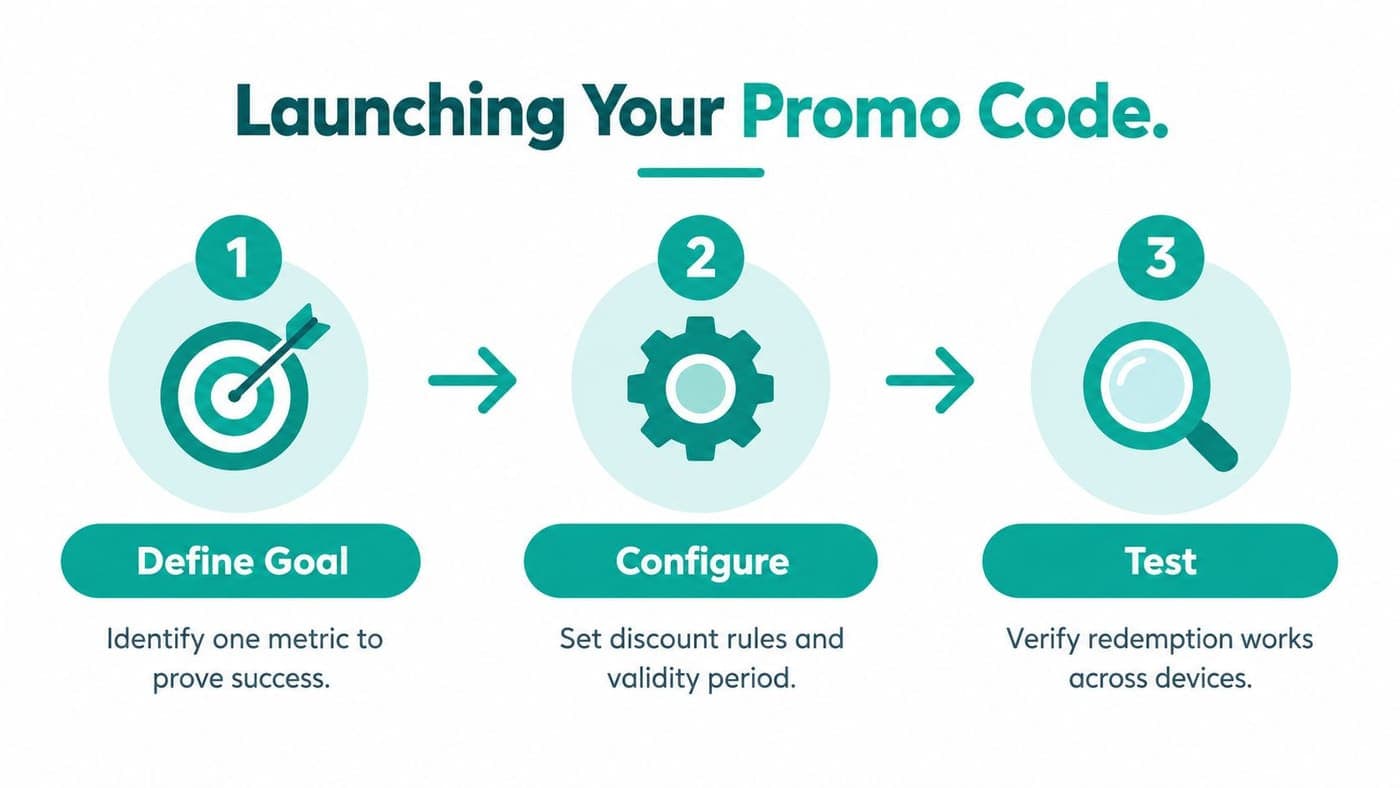
A small team can build a clean campaign in one afternoon if someone makes the decisions before opening the ticketing dashboard. The work starts with the outcome, not with the coupon field.
Define the result before creating the code
Write one sentence: “This code will help us fill weekday seats,” or “This code will show whether our partner newsletter reaches new buyers.” Then choose the metric that proves success, such as completed redemptions, new email signups, or revenue from a defined audience.
A code without a goal is only a coupon. A code with a goal becomes a small campaign you can evaluate.
Name codes so the report explains itself
Name codes for the channel and audience, not only the discount. SPRINGBOARD-EMAIL tells you more later than 15OFF.
Use a consistent pattern that includes the campaign and channel, such as SPRINGBOARD-IG or SPRINGBOARD-PARTNER. If you also use tracking links, align the code name with your UTM campaign and source values.
Create one code for each meaningful surface:
- Email: Give your subscriber list a code tied to the exact campaign.
- Social: Use a distinct code for an Instagram post, story, or Facebook update.
- Partner: Assign a code to each community organization or business.
- Board outreach: Give board members individual codes when personal accountability matters.
- Paid advertising: Keep paid traffic separate from organic promotion.
Add guardrails before distribution
Set the eligibility rules, start date, expiration date, usage limit, total redemption cap, and ticket categories before anyone receives the offer. Exclude premium seating if discounting it would weaken the event's margin.
Prepare every asset in advance. Draft the email sentence, social caption, partner blurb, and check-in instruction so volunteers don't improvise different terms.
Stage each code as a draft, then test a redemption with a personal card. Check the ticket selection, updated total, confirmation email, and mobile experience. Publish codes in a coordinated window, and use our guide to creating nonprofit promo codes for the configuration details your team needs.
Tracking Channel Attribution With Unique Codes
A unique code turns a ticket sale into a clue about buyer origin. That clue isn't perfect attribution, but it is far better than asking everyone to remember where they heard about the event.
Use one code per channel or outreach asset when the distinction matters. EMAILMAR25 should not also appear in a board message, partner newsletter, and social caption. Shared use contaminates the report.
Keep naming and links aligned
Pair the code with a UTM-tagged link when your team can manage it. The link can show where someone clicked, while the code shows what they entered at checkout. Those signals won't always match, especially when supporters forward emails, but together they give you a clearer picture.
A $5 discount per ticket can become marketing intelligence rather than an unexplained cost when you know which audience redeemed it. The key question is not whether the discount reduced the ticket price. It's whether the resulting audience justified the cost and gave you useful information for the next campaign.
| Practice | Pitfall | Better Approach |
|---|---|---|
| One code for every channel | You can't identify the source | Assign a separate code to each channel |
| Volunteers share one code | Personal outreach disappears into one total | Use individual or team-level codes |
| No expiration date | Urgency weakens and reporting becomes muddy | Align the end date with the campaign |
| No redemption cap | Demand may exceed your planned inventory | Set a limit before distribution |
| Code name uses only the discount | Future reports need decoding | Name the campaign and channel clearly |
A code can also identify partner performance without making the relationship transactional. Tell the partner that the code helps you understand audience response, then share a concise result after the event.
For teams building a broader measurement habit, measure content ROI with Viral.new offers useful context on connecting promotional activity with conversions. Your nonprofit doesn't need a complicated model. It needs consistent names and clean records.
Reading Redemption Reports and Proving ROI
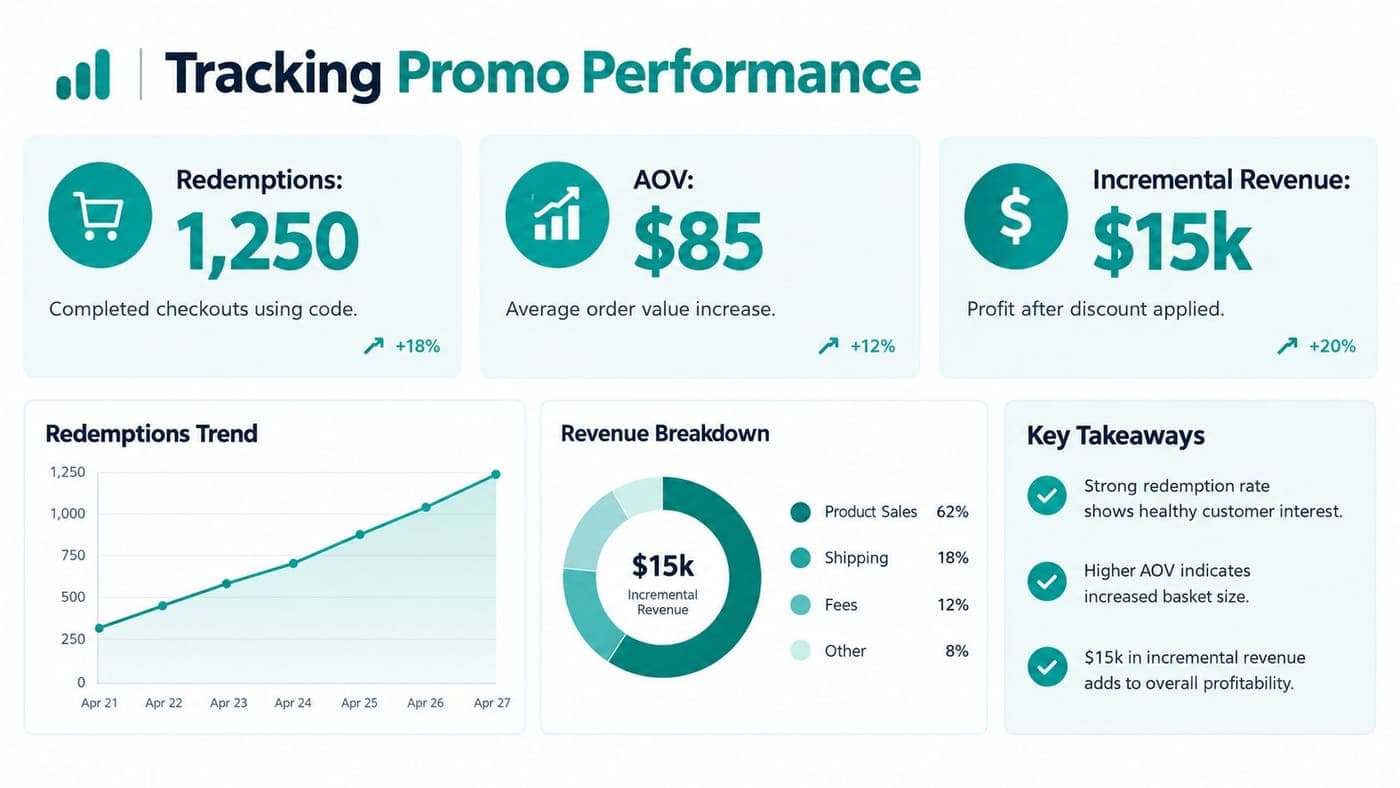
A redemption report answers only one question unless you read it alongside the buyer journey. Start with views, add-to-carts, checkouts started, completed redemptions, average order value, and revenue after the discount.
A channel with many views but few checkouts may have a weak message, a poor audience fit, or a checkout problem. A smaller audience with strong completion may deserve more attention than a large audience that rarely buys.
Watch the first signals, then wait for patterns
During the first forty-eight hours, check whether the code works, whether buyers reach checkout, and whether the offer creates unexpected demand. Those early signals help you fix broken links, unclear terms, or inventory restrictions before the campaign ends.
Wait longer before judging audience quality. After the campaign has had time to run, compare net revenue, new contacts, donor status, attendance, and repeat interest. Gross lift counts every sale associated with the campaign. Net lift considers the discount and the costs that remain.
Give the board a useful answer
Your board wants to know whether the campaign paid for itself and strengthened the organization's future reach. Put the answer in a short report with:
- Campaign cost: Include discounts, advertising, waived fees, and staff time where practical.
- Net ticket revenue: Show the amount retained after the offer and applicable costs.
- Audience growth: Count new contacts and identify donors or supporters worth cultivating.
- Attendance quality: Compare completed purchases with actual attendance and future engagement.
- Channel lesson: State which audience earned the seat and what you'll change next time.
Store the final numbers with the event record, not in someone's personal spreadsheet. A consistent event financial report gives finance and development the same view of campaign performance.
Handling Comps, Fees, and Checkout Failures
A free ticket isn't automatically a harmless ticket. Sponsors, volunteers, media guests, and program beneficiaries still occupy seats, receive food, and affect staffing plans.
Track a complimentary guest list separately when accuracy matters. A 100%-off code records a promotion redemption, while a dedicated comp category can identify why the guest attended. Your choice should match the question finance and development need answered later.
Treat fee rules as an accounting decision
A fee waiver may improve the donor experience, but it doesn't necessarily remove the venue's or processor's cost. One ticketing policy explains that a customer-facing fee can still be deducted from the ticket price or billed separately, while a fully comped ticket may be the only case without a ticket fee (SeatEngine promo code rules).
Another support policy states that a 100% discount can still incur fees when it isn't marked as a comp, while another platform reports no associated fees for a $0 purchase (Event.gives ticket access guidance). The rule depends on the ticketing system, so test before promising a free experience.
Use a short troubleshooting sequence
When a supporter says the code failed, check the event and ticket type before blaming the buyer. Ticketmaster identifies common causes including sold-out inventory, an ended sales window, a code that isn't active, or a code restricted to a particular event or ticket type (Ticketmaster passcode help).
Ask the buyer to type the code manually, confirm the capitalization, open the original link, and select an eligible ticket. Check the code's dates, remaining uses, and inventory from your administrator view.
If the issue persists, record the exact event, ticket type, code, device, and error message before contacting platform support. Your nonprofit payment processing process should also explain who absorbs fees and how staff handle a failed checkout.
Your First Week Promo Code Action Plan
You don't need a major campaign to build the habit. Before next week's board meeting, audit past ticket sales and identify one revenue gap a code could have addressed, such as weak partner outreach or unsold early inventory.
Choose one event within the next ninety days as your pilot. Create three to five named codes for email, social, a partner organization, board outreach, and paid advertising where relevant. Set redemption caps and an expiration date, then create a spreadsheet with columns for code, channel, audience, views, checkouts, redemptions, discount cost, net revenue, new contacts, and attendance.
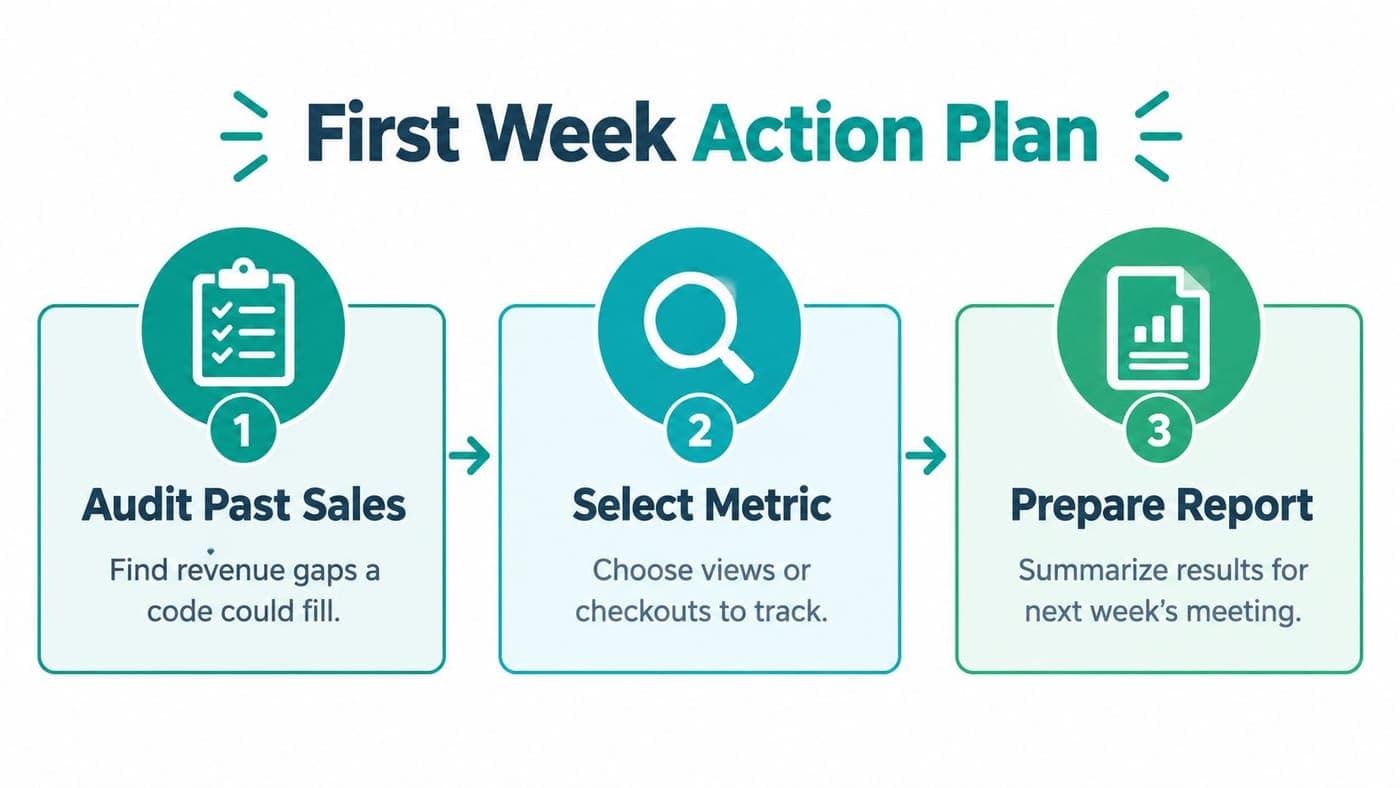
Launch the first code within seven days. Schedule a thirty-day post-event debrief so the lesson survives beyond the person who built the campaign.
Treat promo codes as a standing line item in every event budget, not a one-off experiment, so attribution habits compound across the year's calendar.
AlignMint brings ticketing, donor records, marketing, volunteer coordination, and true fund accounting into one nonprofit platform, with a free tier for organizations under $100K and plan-based access without per-seat fees. Visit AlignMint to see whether your team can track event revenue and audience response without adding another disconnected system.
Ready to try AlignMint with your nonprofit?
Start free — set up donor tools, giving pages, and Minty. Upgrade when you need accounting.