

Form 990-EZ Requirements for Nonprofits
Your fiscal year has closed, the board wants clean numbers, and your team is still sorting receipts, donor records, and restricted grants. Understanding the 990-EZ requirements early turns that annual scramble into a manageable preparation process. This guide explains eligibility, financial tests, schedules, deadlines, public disclosure, and the practical systems that keep your records ready.
Quick Answer: 990-EZ Requirements for Nonprofits
You may file Form 990-EZ only when annual gross receipts are less than $200,000 and year-end total assets are less than $500,000. Check both tests from finalized records before anyone starts the return.
Compare this with the Form 990-EZ guide and nonprofit tax filing requirements. For the ledger, see fund accounting.
Understanding Who Can File the 990-EZ
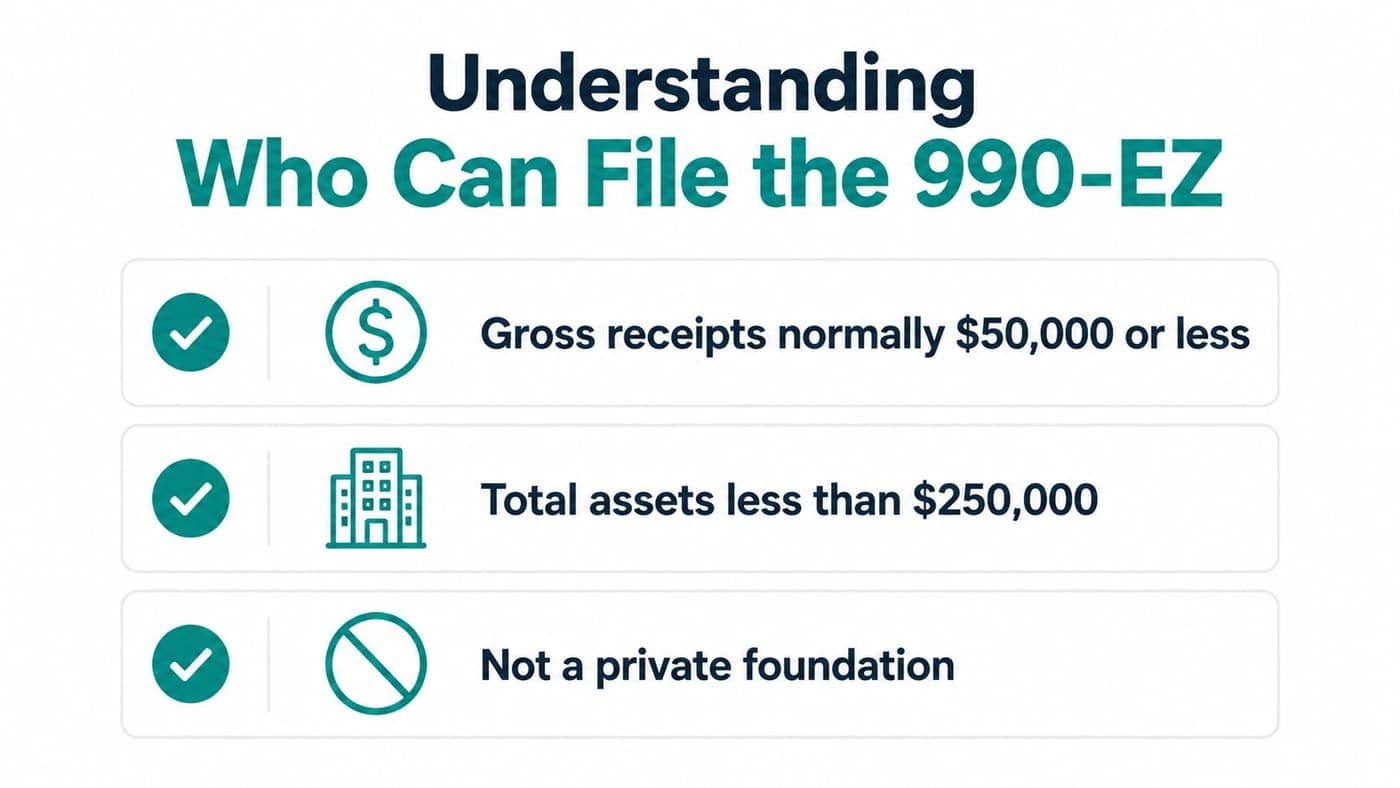
The first question isn't whether Form 990-EZ feels simpler. It's whether your organization fits the IRS financial limits. Form 990-EZ is an annual return for smaller tax-exempt organizations, but eligibility is tightly capped.
Your organization may file Form 990-EZ only when annual gross receipts are less than $200,000 and total assets at the end of the tax year are less than $500,000. The IRS provides these limits in its Form 990-EZ instructions.
Consider a community arts nonprofit that finishes the year with modest program revenue but a larger balance sheet after receiving a building gift. Its receipts might fit the test, while its assets don't. Another organization might have limited assets but receipts above the permitted threshold. In either case, the organization shouldn't select Form 990-EZ based on only one figure.
Practical rule: Check both gross receipts and year-end assets before anyone starts entering data.
The form's simplified design doesn't remove the need for careful accounting. Your revenue, investments, equipment, property, liabilities, and restricted funds all contribute to the eligibility decision. A useful starting point is AlignMint's Form 990 glossary, which can help your board and staff use the same terminology.
Don't confuse a smaller return with an optional return. An eligible organization still has an annual filing responsibility, and its records must support what it reports. If your numbers approach either limit, ask your tax professional to confirm the filing choice before submission.
Reviewing the Financial Thresholds and Limits
The eligibility test becomes clearer when you separate gross receipts from total assets. Gross receipts describe the organization's incoming financial activity for the relevant calculation, while total assets represent what the organization owns at the end of the tax year.
The IRS instructions identify a practical gross-receipts calculation. Add lines 5b, 6c, and 7b on Form 990-EZ to determine gross receipts, as explained in the official Form 990-EZ PDF. Your bookkeeper should prepare this calculation from finalized records, not from a quick review of the bank balance.
New organizations also need to pay attention to the IRS's special guidance for determining whether gross receipts are normally $50,000 or less. The rules differ according to organizational age:
- New organizations: An organization one year old or less is normally within that level if it has received or been pledged $75,000 or less.
- Early operating years: An organization between one and three years old is normally within that level if its average receipts during its first two tax years are $60,000 or less.
- Established organizations: An organization three years old or more is normally within that level if its average receipts over the prior three years are $50,000 or less.
The same IRS instructions establish the Form 990-EZ eligibility ceiling at less than $200,000 in annual gross receipts and less than $500,000 in total assets. Those limits aren't the same as the gross-receipts test used for Form 990-N, so teams should avoid treating the forms as interchangeable.
Build the calculation from source records
Start with the trial balance, then reconcile the relevant revenue lines and review year-end asset balances. Your financial statement preparation guide can help structure that review before the return is prepared.
A fund accounting system should distinguish restricted grants, program revenue, contributions, and other receipts without relying on memory. That distinction gives your preparer a defensible trail from the ledger to the return.
Completing the Required Schedules and Lines
Once eligibility is established, accuracy depends on translating your operating records into the form's lines and required schedules. The return should tell a consistent story about finances, governance, programs, compensation, fundraising, and public support.
Begin with a finalized balance sheet and statement of revenue and expenses. Then compare the form fields with your general ledger, bank reconciliations, grant records, donor reports, payroll files, and board records.
Use a controlled preparation sequence
- Freeze the accounting period: Confirm the accounting period and make sure every transaction belongs in the correct year.
- Reconcile financial data: Tie cash, receivables, liabilities, restricted funds, and fixed assets to supporting schedules.
- Map operations to the return: Identify programs, fundraising activity, management costs, grants, contributions, and other revenue categories.
- Review governance information: Confirm officers, directors, key employees, policies, meetings, and compensation details with the appropriate records.
- Identify schedule triggers: Ask your preparer which activities require additional schedules or explanations.
- Perform a cross-check: Compare the return with audited, reviewed, compiled, or internally prepared financial statements, when applicable.
The Form 990 preparation checklist can give your team a central list of records to gather. It's especially helpful when the executive director, treasurer, bookkeeper, and outside preparer divide responsibilities.
Use true fund accounting rather than treating funds as simple QuickBooks classes. Restricted gifts, grants, and programs should remain visible throughout the year, because reconstructing restrictions at filing time invites errors. Your return should reflect the same financial structure your board uses to make decisions.
Choosing Between the 990-EZ, Full 990, and 990-N
Filing the right form depends on your organization's financial profile and circumstances. Treat the choice like sorting records into the right reporting lane: first check the organization's receipts and assets, then review whether its activities create additional reporting needs.
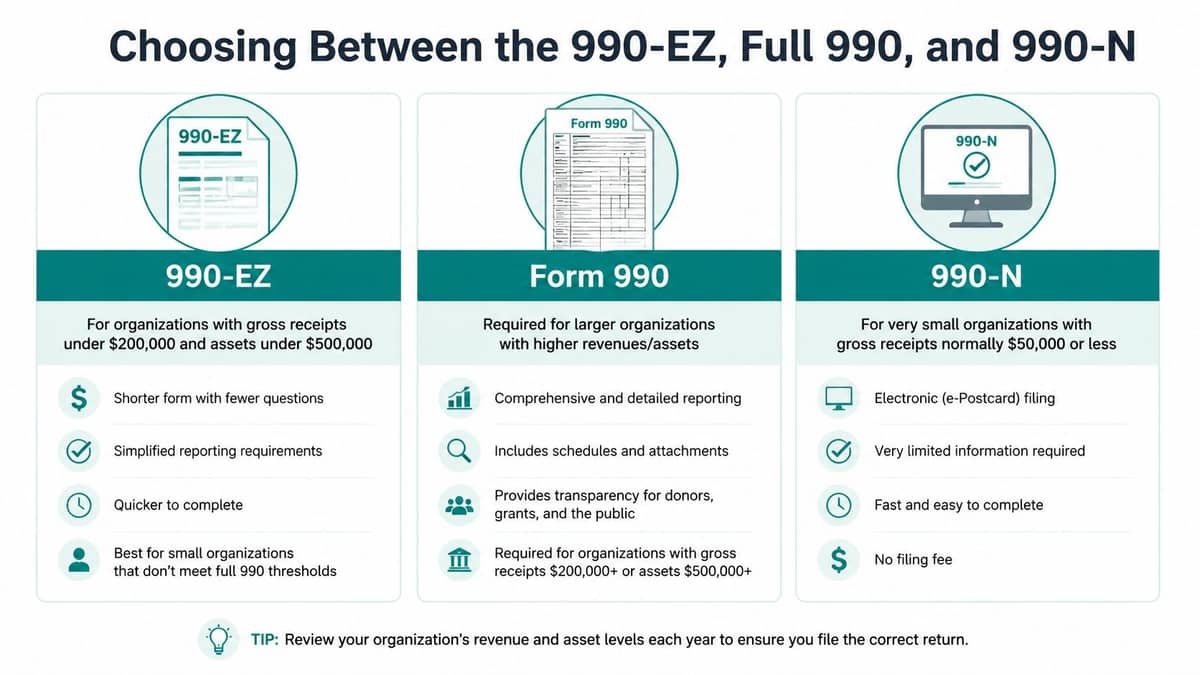
Form 990-EZ is available when annual gross receipts are less than $200,000 and total assets are less than $500,000, according to the IRS Form 990-EZ instructions. If either measure reaches or exceeds its applicable ceiling, ask a qualified tax professional whether the full Form 990 applies. A current operations platform can make this review easier by keeping income, assets, grants, and program records organized throughout the year instead of reconstructing them during filing season.
The full Form 990 generally requires broader financial detail, governance information, program descriptions, and supporting schedules. That longer return may also require more coordination among staff, board members, and the preparer. Use the organization's actual records and activities to choose the form, rather than selecting the shorter form because it seems easier.
Where Form 990-N fits
Form 990-N is an annual electronic notice for very small organizations. The IRS e-file technical requirements state that eligible organizations file it each year by the 15th day of the 5th month after the tax year ends, and they cannot file it before the year ends. Failure to file for three consecutive years automatically revokes tax-exempt status.
| Filing | General role | Main consideration |
|---|---|---|
| Form 990-N | Smallest eligible organizations | Annual electronic notice and strict filing control |
| Form 990-EZ | Smaller organizations below its financial ceilings | Detailed annual return with supporting records |
| Full Form 990 | Organizations requiring the longer return | Broader reporting and additional schedules |
A nonprofit tax filing requirements overview can help your board compare the forms before records are gathered. Churches, church-affiliated schools, governmental units, and other potentially excepted organizations should confirm their status with qualified advice rather than assuming an exception applies.
Navigating Deadlines and E-Filing Rules
A reliable filing workflow starts before year-end close. Form 990-EZ is due on the 15th day of the 5th month after the accounting period ends. For a calendar-year filer, that generally means May 15 of the following year, according to the IRS annual return due-date guidance.
If the deadline falls on a weekend or legal holiday, the IRS moves it to the next business day. Set an internal review date earlier, so missing receipts or unclear transactions do not become deadline problems.
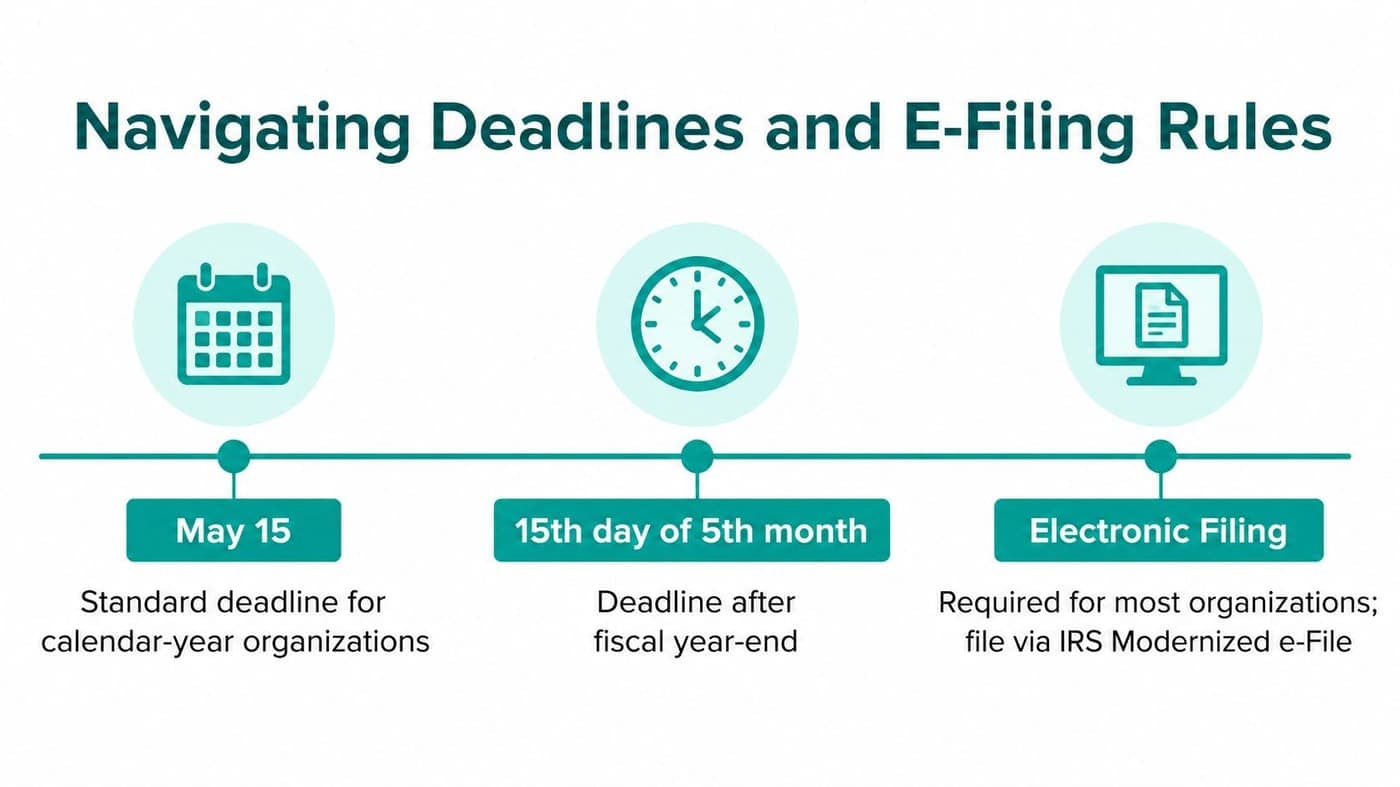
The IRS requires electronic filing for Form 990 returns for tax years ending July 31, 2020 and later, and the 2025 Form 990 instructions state that e-filing is required. The accepted electronic window covers the current tax year plus the two prior tax periods. Older or amended filings outside that window must be paper-filed because the IRS rejects out-of-window electronic submissions, as explained in the IRS charity e-file requirements.
If a tax professional files for you, the organization does not need special software. The preparer must use IRS-approved software, be an IRS Electronic Return Originator, and submit a new or revised e-file application at least 45 days before e-filing the applicable return.
Use a Form 990 filing software guide to compare data-collection workflows. A platform can organize receipts and finance records, while the preparer remains responsible for submission and final review.
Addressing Common Misconceptions About Filing
A federal filing does not satisfy every state obligation. Depending on where your nonprofit operates or solicits support, state agencies may require charitable solicitation registration, corporate reports, or financial statements. Confirm the applicable rules with your state regulator or nonprofit attorney.
Filing also does not end the organization's responsibility. Form 990-EZ remains a public organizational record, so your team needs a retrieval process, not just a submission confirmation.
Public access requires organized records
The return must be available for public inspection for three years, starting on the due date, including extensions, or the filing date if later, according to the IRS public disclosure overview.
Store the exact filed return with its schedules, amendments, and related approvals. A shared operations platform can connect finance records, approvals, and document versions, reducing the risk that staff changes or scattered folders leave gaps.
Board-ready practice: Treat the filed return as a public organizational record, not a document that disappears after the deadline.
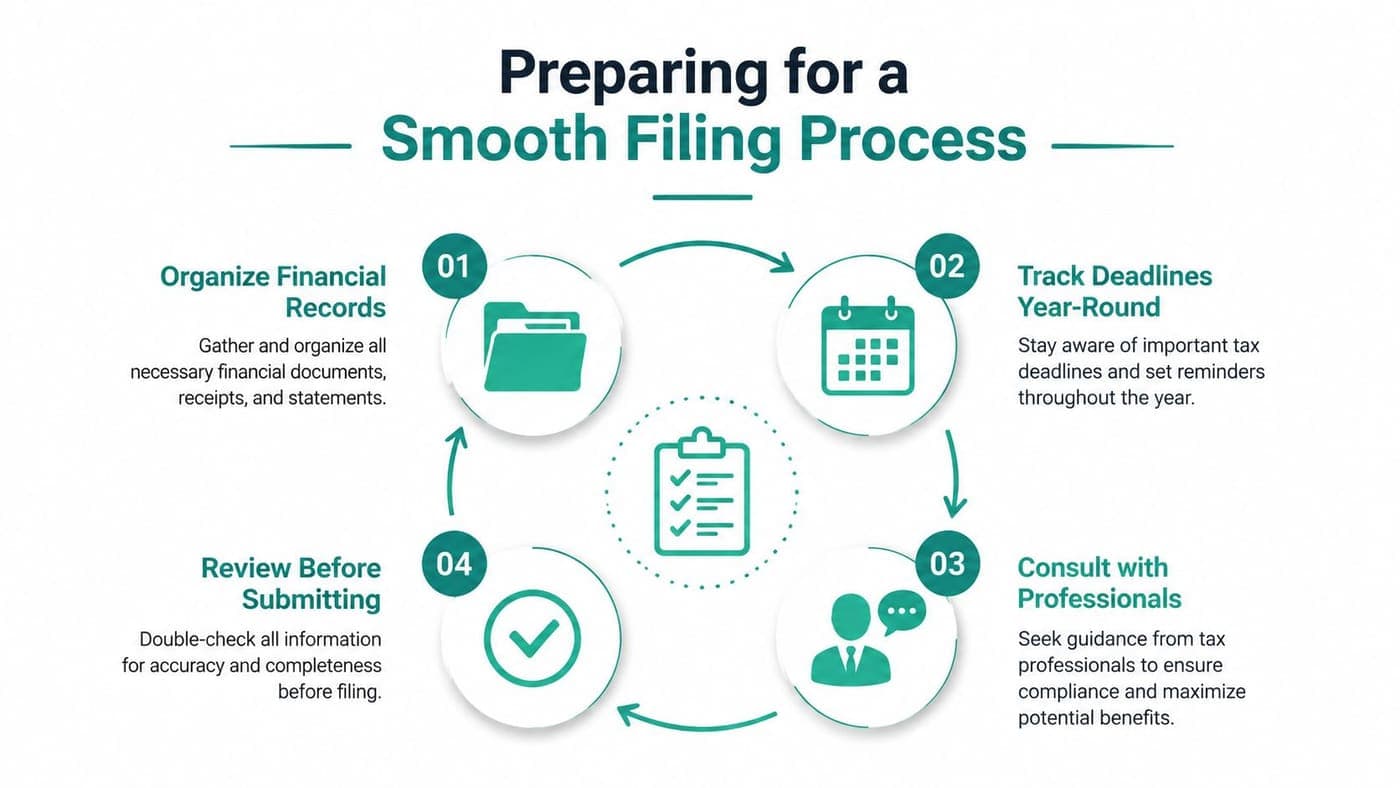
Preparing for a Smooth Filing Process
A smooth filing begins months before submission. For example, a grant expense recorded in one spreadsheet and a donor restriction tracked elsewhere can force your team to reconstruct the story later. Keep records together throughout the year.
Use a recurring workflow:
- Organize financial records: Reconcile bank accounts, classify revenue, document restrictions, and retain grant support.
- Track deadlines year-round: Place the accounting-period deadline, board review, preparer date, and extension decision on one calendar.
- Consult with professionals: Ask a CPA or nonprofit attorney about unusual transactions, state requirements, related parties, and filing exceptions.
- Review before submitting: Compare the return with financial statements, minutes, donor reports, and approved budgets.
Accounting exports are only one part of the preparation. Donor and volunteer records, event activity, marketing campaigns, online giving pages, and team communications can explain why transactions changed.
Modern operations platforms can connect these records, approvals, and financial entries, reducing rekeying and missing context. For vendor agreements, reviewing managing contract costs and obligations helps connect commitments with budgets and accounting records, especially when contracts affect program costs, restricted grants, or future liabilities.
Finding the Right Tools for Compliance
A filing team may have accounting records in one spreadsheet, donor details in another, and event information in email. The right platform brings those records into a shared system, reducing rekeying while preserving permissions, review history, and clear responsibility for the treasurer, executive director, bookkeeper, and preparer.
AlignMint is one option for nonprofits seeking an all-in-one platform for accounting, donor management, volunteers, events, marketing, online giving, and team communication. Its true fund accounting is designed to track restricted funds, grants, and programs instead of treating them as simple QuickBooks classes. A donor CRM, volunteer records, event tools, and marketing features can also keep supporting information connected to financial activity.
Match the tool to your operating reality
A church may need donation and program records together. A school may need grants, events, volunteers, and reports connected. A fiscal sponsor may need separate sponsored projects with consolidated visibility. The details differ, but disconnected files create the same basic problem: staff must reconcile information before they can trust the return.
AlignMint includes Minty, an assistant that answers questions about an organization's own data. It also offers plan-based access without per-seat fees and a free tier for nonprofits under $100,000, according to the publisher's product information. Evaluate those features alongside access controls, reporting, implementation support, data portability, and compatibility with your preparer.
A sensible test: Can the system trace a reported figure back to its source record without exporting several files?
You don't need software to understand these filing obligations. What you need is repeatable ownership and records that stay consistent from transaction entry through public disclosure. A platform can simplify collection and review, but leadership remains responsible for checking the return and meeting applicable rules.
AlignMint combines accounting, true fund accounting, donor management, volunteers, events, marketing, online giving, and team communication. Visit AlignMint to assess whether its connected records and filing preparation tools fit your organization's 990-EZ workflow.
Ready to try AlignMint with your nonprofit?
Start free — set up donor tools, giving pages, and Minty. Upgrade when you need accounting.