

What Is Contra-Revenue in Fund Accounting
A storm cancels your nonprofit's gala after tickets have been sold, deposits have been collected, and program budgets have been updated. You refund the attendees, but your board still needs to know how many tickets were sold, how much income the event generated, and what your organization retained.
That's the practical reason to understand what is contra-revenue. It helps you separate original transaction activity from refunds, discounts, waivers, and other reductions, so your program reports, restricted funds, and forecasts reflect reality.
Quick Answer: Contra-Revenue in Fund Accounting
Contra-revenue reduces gross income for refunds, discounts, and similar concessions while keeping the original sale visible. Record the reduction against the program or fund it belongs to, not as a general expense.
Start with fund accounting and how to close revenue accounts. For restrictions, see restricted vs unrestricted funds.
Understanding Contra-Revenue in Nonprofit Operations
When a nonprofit refunds tickets after a cancelled gala, the money leaving the bank account raises a practical question: should the refund be recorded as an expense, or should it reduce the revenue originally recognized?
A refund linked directly to a ticket sale generally reverses part of that earning event. It differs from paying a caterer, renting a venue, or purchasing advertising. Those costs support the event and belong in expense categories. The refunded ticket amount reduces the revenue associated with the cancelled event.
Contra-revenue is the accounting category for amounts that reduce gross sales to arrive at net revenue, while keeping the original sales activity and related deductions visible. In nonprofit operations, this treatment may apply to program fees, event registrations, merchandise sales, tuition waivers, and other exchange transactions.
Gross activity and retained income
Gross income shows what the organization originally billed or collected before transaction-specific reductions. Net revenue shows what remains after refunds, allowances, discounts, rebates, credits, or similar concessions.
That distinction gives the board a clearer view of program performance. A program may attract strong participation yet retain less income because participants received waivers or refunds. Recording every reduction as a general expense can make the program appear more costly than it was and obscure the amount available for its activities.
The same issue affects fund reporting. Fund accounting records should connect the original transaction, its reduction, and the fund or program affected. That link helps leaders review whether restricted resources remain available for their intended purpose instead of treating a refund as an unrelated operating cost.
Practical rule: If a transaction reverses or reprices the original earning event, evaluate it first as a reduction of related revenue. Use an expense category when the payment represents a separate cost of operating the program.
This approach preserves both sides of the story: the volume of exchange activity and the income the nonprofit ultimately retains.
How Debit Balances Reduce Gross Income
A nonprofit can report strong event registrations while retaining less income after cancellations, waivers, or participant credits. The accounting entry should make both facts visible.
Revenue accounts normally carry credit balances because credits increase recorded revenue. A contra-revenue account moves in the opposite direction. Its usual debit balance increases the deduction from gross revenue.
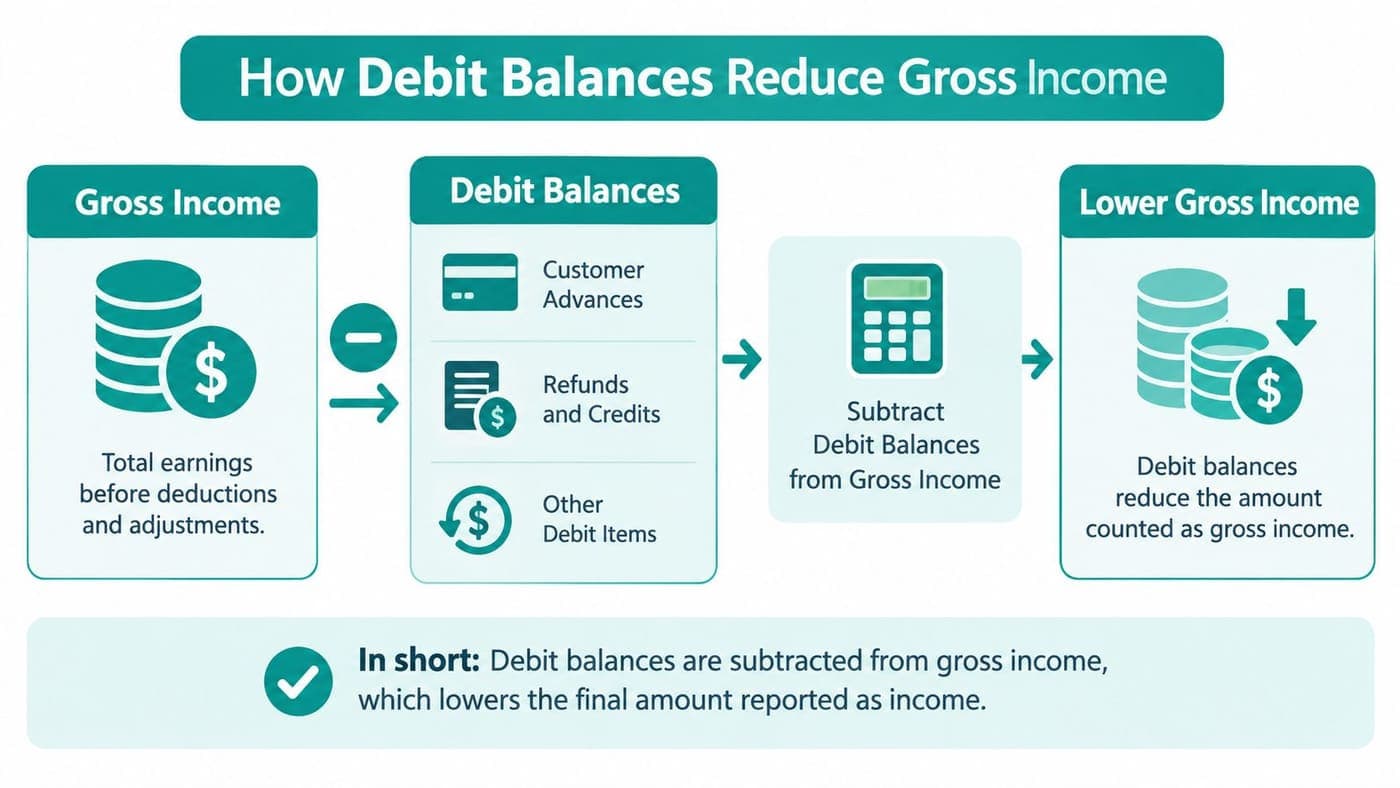
Suppose a nonprofit records $100,000 in gross sales and grants $4,000 in discounts and customer credits. Net revenue is $96,000. The ledger preserves the original activity while showing the amount the organization will not retain.
- Record the original $100,000 as gross sales.
- Record $4,000 in a contra-revenue account through debits.
- Present the deduction near revenue on the Statement of Activities.
- Report net revenue of $96,000.
Revenue accounts normally carry credits, so contra-revenue increases through debits and decreases through credits. Its balance appears near the top of the statement as a deduction from sales, consistent with Lumen Learning's accounting guidance.
Why the presentation matters
Keeping the original sales or program-fee account visible helps the board distinguish participation from retained income. A separate reduction also clarifies whether lower results came from cancellations, pricing concessions, or tuition waivers rather than from higher operating costs.
The top line reflects revenue. The bottom line reflects the final result after expenses and other items. This distinction, summarized in top line versus bottom line explained, helps board members interpret program reports without confusing reduced consideration with a separate expense.
Set up the chart of accounts with clear homes for event refunds, program-fee waivers, discounts, rebates, credits, and returns. Consistent account names make program-level reports easier to review and help trace changes to affected fund balances.
Contra-Revenue Versus Operating Expenses
The easiest classification question is this: Did the organization give back or reduce consideration from the original transaction, or did it incur a separate cost?
A refunded workshop registration reduces workshop revenue. A credit-card processing fee is a cost of collecting the payment. Both affect the organization's financial result, but they explain different things to management.
The accounting distinction is that contra-revenue carries a debit balance and offsets the original revenue account, while a general operating cost is recorded separately (AccountingCoach's contra-revenue explanation). This separation protects program-level reporting and prevents unrelated costs from being netted against income.
| Transaction Type | Classification | Impact on Financials |
|---|---|---|
| Refunded event ticket | Contra-revenue | Reduces related event revenue while preserving original ticket activity |
| Tuition waiver tied to enrollment | Usually a revenue reduction, subject to policy and transaction substance | Reduces recognized tuition income connected with the enrollment |
| Credit-card processing fee | Operating expense | Increases fundraising or payment-related costs without reducing gross program revenue |
| Advertising for an event | Operating expense | Records the cost of promoting the event separately from ticket income |
| Post-sale credit for a program service | Contra-revenue | Reduces the amount the organization expects to retain from that transaction |
A practical test for your team
Ask bookkeepers to document three details:
- Original transaction: What revenue, fee, registration, or sale created the adjustment?
- Reason for change: Did the organization refund, waive, credit, or reprice that transaction?
- Separate service received: Did a vendor provide something your organization consumed, such as payment processing or advertising?
A refund belongs with the original revenue when it reverses the earning event. A processing fee remains an expense because the organization purchased payment services.
This distinction resembles the need to separate gross bookings from deductions when reading payout gaps in tour bookings. The same analytical habit helps nonprofit leaders understand whether a lower payout came from reduced customer consideration or from a separate cost.
Your income statement reporting should make those categories easy to review. When the board sees lower program revenue and higher operating expenses separately, members can ask better questions about participation, pricing, fundraising efficiency, and program design.
Recording Journal Entries for Event Cancellations
A journal entry makes the classification visible. Suppose your nonprofit records workshop registrations as program revenue, then cancels the workshop and refunds the participants.
If the organization has already received the payments, the original entry may look like this:
| Account | Debit | Credit |
|---|---|---|
| Cash or accounts receivable | Registration amount | |
| Program registration revenue | Registration amount |
When the workshop is cancelled and the organization owes the money back, record the reduction separately:
| Account | Debit | Credit |
|---|---|---|
| Event refunds, contra-revenue | Refund amount | |
| Refund liability or cash | Refund amount |
If the refund is paid immediately, credit cash. If payment will occur later, credit a refund liability until the organization settles the obligation.
Why timing matters
Modern revenue-recognition practice treats estimates and timing as part of the accounting judgment. Estimated returns and allowances are based on historical transaction detail and recorded as contra-revenue when the related revenue is earned, so deductions are recognized in the same period as the associated sale (SEC filing example).
For a nonprofit, that means your month-end process shouldn't wait for a bank refund to explain an already-known cancellation. If management approved the cancellation before close, your accounting team should determine whether a refund liability or contra-revenue entry belongs in that reporting period.
Questions for the monthly reconciliation
Ask your bookkeeper to compare:
- Registration reports with refund requests.
- Event cancellations with refund liabilities.
- Credit memos with the related program or event.
- Waivers with the organization's written eligibility policy.
- Bank activity with the journal-entry documentation.
Keep the program, event, or fund dimension attached to each entry. The refund should reduce the same reporting area that recorded the original income, unless your accounting policy requires another treatment based on the transaction's substance.
A clean entry doesn't erase the event's history. It shows the original activity and the amount your nonprofit ultimately expected to retain.
Protecting Restricted Funds and Grant Budgets
Correct classification protects more than the income statement. It also helps you honor donor restrictions and explain available resources to your board.
Nonprofit fund accounting requires resources to be tracked according to donor restrictions and organizational purpose, with net assets with donor restrictions separated from net assets without donor restrictions on financial statements (501 CPAs' guide to fund accounting). A refund doesn't automatically make restricted money unrestricted. It should be connected to the original transaction, fund, program, and restriction.
Program and grant reporting
Suppose a grant-supported program charges participant fees. A waiver or refund may reduce program revenue, but it doesn't necessarily change the grant's authorized purpose. Your records should show the lower earned income and preserve the grant budget's original restrictions.
For fiscal sponsors, this discipline becomes even more important. The sponsor accepts donations and grants for sponsored projects, remains responsible for applying funds properly, and should maintain project-level records separate from its own operations (Fiscal Sponsorship Guide).
A refund assigned to the wrong project can distort both the sponsor's consolidated report and the sponsored project's available balance. The same concern applies to churches tracking designated building, missions, or benevolence funds. A transaction reduction should remain connected to the purpose that generated the original income.
A positive bank balance doesn't tell you how much money your organization may spend freely.
Your restricted-funds reporting should help directors answer three questions: what came in, what was returned or credited, and what remains available under each restriction. That clarity supports grant reports, board packets, Form 990 preparation, and conversations with program leaders.
Automating Your Financial Reporting
Manual spreadsheets can preserve the right logic, but they require consistent mapping across ticketing, donor records, bank activity, and the general ledger. A cancellation may be recorded in one system while the refund appears in another, leaving your team to reconcile the difference later.
An all-in-one platform can connect accounting, donor management, volunteers, events, marketing, online giving pages, and team communication. AlignMint is one option that provides true fund accounting, event ticketing, donor records, and reporting in one nonprofit operations platform. It also offers a free tier for nonprofits under $100K, plan-based access without per-seat fees, a built-in marketing suite, and Minty AI for questions about organizational data.
The important evaluation question isn't whether software uses artificial intelligence. Ask whether your system preserves gross activity, maps reductions to the correct fund or program, and keeps restricted balances separate after a refund.
For peer discussion about finance processes and reporting systems, a CFO community can provide practical perspectives from other finance leaders. Bring those conversations back to your own chart of accounts, approval policy, and board reporting needs.
AlignMint brings accounting, fund tracking, event registrations, donor management, and reporting into one nonprofit platform, helping your team keep refunds connected to the right program and fund. Review your current process, then visit AlignMint to see whether it fits your organization's reporting needs.
Ready to try AlignMint with your nonprofit?
Start free — set up donor tools, giving pages, and Minty. Upgrade when you need accounting.