

A program officer just told you to send a letter first. Your board thinks that sounds easy. You're the one who knows that short letter will decide whether your idea lives or dies. This guide shows you how strong grant letters of intent work, what funders screen for, and how to size your request so you can deliver it.
Quick Answer: Grant Letters of Intent
A grant letter of intent is the funder's go or no-go screen. It should show eligibility, fit, and a request your team can deliver, not a shortened full proposal.
Start with fund accounting and what a grantor expects. For the books after an award, see nonprofit grant accounting.
Why the LOI Is a Decision Document, Not a Short Proposal
You get the email on a Tuesday morning. The program officer sounds warm. She says, just send us a letter of intent first. Your development volunteer relaxes. Your finance chair asks for a draft by Friday. You feel that familiar dread, because you've seen this movie before.
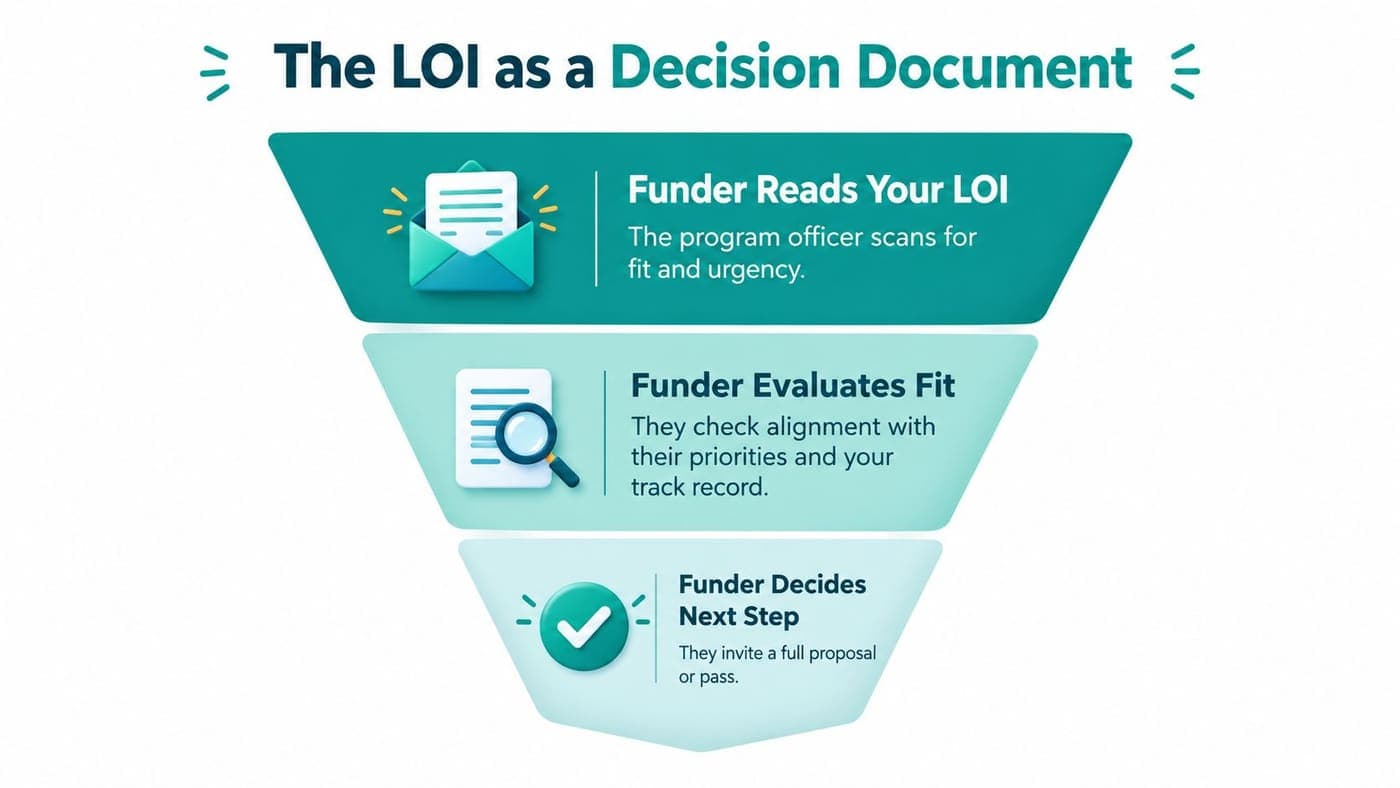
That letter isn't a warm-up. It's a go or no-go decision. The funder uses it to sort who gets invited forward and who gets a polite pass. If you treat it like a shortened proposal, you'll load it with detail the reader didn't ask for and bury the fit she needs to see in the first minute.
The Numbers Should Change How You Write
The Kaufman Foundation published its funnel openly. Out of 100 LOIs, about 18 advance and about 6 get funded. The rest stop before detailed review.
Those figures come from its New Initiative and New Investigator programs. Across 2019 to 2024, 18% of submitted LOIs led to invitations for full proposals, 31% of invited full proposals resulted in grants, and only 6% of all LOIs ultimately received funding, as shown in the Kaufman Foundation grantmaking statistics for those programs.
That isn't a writing contest. That's triage. The reader is asking three fast questions about your organization. Are you eligible. Do you fit our stated priorities. Can you credibly do this work for roughly this amount of money.
Your LOI earns an invitation, not a grant. Write it to clear screening, and save the full case for the invited proposal.
What Screening Actually Feels Like
Picture a small school leader I know well. She sent a lovely two-page letter about student need. She barely named the funder's own priority area. She listed a request amount with no range and no timeline. The foundation passed in days.
Nothing in that letter was dishonest. It made the reader work too hard. Screening readers don't hunt for your best point. They scan for eligibility, geography, population, and mission fit. If those items aren't obvious, they move to the next file.
That's why more detail can hurt you. Jargon slows the reader down. Big claims about solving a whole social problem raise doubt. Plain language about a defined group, a defined place, and a defined result builds trust faster.
Keep your records connected from the start. Save the LOI, invitation, proposal, award, and reports together. Scattered PDFs in inboxes teach you nothing next year. Connected records show you where you're winning, where you're screened out, and which funders deserve your limited writing time.
What an LOI Is Actually Meant to Do
Folks use several names for this step. Some funders say letter of intent. Others say letter of inquiry. Federal agencies often say preapplication. The name changes, but the purpose is screening before a full application.
Don't assume the purpose is identical everywhere. One funder checks basic eligibility. Another scores strategic fit before inviting anyone. A third uses the letter to test budget size against a tight program pool. Your job is to find which decision your funder wants to make, then write for that decision.
Three Funders, Three Different Jobs
The Congressional Research Service gives a useful general outline. It describes a brief statement covering your organization, project, need, staffing, evaluation, request, and fit, as summarized in the Congressional Research Service guide to grants work. Some foundations accept letters on a rolling basis. Others set firm deadlines.
Federal programs play by published rules. Agencies must say whether an LOI or preapplication is required. They also publish key dates for that step. You can compare your idea with the stated award range before you draft a word.
Private foundations can be much narrower. The George Family Foundation is a clear example. It receives a high volume of LOIs and advances very few. The foundation states it typically invites only about 4% of LOIs to submit full proposals, with approximately 1% ultimately approved for funding, per the George Family Foundation application guidance.
That is not a formality. That's a stiff gate. A generic letter sent to ten foundations will fail there. You need targeted fit, stated early and stated plainly.
How LOI Purposes Differ Across Funder Types
| Funder Type | Typical LOI Purpose | Common Format | Key Constraint |
|---|---|---|---|
| Community foundation | Check local fit and eligibility | Portal form or short letter | Geography and population served |
| Private foundation | Score strategic alignment | Two pages or guided form | Stated priorities and request range |
| Federal agency | Confirm eligibility before preapplication | Structured online submission | Published dates and award ranges |
| Corporate funder | Test program and community match | Short online inquiry | Service area and employee footprint |
Read that table as a decision map. You're not filling space. You're helping a busy reader say yes to the next step. If she needs eligibility proof, lead with that. If she needs strategic fit, quote her own priorities back through your project choices.
Practical rule: If you can't name the decision your LOI must support, you're not ready to draft it yet.
The Cummings Foundation shows the opposite end of volume. Its process still screens most applicants out before funding. There's no universal success rate you can plan around. Advancement depends on strategy, budget, eligibility rules, and how many others apply that cycle.
The Building Blocks of a Strong LOI
Write in the order a screening reader scans. Start with fit. Move to need and track record. Then give the project concept, the amount, and a clean close. Your reader should grasp the whole request without rereading a paragraph.
Open With Fit, Not With Your History
Your first sentence should connect their priority to your request. Name the program area in their words. State whom you'll serve and where. Ask for a clear amount or credible range. A reader who sees fit in line one keeps reading.
Skip the founding story at the top. You can earn trust later with track record. At the opening, history sounds like throat clearing. Say what you want, why it matches, and what changes if funded.
Write Need and Credibility in Short Paragraphs
Give need in two short paragraphs at most. Use local facts you can defend. Name the specific group affected. Avoid claims you can't support with your own service records or public data you have checked.
Then show why you're the right group. Name years doing this work. Name partners who refer clients, students, or families. Name prior grants you've managed well. For churches and schools, name the neighborhood trust you've already earned through steady presence.
Length discipline helps here. The Ralph M. Parsons Foundation form suggests approximately 250 words for the organization's work and proposed-grant scope and approximately 500 words for current programs and services, and it asks applicants to itemize confirmed and prospective revenues alongside expenses, as shown in the Ralph M. Parsons Foundation LOI form guidance. That's a good guardrail even when another funder gives no counts.
A Template You Can Adapt Today
Dear Program Officer, We request consideration for funding to expand [program] for [population] in [place]. This request aligns with your priority of [funder priority]. In our community, [specific need].
Our organization has served [place] through [programs] and partners with [partners]. With this funding, we will [core activities] during [timeline]. We will track [two or three outcomes].
The total project cost is [amount]. We request [amount or range] from your foundation. Other support includes [confirmed and prospective sources]. Please contact [name, title, phone, email] with questions. Thank you for your consideration.
Adapt that, don't copy it cold. Replace every bracket with plain facts. Then check your numbers against our grant budget template for building the request before you send anything. Your narrative and your budget must tell the same story.
- Project concept: Describe activities, timeline, and who leads the work.
- Outcomes: Name two or three results you can measure.
- Funding request: State the total cost and your specific ask.
- Close: Name one contact person and invite the next step.
Cut jargon without mercy. Replace program language with household words. Drop unsupported superlatives like leading or unique. A screening reader trusts a calm, specific letter far more than a breathless one.
Reading the Funder's Rules Before You Write
Most LOIs don't die on prose. They die on ignored instructions. I've watched strong programs get cut for a missed cap, a wrong geography, or a request outside the stated range. You can prevent that loss in fifteen quiet minutes.
Pull Five Facts Before Drafting
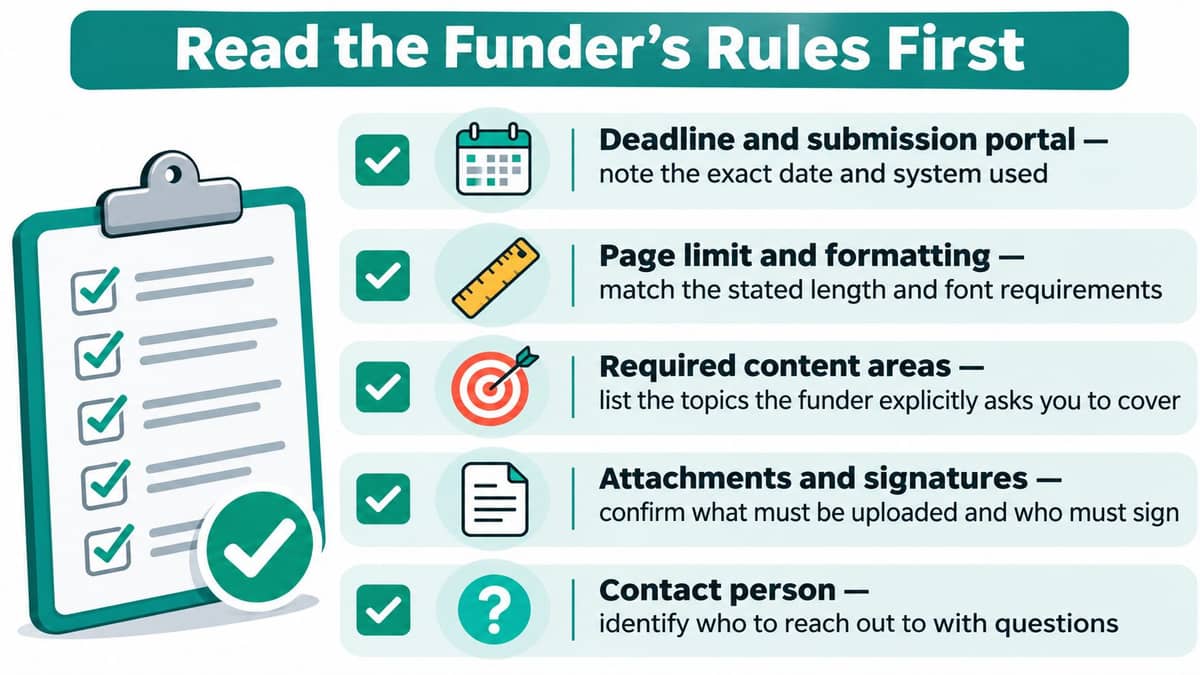
Open the guidelines and write down the hard limits first. Note the deadline and portal. Note page or word limits. Note required content areas. Note attachments and signatures. Note the named contact for questions.
The Intuitive Foundation shows how tight this can get. Its LOI guidelines cap the total budget, set a completion window, and limit indirect costs. If your project can't fit those limits, stop. Don't polish a letter that breaks the rules on page one.
- Deadline and portal: Confirm the exact date and submission system.
- Budget cap: Match your total cost to the stated ceiling.
- Indirect costs: Check the allowed share before building numbers.
- Timeline: Confirm you can finish within the required window.
- Match funds: Note whether confirmed support must be shown.
Score Yourself With a Pass or Flag Test
Make a simple sheet with two columns. Mark each rule pass or flag. Any flag needs a fix or a decision to walk away. Don't let hope override a clear mismatch in geography, population, or amount.
If your project needs three exceptions to fit, it doesn't fit. Spend your writing hours on a funder where you need none.
That discipline protects your team. Small staffs can't afford dead cycles. For an overview of how grant tracking fits your wider operations, see our grants resource for nonprofit teams. Use it to sort live prospects from long shots before drafting season swallows your calendar.
Call the contact person when rules are unclear. Ask one or two precise questions. Program officers respect that approach. They'd rather steer you early than screen you out later for a fixable misunderstanding.
Why Your Budget and Fund Accounting Matter More Than Your Prose
I'll say this plainly to a fellow director. Your biggest LOI risk isn't weak sentences. It's a request you can't deliver, absorb, or report on cleanly. A polished letter attached to a shaky budget creates pain for two years.
Common guidance on proposal errors points the same way. Inaccurate costs hurt you. A budget that doesn't match the narrative hurts you. Ignoring instructions hurts you. Poor planning shows up fast once money arrives and reporting starts.
Translate the Pitch Into Fund Accounting Reality
Ask how this money will live in your books. Will it be restricted for one program. Can it cover staff time already budgeted elsewhere. Which costs are allowable under the funder's terms. How will you track drawdowns against actual spending each month.
That's where true fund accounting earns its keep. QuickBooks classes can sort transactions after the fact. True fund accounting tracks restricted balances by fund from the start. You can see what's committed, what's spent, and what still needs a report.
Review our fund accounting feature overview for restricted funds if classes are now causing cleanup work. The benefit is simple. You answer board and funder questions from live balances, not from a spreadsheet someone rebuilt last night.
Should You Ask for the Maximum Allowed
No. Ask for what you can responsibly deploy. The maximum can create an unfunded continuation obligation. That's the quiet trap where a grant starts a service your donors can't sustain after year one.
The climate has eased some, but not enough for careless sizing. The 2025 Nonprofit Finance Fund survey included 2,206 respondents, and a related summary reported that 40% said foundation grants had become less restrictive since late 2022, according to the Nonprofit Finance Fund survey summary. Less restrictive still doesn't mean unrestricted, and it doesn't pay for staff you can't retain.
- Small church program: Ask for one year you can staff well.
- School STEM project: Fund equipment plus the teacher time required.
- Multi-year service: Confirm cash flow timing before promising growth.
- Collaborative project: Split lead costs from partner costs clearly.
Model the cash, not just the total. Some grants reimburse after spending. That timing can strain payroll. A request that looks generous on paper can leave you floating expenses for months.
Size the ask to delivery capacity first. Funders respect a credible range with clear uses. They worry when the amount seems chosen because the guidelines allowed it. Your LOI should sound like a leader who has already thought about month thirteen.
Fiscal Sponsors, Federal Deadlines, and Pipeline Tracking
Your letter is only the front door. Behind it sit ownership, deadlines, and tracking. Get those wrong and a good idea stalls. Get them right and your board can forecast grant revenue with some confidence.
Fiscal Sponsorship Changes Your Paperwork
If you apply through a fiscal sponsor, say so early. Name who submits, who holds funds, and who owns the work. Don't leave the reader guessing about roles. Ambiguity reads as risk during screening.
Rules vary sharply by funder. Indiana Arts Commission guidelines require the applicant to write and submit the application. They also require a memorandum of understanding upload for every fiscally sponsored application, as set out in the Indiana Arts Commission fiscal sponsor guidelines.
Other funders draw a harder line. The National Endowment for the Arts doesn't let an organization use a fiscal sponsor to submit on its own behalf in the same way. Check before you promise a partner anything. If terms are new to your board, start with our fiscal sponsor glossary definition and basics.
- Lead agency role: State who signs and who reports.
- Administrative fee: Show where sponsor costs sit in the budget.
- Subgrantee costs: Separate partner spending from your own.
- Project ownership: Name who directs staff and activities.
Federal Timelines Give You Useful Clues
Federal LOIs come with published structure. Federal rules require agencies to publish the expected total funding, anticipated number of awards, and expected award amounts for each opportunity, and generally leave applications open for at least 60 calendar days, under the federal rules for funding opportunity announcements.
Use those published ranges carefully. If your request sits far outside them, rethink scope. Federal reviewers won't rescue a mismatch. Build your calendar backward from the preapplication deadline, not from the final proposal date.
Track the Pipeline Like a Leader
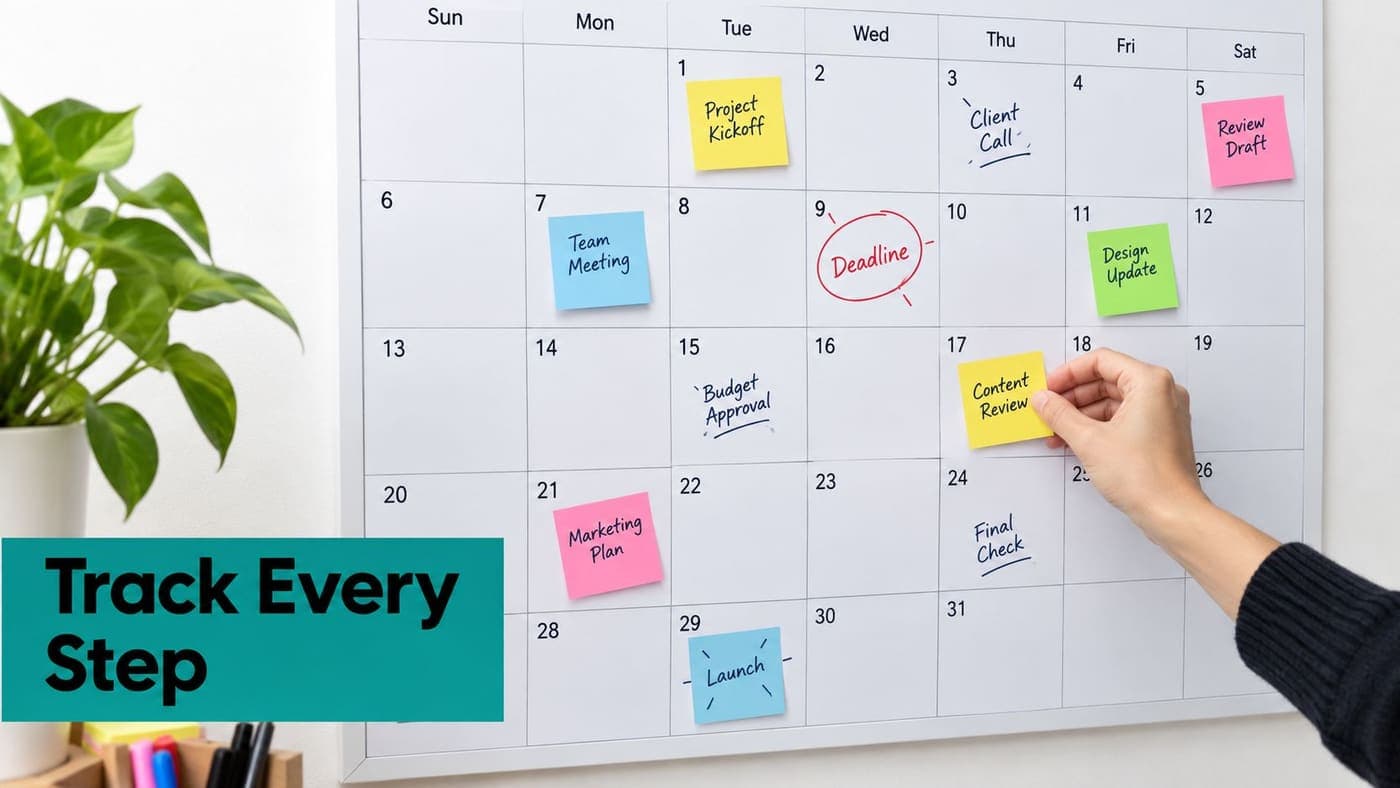
Keep one connected record per funder. Log the LOI date, amount, decision, invitation, proposal, award, and reports. Add donor contacts and volunteer capacity where they affect delivery. Your future self will thank you during budget season.
That habit turns grant writing into forecasting. You can show your board likely revenue ranges. You can spot funders who invite you often. You can stop rewriting the same letter to foundations that screen you out for the same reason each year.
Your Pre-Submission Checklist and the Mistakes That Get You Cut
Do this review the morning you submit. Read with a pen, not with hope. Check eligibility, geography, population, amount, word count, attachments, and signer. Confirm the contact line works. Confirm the budget matches the story.
- Mission mismatch: Their priorities aren't named in your opening.
- Request too high: Your ask sits above the stated range.
- Vague outcomes: You promise change you can't measure.
- Hidden financial risk: Match, cash flow, or continuation costs aren't addressed.
- Recycled letter: Last year's funder name or program slipped through.
- No clear contact: The reader can't reach one named person.
If two items fail, pause submission. Fix them or choose another funder. For help organizing drafts and deadlines, review our grant assistant documentation for planning submissions. A calm checklist beats a rushed send every time.
If you're tired of tracking grant letters of intent in scattered spreadsheets, we built AlignMint to keep your fund accounting, donor records, volunteers, and grant pipeline in one place with plan-based access and no per-seat fees. Our free tier serves nonprofits under $100K, and Minty, our AI assistant, helps you find answers in your own data without extra exports. Visit AlignMint to start free and give your next LOI a cleaner system behind it.
Ready to try AlignMint with your nonprofit?
Start free — set up donor tools, giving pages, and Minty. Upgrade when you need accounting.