

10 Online Fundraiser Ideas Nonprofits Use
Online giving is no longer a side channel for nonprofits. In the United States, it represented 12.3% of charitable giving in 2022, reaching about $61.2 billion, up from 11.8% in 2021, according to online giving benchmarks. The strongest online fundraiser isn't necessarily the newest tool. It's the concept your team can launch, track, acknowledge, and improve consistently.
The ten ideas below cover peer networks, virtual events, recurring gifts, digital appeals, matching campaigns, merchandise, grants, and longer-term funding. Each one explains the likely outcome, practical setup, staff requirements, reporting risks, and where an integrated platform such as AlignMint can reduce administrative work without asking your team to become technology specialists.
Quick Answer: Online Fundraiser Ideas
The useful online fundraiser is the one your team can launch, track, acknowledge, and repeat. Start with one idea that matches your supporters, the staff time you can spare, and the fund the money belongs in.
Start with fundraising online ideas and fundraising. For the ask itself, see how to raise money for your nonprofit.
1. Peer-to-Peer Fundraising Campaigns
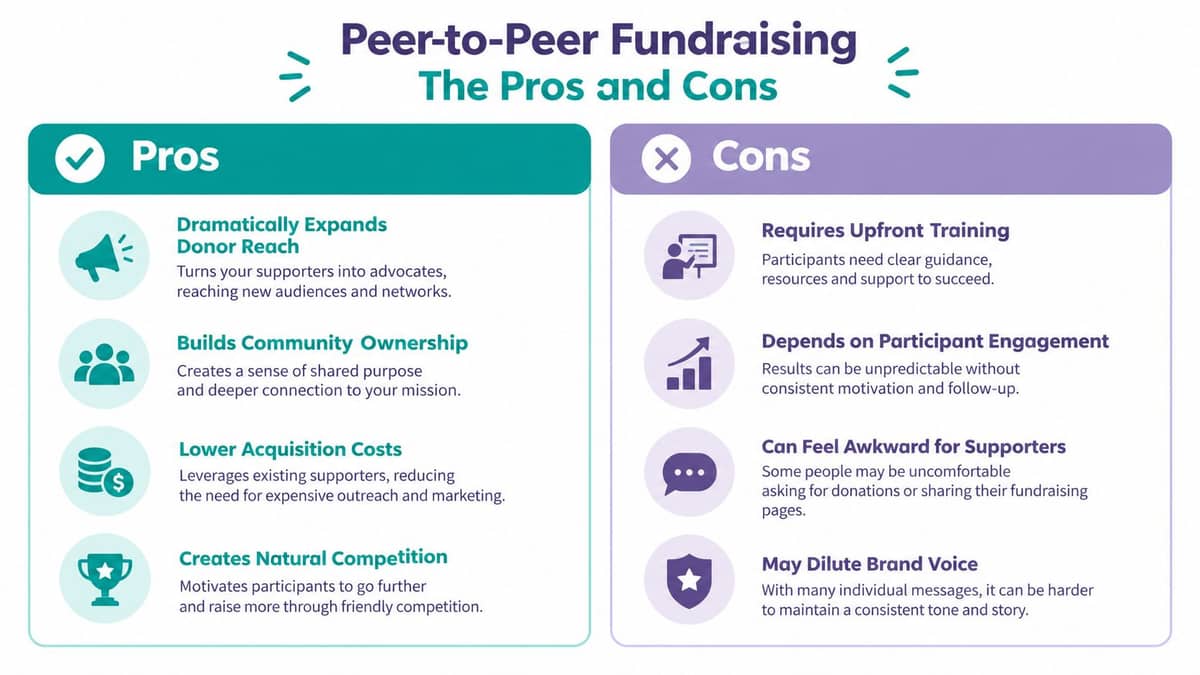
Peer-to-peer fundraising turns a committed supporter into a fundraiser for your organization. That supporter creates a personal page, shares a story with friends and colleagues, and invites people they already know to give. Your team provides the campaign structure, approved language, progress reminders, and acknowledgment.
This approach works particularly well for youth sports teams raising money for equipment or travel, community walks, and mission-based challenges. St. Jude Children's Research Hospital's Tug King campaign and The Leukemia & Lymphoma Society's Light the Night walk show how recognizable programs can build participation around personal fundraising. A smaller nonprofit can apply the same principle without copying the scale.
The operational work
Start with supporters who already respond, volunteer, attend events, or speak confidently about your mission. Give them a short fundraising kit with email language, social posts, a campaign image, answers to common questions, and a direct link to their page.
Your staff must monitor gifts, answer participant questions, thank fundraisers, and correct inaccurate public claims. A shared spreadsheet can work for a small pilot, but it creates extra reconciliation when personal pages, gifts, and acknowledgments sit in separate systems.
Practical rule: Recruit people who already care deeply before recruiting people with the largest social following.
A peer campaign can lose momentum when participants don't know what to say or see no evidence that their effort matters. Publish early wins, send personal encouragement, and recognize progress without making the campaign feel like a competition. Crowd fundraising guidance for nonprofits can help your team shape the campaign before opening registration.
2. Virtual Events for Galas, Auctions, Concerts, and Webinars
Virtual events can raise money while also giving supporters a reason to spend time with your mission. A livestreamed program, online auction, benefit concert, or educational webinar may reach people who won't attend an in-person event because of distance, mobility, schedule, or cost.
The trade-off is staff attention. A virtual event removes venue and catering work, but it adds platform testing, speaker preparation, moderation, payment tracking, recording, and follow-up. Local food banks can invite businesses to donate auction items, while a school or church might host a mission-focused conversation with a giving option during registration.
Design the event around attention
Keep the program focused. A virtual audience needs a clear opening, a human story, a specific invitation to give, and an easy payment path. Auction items should mix goods with experiences, and every listing needs accurate descriptions, collection details, and restrictions.
Don't make the live appeal the first time supporters hear about giving. Offer an optional donation during registration, explain what tickets include, and send a reminder before the event. Afterward, provide a recording or summary, confirm gifts, and thank attendees whether or not they donated.

Your team should assign one person to the program, one to technology, and one to donor questions. If those roles fall to one executive director, a shorter webinar may work better than a virtual gala. Use this guide to planning nonprofit events to define ownership, payment handling, and follow-up before promotion begins.
3. Monthly Recurring Giving Programs
Monthly giving turns individual donations into a steadier source of support. It can help cover regular operations, reduce pressure between major campaigns, and give a small development team a clearer view of expected income.
RallyUp's 2025 recurring and mobile giving benchmarks report that monthly donations represented 31% of online revenue, while recurring donors gave 42% more annually. The figures support a practical choice: make monthly giving visible on the donation page, while keeping one-time giving easy for donors who prefer it.
Make the commitment easy to understand
Offer a short range of suggested monthly amounts, and connect each to a specific program outcome where the connection is accurate. Avoid promises that overstate impact when funds are restricted or delivery costs change. A “Sustainer Circle” can include regular updates, early invitations, or a personal note without adding costly benefits.
The launch also requires an operating process. Assign responsibility for failed payments, expired cards, cancellations, upgrades, and donor questions. Review recurring records before major appeals, and schedule periodic impact messages so donors receive acknowledgment while their gifts continue.
Start with a manageable monthly program rather than offering complex tiers your team cannot maintain. Track new sign-ups, failed payments, cancellations, upgrades, and renewal patterns. Those records show whether the program is growing and where the donor experience needs attention.
AlignMint can connect recurring gifts with donor records and fund accounting, reducing manual reconciliation between a payment list and the rest of your records. Before launching, review the recurring gifts documentation and decide how monthly income will be assigned to unrestricted or restricted funds.
4. Cause-Related Corporate Partnerships and Sponsorships
Corporate partnerships can bring funding, in-kind support, employee participation, and access to a business's customers. They work best when the company's audience already has a credible connection to your mission. A regional bank may sponsor a community event, while a local retailer may run a percentage-of-sales campaign or invite staff to volunteer.
Large brands such as Starbucks and Patagonia have made cause partnerships visible, but a small nonprofit doesn't need a national company to create value. A trusted local employer can provide introductions, matching gifts, skilled volunteers, venue support, or donated products.
Sell a clear relationship, not a logo package
Prepare a concise partnership prospectus. Explain the community need, the audience you reach, the activity you want to fund, the business's expected role, and how you'll recognize the contribution. Tiered packages can help, but don't promise marketing exposure your team can't deliver.
Ask for the marketing, community relations, or corporate social responsibility contact rather than starting with the chief executive. Then record the company, project, gift, restrictions, contacts, recognition commitments, and renewal date in one donor record.
The administrative risk is often overlooked. A sponsor may pay for a particular event while another gift supports general operations. Your accounting system must preserve that distinction, and your communications team needs the same information when it publishes recognition. AlignMint's combination of donor management, events, marketing, and fund accounting can keep those records connected without charging for additional users.
5. Email and Text Fundraising Campaigns
Email gives you room to explain a need, show progress, and build a relationship over time. Text messaging works better for urgent, time-sensitive appeals when the recipient already understands your organization. Used together, they can support a campaign without asking every person to receive the same message.
Start by separating major donors, regular supporters, monthly donors, volunteers, event participants, and inactive contacts. A message to a long-term donor should sound different from a first welcome note. Your team should also record consent, respect opt-outs, and avoid sending frequent emergency messages that train people to ignore your texts.
Keep the campaign human
Write a short story about one person, family, classroom, congregation, animal, or neighborhood affected by your work. Connect the story to a specific action, then make the donation button easy to find. Test links, receipts, and mobile display before sending anything.
Email subject lines and text messages should avoid exaggerated language that can trigger filtering or reduce trust. Review spam trigger words before launch, but don't replace a clear message with awkward wording just to satisfy a checker.
Your database should update when someone gives, joins a recurring program, attends an event, or asks not to be contacted. That prevents a donor from receiving an acquisition appeal immediately after making a gift. AlignMint's nonprofit email and text marketing platform connects campaigns with donor records, so your team can spend less time moving lists between tools.
6. Crowdfunding and Online Donation Platforms
A focused crowdfunding campaign can turn a specific need into a clear fundraising outcome. Projects such as classroom materials, emergency repairs, community gardens, equipment purchases, or short-term relief give supporters a concrete reason to act and an easy story to share.
Choose the platform based on the work your team can manage. Facebook Fundraisers use a familiar social channel, while GiveWP places donation pages on your website. Donorbox provides hosted forms and campaign tools. Compare payment handling, donor ownership, reporting, fees, integrations, and recurring-gift support before committing. A quick launch may come with less control over donor records or reporting.
Protect the last mile of the gift
Assign someone to publish the page, monitor gifts, issue acknowledgments, and review results. A third-party account can leave staff struggling to identify repeat donors, assign restricted funds, or report on the campaign. Confirm how records export before launch, then test the receipt, payment flow, and donor follow-up.
Mobile giving deserves a short form, readable text, and a payment button that is easy to tap. Test the page on a phone used by someone who has not seen it before, including the confirmation and receipt process.
Set a clear deadline, realistic budget, strong images, and an update schedule. Review online donation software options to connect giving pages, donor records, campaign reporting, and fund assignments in one system. AlignMint can reduce manual transfers between tools, while your team still needs to review data and donor acknowledgments. For planning considerations, compare this approach with crowdfunding for nonprofits 2026.
7. Grant Writing and Foundation Funding
Grants can fund a defined program, staff role, capital purchase, or community project. They often require more preparation than a digital appeal, but a well-matched grant can provide meaningful support and strengthen your case with other funders.
The work begins before the proposal. Identify funders whose stated priorities fit your mission, review their geographic and program restrictions, and read their reporting expectations. Local community foundations may be more accessible than national funders because they understand the community context and often provide relationship-based guidance.
Treat grants as managed commitments
Build a grant calendar that includes research, letters of inquiry, application deadlines, award notices, drawdowns, progress reports, renewal decisions, and closeout. Keep the proposal, approved budget, correspondence, outcomes, and receipts together. Assign one owner, even when program and finance staff share responsibility.
Fund accounting matters here. Restricted grant income should remain distinguishable from unrestricted support, and expenses need to connect to the correct program or grant. IRS Form 990 requires functional expense allocation, and full filers complete the Statement of Functional Expenses in Part IX, as explained in the IRS Form 990 instructions.
AlignMint's true fund accounting can show restricted balances, grant activity, and program expenses alongside donor and campaign information. That connection won't replace careful grant management, but it can reduce the manual work required to prepare reports and answer finance questions.
8. Donation Matching Campaigns and Corporate Matching Gifts
A matching campaign gives donors a reason to act during a defined period. A major donor, board member, family foundation, or business commits to match gifts, while your organization communicates the terms and tracks progress.
Corporate matching gifts add another path. An employee gives to your nonprofit, checks whether their employer matches the gift, and submits the required documentation. The organization then needs to monitor the request, follow up when appropriate, and record the employer contribution correctly.
Make the terms impossible to misunderstand
Secure the match before promotion begins. Put the match amount or limit, eligible gifts, campaign dates, and any exclusions on the donation page and in campaign emails. Avoid saying that every gift will be doubled when the commitment has a cap or depends on a company approval process.
The best campaign story connects urgency to impact. A community center might explain how matched gifts support a particular service, while a school can connect the campaign to supplies or student access. Pairing the appeal with a giving day can concentrate attention, but it also increases the need for accurate real-time reporting.
Your team should track the donor gift, matching source, eligibility status, expected amount, received amount, and acknowledgment. AlignMint can keep campaign records, donor histories, and fund assignments together, reducing the risk of a match being recorded as an anonymous or unrestricted gift.
9. Online Merchandise and Product Sales
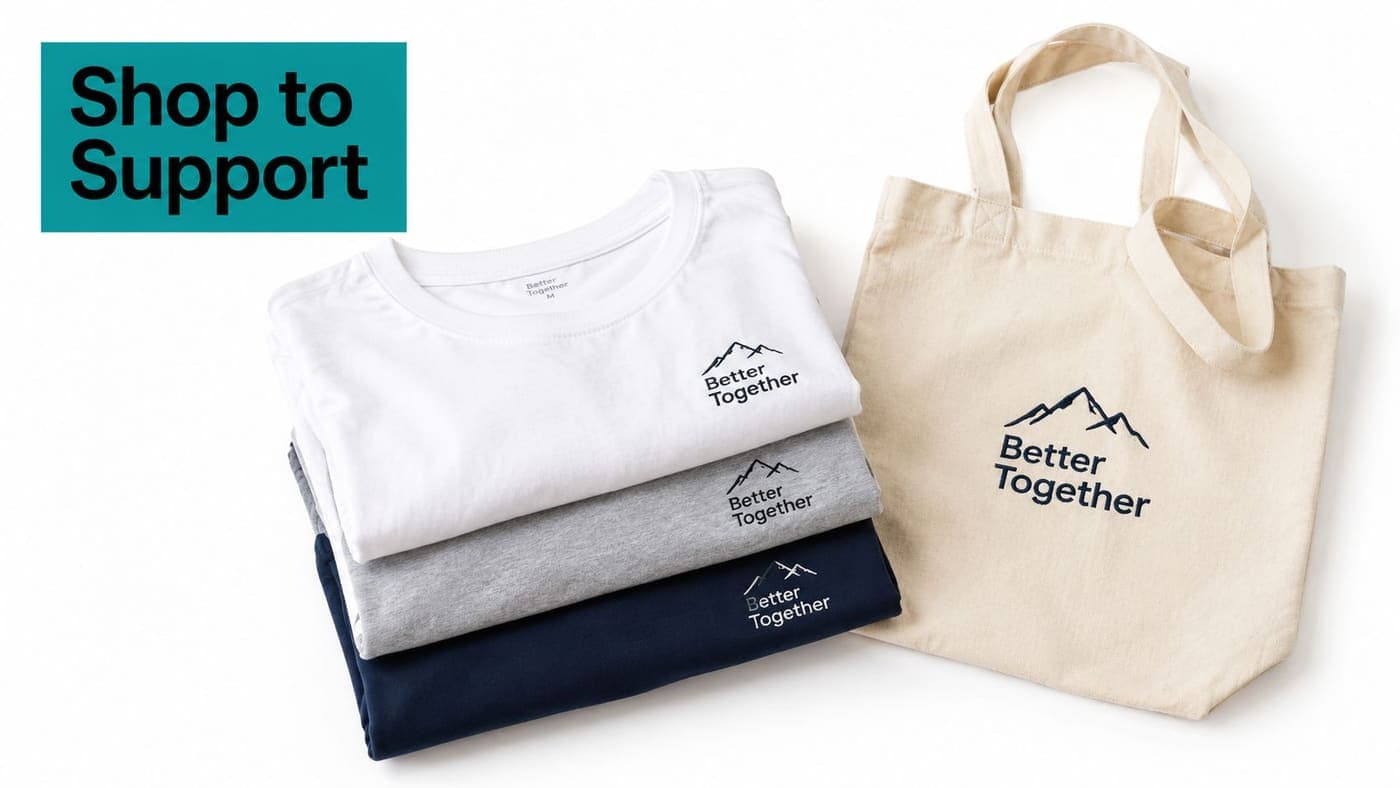
Merchandise can raise money while giving supporters a visible way to identify with your mission. T-shirts, mugs, tote bags, hats, and team apparel work particularly well for environmental organizations, schools, churches, sports groups, and community campaigns.
The main trade-off is margin versus administrative effort. Print-on-demand services reduce inventory risk, packing, and shipping work, but they can limit product choices and leave you with less control over fulfillment. Buying inventory may improve margins, yet it creates storage, payment, returns, and unsold-stock responsibilities.
Keep the shop intentionally small
Choose designs supporters would wear or use, not only designs that display your internal branding. Limit the first collection to a manageable selection, order samples, check quality, and publish clear delivery and return information. Consider bundling merchandise with an event registration or a higher-level donation, but show the taxable and deductible portions accurately where applicable.
Treat every purchase as a relationship opportunity. Capture permission for future communication, thank the buyer, and connect the order to the campaign or program it supports. Merchandise shouldn't become a separate island in your records.
For creative planning, review Cobra DTF's guide to T-shirts for causes. AlignMint can help keep the related campaign, donor record, event, and acknowledgment in one place, while fulfillment remains with your chosen merchandise provider.
10. Planned Giving and Donor-Advised Funds Programs
Planned gifts and donor-advised fund distributions support longer-term financial health. Donors may choose bequests, appreciated securities, life insurance arrangements, or distributions from a donor-advised fund. These gifts require patience because the donor's decision often depends on family conversations, tax advice, and estate planning.
A university may build a legacy society around bequests, while a community foundation may recommend grants from donor-advised funds to local organizations. A small nonprofit can begin with respectful education rather than a complex program.
Build trust before asking for a commitment
Create plain-language materials explaining how a donor can include your organization in an estate plan or recommend a DAF grant. Don't provide legal or tax advice. Encourage donors to speak with their own attorney, accountant, or financial adviser, and give those professionals accurate organizational information.
Start with people who have a long relationship with your nonprofit and have shown interest in its future. Keep records of conversations, stated intentions, restrictions, recognition preferences, and adviser contacts. A Legacy Society can recognize commitments, but participation should remain private when donors prefer confidentiality.
Planned gifts also require careful fund treatment. A restricted bequest, an unrestricted bequest, and a DAF distribution may carry different instructions and reporting needs. Strong fund accounting helps your finance team preserve those distinctions while donor management helps development staff steward the relationship.
Fiscal sponsors face an additional responsibility when receiving gifts for sponsored projects. In a preapproved grant model, the sponsor must retain discretion and control over donated funds, while the agreement should explain solicitation, release of funds, records, reporting, and sponsor fees, as set out in this fiscal sponsorship guide.
10 Online Fundraising Ideas Compared
| Fundraising Method | Implementation complexity | Resource requirements | Expected outcomes | Ideal use cases | Key advantages |
|---|---|---|---|---|---|
| Peer-to-Peer Fundraising Campaigns | Medium, platform setup plus coordinator training | CRM integration, setup support, marketing assets | High reach; multiplex revenue per engaged participant | Annual campaigns, walks/runs, youth sports, community events | Expands reach with low marginal staff effort; builds community ownership |
| Virtual Events: Galas, Auctions, Concerts, Webinars | High, livestream production and auction systems | Production team, streaming platform, talent, auction inventory | Variable; can raise large sums and reach dispersed supporters | Major donor cultivation, anniversaries, education/entertainment fundraisers | Eliminates venue costs; flexible reach; replay monetization |
| Monthly Recurring Giving Programs (Sustainer Campaigns) | Medium, billing infrastructure and compliance required | Payment processor, CRM automation, retention communications | Predictable, stable revenue and higher donor lifetime value | Operations, long-term programs, community nonprofits | Forecastable income; lower acquisition cost per dollar; strong retention |
| Cause-Related Corporate Partnerships & Sponsorships | Medium–High, relationship building and legal agreements | Business development, proposals, reporting, legal review | Significant funding, in-kind support, expanded audience | Events, capital campaigns, organizations with local business networks | Access to corporate budgets; marketing amplification; multi-year support |
| Email and Text Fundraising Campaigns | Low–Medium, segmentation and deliverability practices | Email/SMS tools, content creators, clean data, authentication | High ROI; fast response for urgent asks; strong engagement metrics | Annual campaigns, emergency appeals, event promotion, stewardship | Low cost per dollar; direct access to supporters; rapid deployment |
| Crowdfunding and Online Donation Platforms | Low, platform-driven, quick setup | Minimal technical staff, platform fees, campaign content | Fast launches; project-specific funding; strong social proof | Specific projects, emergency fundraising, new orgs, niche communities | Easy to launch; payment processing handled; social sharing built-in |
| Grant Writing and Foundation Funding | High, competitive proposals and reporting | Skilled grant writers, research, long lead time, reporting systems | Potentially large lump-sum awards; restricted program funding | Program funding, capital campaigns, organizations with grant capacity | Large award amounts; credibility and multi-year funding potential |
| Donation Matching Campaigns & Corporate Matching Gifts | Medium, secure matches and campaign coordination | Partner relations, promotion, tracking systems, legal terms | Boosted gift size and frequency; increased urgency during campaign | Annual drives, Giving Tuesday, emergency or major giving pushes | Doubles donor impact; drives participation and media attention |
| Online Merchandise and Product Sales | Low–Medium, storefront and fulfillment setup | Design resources, print-on-demand or fulfillment partner, customer service | Modest recurring revenue; increased brand visibility | Community building, younger donors, organizations with visual identity | Builds community identity; low inventory risk with POD; engagement tool |
| Planned Giving & Donor-Advised Funds (DAF) Programs | High, legal/tax expertise and long cultivation cycles | Planned giving specialists or consultants, stewardship resources | Large future or one-time gifts; endowment growth; long-term support | Mature organizations, capital campaigns, endowment building | High-value gifts and tax-advantaged donations; low stewardship cost per dollar |
Turn One Good Idea Into a Repeatable Fundraising System
You don't need to launch every online fundraiser at once. The right choice depends on who already trusts your organization, how much staff time you can assign, how quickly you need funds, and what reporting obligations the campaign creates.
Choose peer-to-peer fundraising when supporters naturally introduce your work to friends. Choose monthly giving when your priority is predictable unrestricted income. Choose a virtual event when you have a strong program, speakers, or donated experiences that can hold attention online. Choose a matching campaign when a major donor or business can create urgency. Choose grants or planned giving when your board accepts a longer cultivation period.
Your first campaign should be small enough to manage carefully. Set one clear financial or participation goal, name one owner, define the audience, prepare the donation page, and test every payment path before asking the public to give. If volunteers or event participants are involved, give them approved language and a direct way to ask questions.
Acknowledgment needs its own plan. A receipt confirms the transaction, but a personal thank-you confirms the relationship. Decide which gifts receive an automated receipt, which donors receive a personal call, who thanks volunteers, and how quickly the organization will share an impact update.
Review the campaign after the activity ends. Look at revenue, processing costs, participation, average gift size, recurring-gift enrollment, donor retention, campaign source, and staff time. Also record what failed. A campaign that raised money but required several days of manual correction may not be worth repeating in the same form.
Donation-page experience deserves particular attention. Sector benchmarks place typical conversion around 8% to 12%, with desktop often ahead of mobile, including one benchmark showing 11% desktop conversion compared with 8% mobile conversion. The same source set reports that well-optimized nonprofit pages can reach roughly 15% to 25% conversion, which reinforces the value of shorter forms, mobile-first layouts, and simpler payment choices in this donation-page conversion guidance.
Your team should also decide how each campaign affects fund accounting. A matching gift, grant, event ticket, recurring donation, and merchandise sale may not belong in the same fund. Clear classifications protect reporting quality and help your board see what money is available for programs, operations, or donor-directed purposes.
AlignMint can connect online giving pages, donor records, campaigns, events, volunteers, marketing, and fund accounting in one platform. It includes true fund accounting rather than QuickBooks classes, a built-in marketing suite, and Minty AI, which answers questions about your real organizational data without requiring exports. Churches, schools, fiscal sponsors, and community nonprofits can use the same connected records while keeping fund and program distinctions clear.
For smaller organizations, AlignMint offers a free tier for nonprofits under $100K, with plan-based access and no per-seat fees. That matters when finance, development, program, volunteer, and board users all need access to the same information. The platform can reduce duplicate entry, but your team still needs sound policies, accurate coding, thoughtful donor communication, and regular review.
Start with one campaign your team can run well. Give it a clear owner, a simple donor experience, and a defined review date, then use what you learn to choose the next online fundraiser with confidence.
AlignMint brings online giving pages, campaigns, donor management, events, volunteers, marketing, and true fund accounting into one nonprofit platform. If your next fundraiser needs cleaner records and less manual follow-up, visit AlignMint to see whether it fits your organization.
Ready to try AlignMint with your nonprofit?
Start free — set up donor tools, giving pages, and Minty. Upgrade when you need accounting.