

Your board chair catches you after the meeting with the same request as last year. One more big event, because the last one looked good in the photos. Your team is already running three programs with a staff of four, and you know another gala won't fix a thin donor pipeline.
What will fix it is the format you choose and what you do in the two weeks after the last table is cleared. A well-built fundraising events group turns people who already like you into people who ask their friends, and that shift is worth more than any single night's net.
Group events beat solo appeals because your supporters do the asking. One person who invites five friends to a trivia night does more for your pipeline than a mailing to a thousand strangers, and the relationship sits in your database where you can use it again. Six in ten nonprofits reported that event and online fundraising generated at least 21% of their annual operating budget in 2023, rising to seven in ten among organizations under $1 million in revenue, according to OneCause's fundraising report. The eight formats below are the ones small and midsized nonprofits run without hiring an agency. Each comes with a concrete follow-up step, because the group is the asset and the night is only the introduction.
Quick Answer: Group Fundraising Event Ideas
Group fundraising events work when supporters ask their own friends and you follow up within two weeks. This page compares eight formats. The event list, the planning checklist, the budget, and online ideas are separate guides.
Start with events and events for nonprofits. For the day-of checklist, see planning events for nonprofits. For the budget, see budgeting for an event. For appeals that are not a room, see fundraising online ideas.
1. Peer-to-Peer Fundraising Challenge
Participants set a personal goal, then ask their own friends, family, and coworkers to give. Each one becomes a small fundraiser for your mission, and the ask lands better coming from a neighbor than from your letterhead.
The format runs at serious scale when you give people the tools. In 2016, the 30 largest peer-to-peer campaigns in the United States raised more than $1.53 billion, as the Chronicle of Philanthropy reported. The Leukemia & Lymphoma Society built Team in Training on this model, and St. Jude Children's Research Hospital runs peer-to-peer campaigns the same way.

The pipeline starts after the finish line
The campaign closes and most organizers stop. That's the expensive mistake. A participant who raised $400 from eleven friends has just introduced you to eleven people who trust them, and those relationships belong in your database with the participant's name attached.
Set each person up with a page that stays tied to their constituent record, so gifts from their friends never land as anonymous cash. That's what peer-to-peer fundraising pages are for.
- Set a modest first goal: A few hundred dollars per participant gets people to the first gift. A $2,500 goal gets them to close the tab.
- Send the weekly team total: One short email with the running group number keeps momentum through the middle weeks, when individual pages go quiet.
- Thank each person within 48 hours: A personal note, not a template, and one question about next year.
Your follow-up step: ten days after the campaign, invite every participant who hit their goal into a monthly giving tier at a low amount. They've already proved they will ask. Now you're asking them.
2. Team Walk or Run
A pledge walk or run asks teams of friends, families, or coworkers to move together and collect sponsorships for doing it. The shared physical goal brings in people who would never buy a gala ticket, including the coworkers they drag along.
Format affects productivity more than most organizers expect. In a 2019 benchmark study of 281 organizations across the United States and Canada, endurance events averaged $389.97 per participant while cycle events averaged $798.97, per the Blackbaud peer-to-peer fundraising study. A ride costs more to stage and asks more of each rider, and revenue per head reflects that trade.
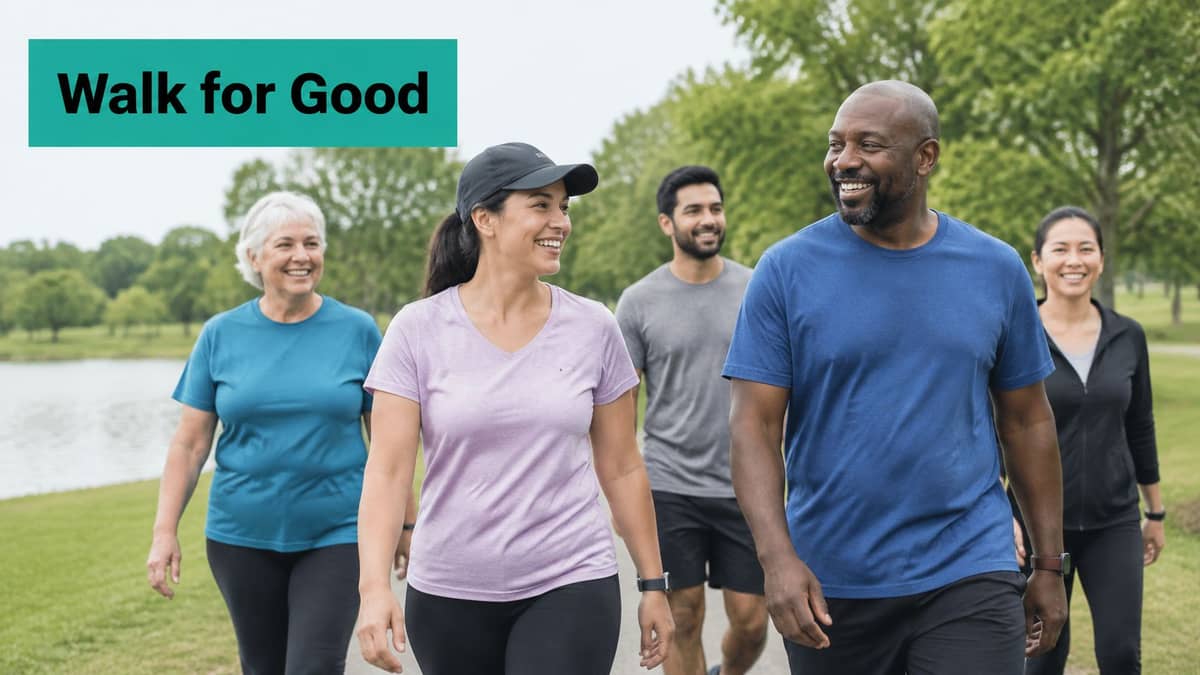
Susan G. Komen's Race for the Cure and the American Heart Association's Heart Walk have run on this model for decades. That longevity tells you the format survives leadership changes, bad weather, and the occasional boring route.
Practical rule: Put the pledge deadline a week after the event, not the morning of. The final push is where the last quarter of the money arrives.
- Award the most pledges, not the most walkers: A prize for the top fundraising team keeps captains recruiting givers instead of warm bodies.
- Recruit captains through a running store or gym: Experienced captains bring whole teams, and a local partner lends credibility you can't buy.
- Give the winning team something visible: Custom caps cost little and get worn around town for months, and hat inspiration from Dirt Cheap Headwear covers styles that fit a small budget.
Run registration, entry fees, and day-of check-in through one event registration and ticketing flow so pledge totals and attendance sit on the same record. Your follow-up step: within two weeks, send every captain a photo from the day and ask them to captain again, with next year's date already on the calendar.
3. Giving Circle
A giving circle is a standing group, not a one-night ask. Members pool gifts, hear from the people doing the work, and vote on awards. Impact 100 chapters across the United States use this model to make large, focused grants, and community foundations host similar circles regionally. I judge the format by who renews.
Write the charter before you recruit
Twenty members give $1,000 and vote in March on one award. The math is easy. The circle dies when nobody wrote the rules. Put the decision on one page: who votes, what majority wins, what happens when someone joins mid-year, and how the money is held until it is awarded.
Money held for a named purpose is restricted money, and the distinction matters more than it sounds. IRS instructions on fund classification treat funds without donor-imposed restrictions as unrestricted even when the board has designated them for a purpose. A board can reverse its own designation next month. A donor restriction holds until the stated purpose or time condition is satisfied.
Tie the award to a named program. Members need to see what the gift did, and you need program-level records when you describe your largest services. A receipt will not bring them back.
Keep the meeting to one decision: two hours, one vote, and five minutes from last year's grantee. Track each member's giving year over year so the renewal starts from their own history. Thank the grantees, not only the donors. Bring the last recipient into the room.
Your follow-up step: within a month of the award, send every member a two-paragraph update from the grantee. Members renew when they can see the result. That note turns one vote into a donor pipeline you can run again.
4. Workplace Matching Campaign
A regional bank with 400 employees chooses your organization for its fall campaign. Staff give through payroll, the bank matches gifts up to a cap, and HR handles the paperwork. The campaign can bring in company gifts and introduce your work to employees who may become ongoing supporters.
The hard part is tracking each step. In a 2025 survey of more than 600 nonprofits, 79% reported using five or more third-party systems beyond their main CRM, up from 62% the year before, according to Omatic's nonprofit tech trends report. Every extra system is another place an employee gift can sit unmatched while someone reconciles it by hand.
Record the employer's match alongside the employee's gift and the campaign. A matching gift is a contribution from the company, not a fee for anything. Clear records make it easier to see which gifts still need follow-up.
Keep the match form short enough to complete on a phone. If employees have to search for details or repeat information, fewer will finish it.
- Start with the benefits contact: HR can explain the matching process and share it with employees.
- Keep the form focused: Ask for the employee's name, employer, gift date, amount, and receipt.
- Report the outcome: Send the matching team a concise impact update after the campaign.
Your follow-up step: thirty days after the campaign, invite participating employees to a site visit or a 30-minute call with a program director. Give them a clear next step to stay involved, such as sharing the campaign with a colleague or learning about another way to support the work.
5. Community Trivia Night
Forty guests at $25 each bring in $1,000. Add two local businesses sponsoring tables at $500 apiece, and the night raises $2,000 while introducing your organization to forty new people. Teams of four to eight can play at a brewery, library, or community center, with prizes donated by local businesses.
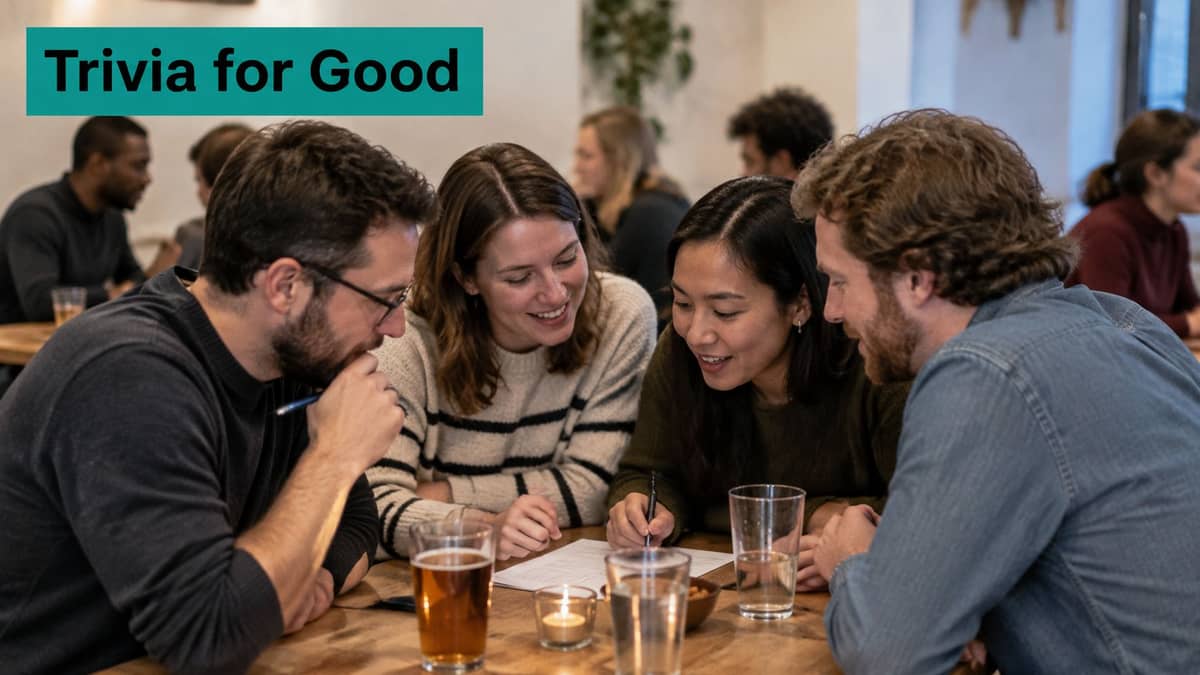
The venue may be inexpensive; staff time is the larger cost. Limited staffing was the top event-planning challenge for 68% of fundraisers in a 2025 survey, according to Bloomerang's Engagement Amplified report. Keep the workload manageable with one venue, a prepared question set, and a simple scoring sheet.
Keep the room moving
- Cap teams at six: Larger teams can slow scoring and leave some guests out of the game.
- Sell table sponsorships: A business can cover a table and receive recognition there, raising proceeds without adding much event work.
- Give teams a reason to return: Put next year's date on the final slide and invite captains to help recruit their teams.
Your follow-up step: the week after the event, email each team captain the final standings and an invitation to bring a team or host a table next time. A timely recap turns a fun evening into a clear next step for new supporters.
6. Dine-Out Fundraising Night
A restaurant gives your organization a share of sales during a set window, usually when supporters present a flyer or mention a code. You promote the night to members, families, and neighbors. Chili's and Applebee's have hosted community nights for local nonprofits for years, and school parent groups run them at neighborhood restaurants every semester.
Be honest about what this format is. A dine-out night might net a few hundred dollars, and if you judge it on net proceeds you'll cancel it after one try. Judge it on names. In 2025, 97% of surveyed nonprofits held at least one fundraising event, and 77% of those organizations met or exceeded their event fundraising goals, per Bonterra's survey of 1,273 nonprofit professionals. The nights that pay off are the ones where somebody captured the guest list.
Never run one without a name capture step. A table of ten who eat and leave is a small donation and a wasted evening.
- Pick a restaurant with its own loyal regulars: You want their customers, not only the people already on your list.
- Push the code through every channel: Newsletter, social, and a text to your most engaged supporters on the day.
- Close the loop within a week: Send the restaurant a thank-you note and the final donation amount.
Your follow-up step: everyone who shows gets a welcome email within seven days with one story and one invitation to your next event. That's the difference between a $400 night and a night that adds forty names to a pipeline you'll use for years.
7. Read-a-Thon or Pledge-Based Youth Challenge
A third-grader comes home with a pledge sheet and a goal of twenty minutes a night. Grandma writes a number on the line before dinner is on the table. That is the engine of a read-a-thon or pledge-based youth challenge. The ask travels through families, and relatives give to a child they can picture finishing the goal.
Students collect pledges from family and neighbors, then hit a set target: minutes read, laps run, books finished. Scholastic runs read-a-thon programs in elementary schools, and church youth groups use pledge challenges to fund mission trips. The format fits schools, youth programs, and faith communities because the households around each child are the group you are trying to grow.
I would score this format on families who stay, not on the cash in the envelope. Cash collected at school creates a counting night that eats a volunteer's whole week, and it drops the out-of-town relative who would have given $50 on a card. Move the pledges online. Set up pledge campaigns so each student has a page and the totals update themselves. Those pages are also the household list you will use the next time you ask.
The volunteer hours behind the challenge are real program capacity. They are still not revenue. The IRS Form 990 instructions say donated services generally are not included as contributions received. Track hours for the board and for comparing programs. Leave them off the income statement.
- Set an age-appropriate goal: Fifteen minutes a night beats a hundred books, and it lets every child finish.
- Celebrate weekly: A Friday announcement of the school total does more than a final assembly in June.
- Make finishing visible: A shirt for every student who completes the challenge gets worn in public, and tips for ordering school spirit wear help with sizes and lead times.
Your follow-up step: send each family a photo of their child with the final count and one line on what the money funded. Then invite them to the next school event. Families who see a result give again without being asked twice.
8. Group Gala with Table Sponsorships
A gala can bring new supporters into the room through the people who host each table. Guests buy seats, hear about your work, and may become donors long after the dinner is over. The format takes more planning than a casual community event, so build the sponsorship ask before committing to the venue.
The money side is messier than the room
Say a table sells for $5,000 and includes dinner, drinks, and a program ad. Part of that payment is a contribution and part is a purchase. The IRS instructions for Form 990 distinguish contributions from support that primarily provides an economic benefit to the payer, and classify campaign publicity, solicitation materials, and fundraising events as fundraising expenses. Recording the full table price as a gift can overstate contributions and misstate expenses.
Build the ask before you build the room. A nonprofit sponsorship proposal template can help organize a written proposal that states what each sponsorship level receives.
- Offer one premium table with program recognition: Give your strongest prospective sponsor a clear higher-tier option.
- Ask each host to fill half the table before the event: Early commitments give you a better read on attendance and who may be interested in your work.
- Thank every host within three days: Send a personal note and a photo from the night, alongside any required receipt.
Your follow-up step: ten days after the gala, send each host a one-page summary of what the table funded. Invite them to host again next year and connect the ask to a specific program. A clear purpose gives the next conversation somewhere to start.
How the 8 Fundraising Events Group Formats Compare
| Item | Best For | Typical Audience | Cost to Run | Format |
|---|---|---|---|---|
| Peer-to-Peer Fundraising Challenge | Reaching new donor networks | Participants and their friends, family, and coworkers | Moderate; requires ongoing participant support | Individual fundraising pages linked to a team goal |
| Team Walk or Run | Broad community engagement and pledge fundraising | Friends, families, employees, and local businesses | Low to moderate; permits and logistics may add costs | Team-based walk or run with pledges and sponsorships |
| Giving Circle | Building engaged, long-term donor relationships | Donors who want to pool gifts and guide grant decisions | Moderate; requires member recruitment and coordination | Member-funded group with meetings and shared grant decisions |
| Workplace Matching Campaign | Increasing employee gifts through employer matches | Employees and participating employers | Low; administrative verification required | Workplace giving with employer matches or volunteer grants |
| Community Trivia Night | Hosting an affordable, social fundraiser | Local community members and teams | Low; venue, prizes, and hosting may add costs | Team trivia event with entry fees and optional sponsorships |
| Dine-Out Fundraising Night | Running a simple community fundraiser | Supporters, families, and restaurant customers | Very low; little upfront cost | Restaurant event donating a share of sales |
| Read-a-Thon or Pledge-Based Youth Challenge | Engaging students in goal-based fundraising | Students, families, teachers, and neighbors | Low; prizes and pledge administration may add costs | Youth challenge with activity goals and pledges |
| Group Gala with Table Sponsorships | Raising substantial revenue and cultivating major donors | Donors, sponsors, and guests invited by table hosts | High; venue, catering, and staffing costs | Dinner gala with sponsored tables, auctions, and a program |
Choosing Your Next Fundraising Events Group Format
The right format depends on who you can bring together and what you want those people to do afterward. If families are your strongest audience, consider a read-a-thon or walk. Young professionals may respond to trivia or a dine-out night. Table sponsorships can suit a gala built around major donors. Check staff capacity and the calendar before committing; a good idea still needs someone to run it.
For a first test, peer-to-peer or trivia can be practical options. Choose a clear next step for every new supporter, such as inviting them to another event, asking them to join a giving circle, or sharing a relevant campaign. The event builds the group; consistent follow-up gives people a reason to stay involved.
Track gifts by event, participant, and campaign. Donor acquisition and retention are priorities for many organizations. Follow-up deserves as much attention as the event itself.
Review the results with your team while details are fresh. Ask what each new supporter cost to acquire, how many previous attendees returned, and how many first-time givers made a second gift within ninety days. Use those answers, alongside net revenue, to decide whether to repeat the format and what to change.
AlignMint keeps fundraising, donor management, events, and fund accounting on the same operating record. Its events and ticketing feature manages registration, tickets, check-in, attendance, and event revenue in one flow. A free setup call walks you through fund accounting, donations, and reporting on your plan. The Free plan includes donor records, giving pages, and fundraising drafts for one user, for nonprofits with up to $100K in annual donations, with no credit card required.
For a walk or gala with a corporate team component, review charity team-building activity options before settling on the format. Match the activity to the team's interests, then plan a follow-up that keeps participants connected to your organization.
Frequently Asked Questions
Supporters ask their own friends, and those names stay on a record you can use again. The night introduces people. The follow-up is what you keep.
This page compares eight formats. The event list, the planning checklist, the event budget, and online appeal ideas each live in a separate guide.
Ready to try AlignMint with your nonprofit?
Start free — set up donor tools, giving pages, and Minty. Upgrade when you need accounting.